暴
See also: 異
| ||||||||
Translingual
Han character
暴 (radical 72, 日+11, 15 strokes, cangjie input 日廿金水 (ATCE), four-corner 60132, composition ⿳日共氺)
Derived characters
References
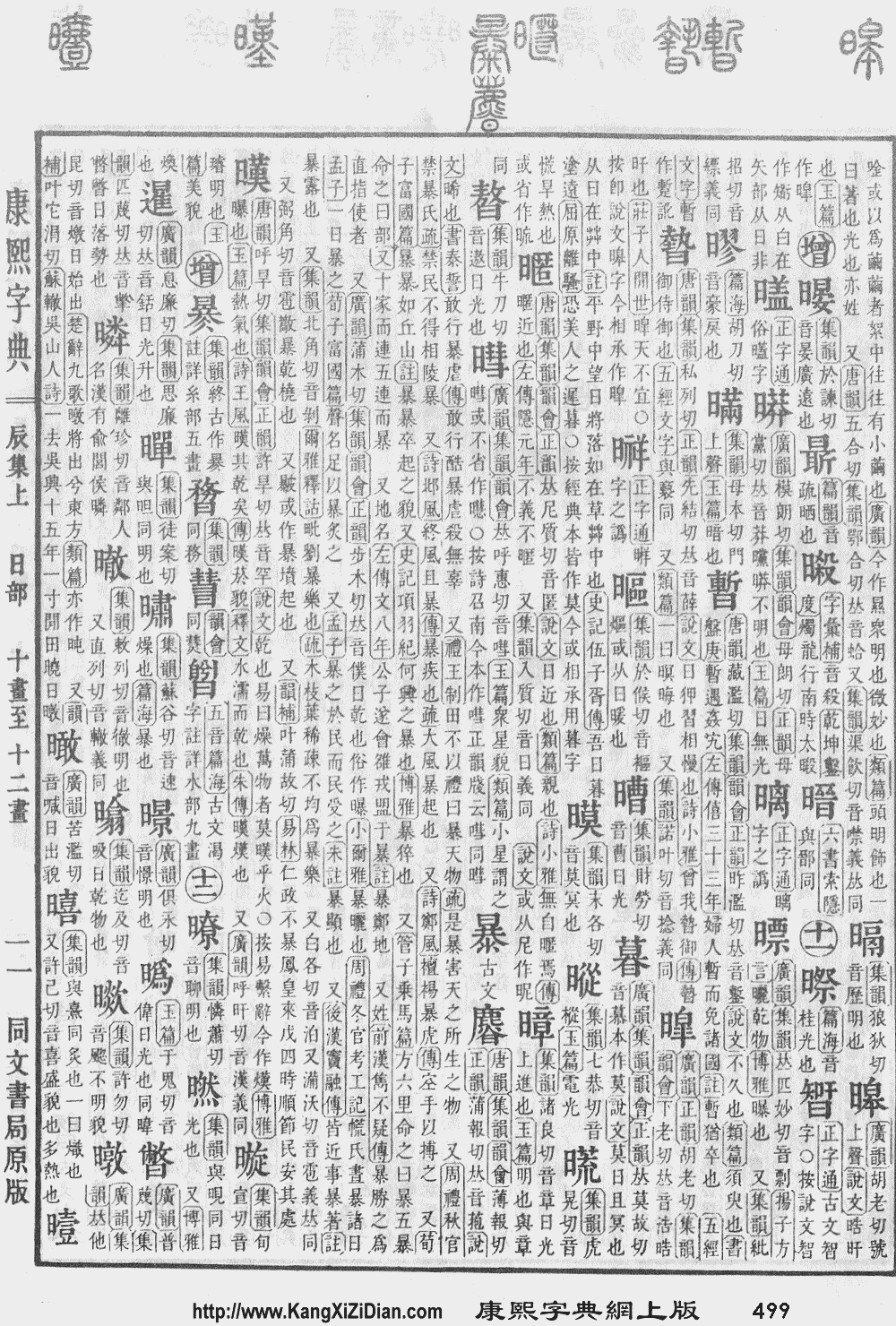
- KangXi: page 499, character 29
- Dai Kanwa Jiten: character 14137
- Dae Jaweon: page 868, character 35
- Hanyu Da Zidian: volume 2, page 1532, character 15
- Unihan data for U+66B4
Chinese
| simp. and trad. |
暴 | |
|---|---|---|
Glyph origin
| Historical forms of the character 暴 | ||
|---|---|---|
| Shang | Shuowen Jiezi (compiled in Han) | Liushutong (compiled in Ming) |
| Oracle bone script | Small seal script | Transcribed ancient scripts |
 |
 |
 |
| Characters in the same phonetic series (暴) (Zhengzhang, 2003) | |
|---|---|
| Old Chinese | |
| 暴 | *boːwɢs, *boːɡ |
| 曝 | *boːwɢs, *boːɡ |
| 瀑 | *boːwɢs, *boːɡ |
| 虣 | *boːwɢs |
| 爆 | *proːwɢs, *poːwɢ, *proːwɢ |
| 襮 | *poːwɢ, *poːwɢ |
| 嚗 | *proːwɢ |
| 謈 | *pʰroːwɢ, *broːwɢ |
| 犦 | *broːwɢ, *poːwɢ |
| 懪 | *broːwɢ |
Ideogrammic compound (會意) – originally (in oracle script) the antler of a buck (at bottom), indicating a savage attack. Subsequently significantly simplified and abstracted: in seal script analyzed as 日 + 出 + 廾 + 米, while in current form rather 日 + 共 + 水 (similar to unrelated 異); compare bottom component to bottom right of 様.
Pronunciation
Definitions
暴
Compounds
Derived terms from 暴
|
|
|
Japanese
Kanji
暴
Readings
Compounds
Etymology
| Kanji in this term |
|---|
| 暴 |
| ぼう Grade: 5 |
| on’yomi |
From Middle Chinese 暴 (bawH, “violent”).
Pronunciation
Adjectival noun
暴 (-na inflection, hiragana ぼう, rōmaji bō)
Inflection
Inflection of 暴
| Stem forms | |||
|---|---|---|---|
| Imperfective (未然形) | 暴だろ | ぼうだろ | bō daro |
| Continuative (連用形) | 暴で | ぼうで | bō de |
| Terminal (終止形) | 暴だ | ぼうだ | bō da |
| Attributive (連体形) | 暴な | ぼうな | bō na |
| Hypothetical (仮定形) | 暴なら | ぼうなら | bō nara |
| Imperative (命令形) | 暴であれ | ぼうであれ | bō de are |
| Key constructions | |||
| Informal negative | 暴ではない 暴じゃない |
ぼうではない ぼうじゃない |
bō de wa nai bō ja nai |
| Informal past | 暴だった | ぼうだった | bō datta |
| Informal negative past | 暴ではなかった 暴じゃなかった |
ぼうではなかった ぼうじゃなかった |
bō de wa nakatta bō ja nakatta |
| Formal | 暴です | ぼうです | bō desu |
| Formal negative | 暴ではありません 暴じゃありません |
ぼうではありません ぼうじゃありません |
bō de wa arimasen bō ja arimasen |
| Formal past | 暴でした | ぼうでした | bō deshita |
| Formal negative past | 暴ではありませんでした 暴じゃありませんでした |
ぼうではありませんでした ぼうじゃありませんでした |
bō de wa arimasen deshita bō ja arimasen deshita |
| Conjunctive | 暴で | ぼうで | bō de |
| Conditional | 暴なら(ば) | ぼうなら(ば) | bō nara (ba) |
| Provisional | 暴だったら | ぼうだったら | bō dattara |
| Volitional | 暴だろう | ぼうだろう | bō darō |
| Adverbial | 暴に | ぼうに | bō ni |
| Degree | 暴さ | ぼうさ | bōsa |
Noun
References
Korean
Hanja
暴 • (po, pok, bak) (hangeul 포, 폭, 박, McCune–Reischauer p'o, p'ok, pak, Yale pho, phok, pak)
- This term needs a translation to English. Please help out and add a translation, then remove the text
{{rfdef}}.
Vietnamese
Han character
- This term needs a translation to English. Please help out and add a translation, then remove the text
{{rfdef}}.
This article is issued from
Wiktionary.
The text is licensed under Creative Commons - Attribution - Sharealike.
Additional terms may apply for the media files.