僧
| ||||||||
| ||||||||
| ||||||||
Translingual
| Japanese | 僧 |
|---|---|
| Simplified | 僧 |
| Traditional | 僧 |
Alternative forms
Note difference between Chinese form, which uses 曾, and Japanese shinjitai which uses 曽. Both forms are encoded under the same codepoint due to Han unification.
Etymology
Han character
僧 (radical 9, 人+12 in Chinese, 人+11 in Japanese, 14 strokes in Chinese, 13 strokes in Japanese, cangjie input 人金田日 (OCWA), four-corner 28266, composition ⿰亻曾 (GTKV) or ⿰亻曽 (J))
Related characters
References
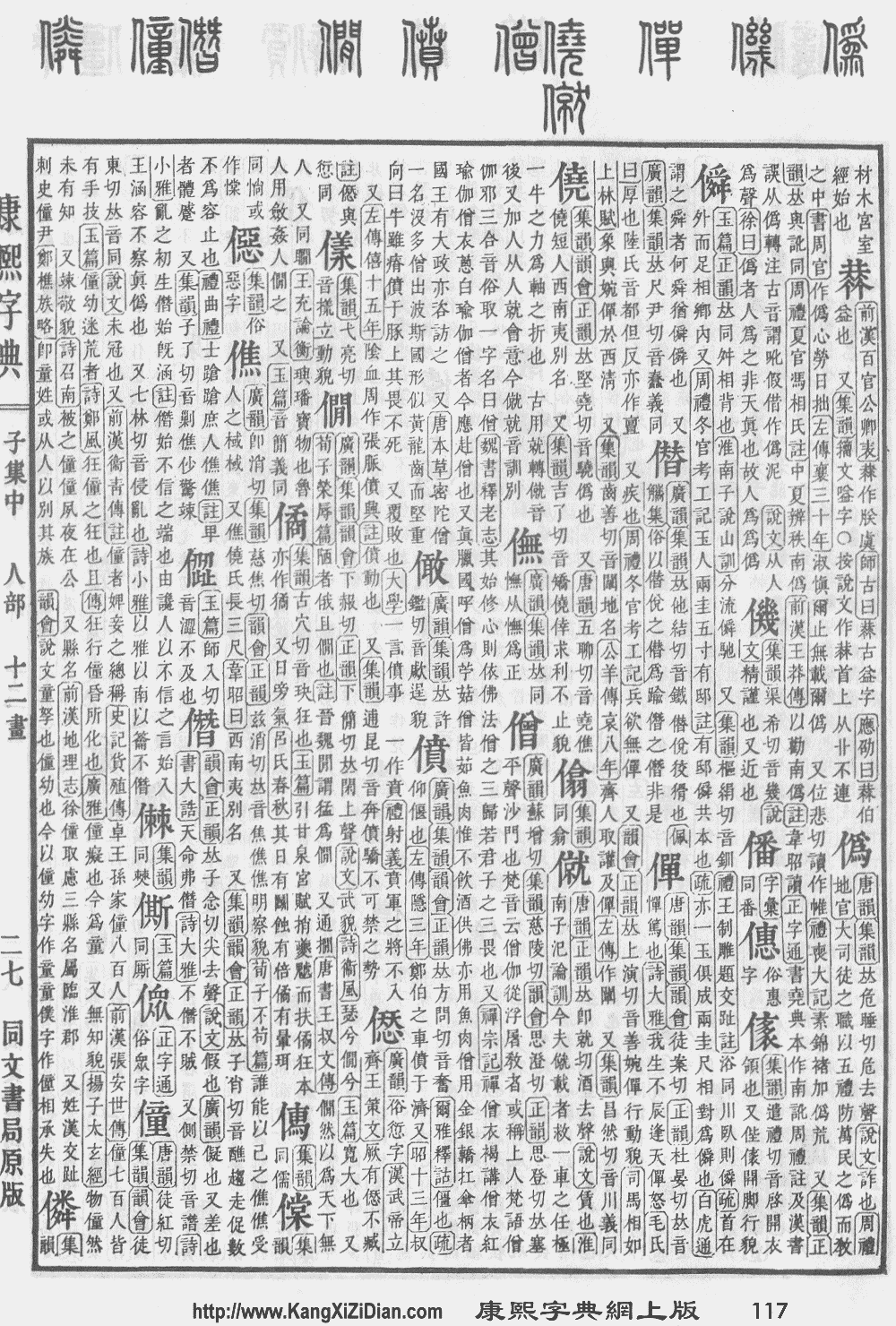
- KangXi: page 117, character 14
- Dai Kanwa Jiten: character 1076
- Dae Jaweon: page 248, character 20
- Hanyu Da Zidian: volume 1, page 222, character 1
- Unihan data for U+50E7
Chinese
| simp. and trad. |
僧 | |
|---|---|---|
Glyph origin
| Historical forms of the character 僧 | ||||
|---|---|---|---|---|
| Shuowen Jiezi (compiled in Han) | Liushutong (compiled in Ming) | |||
| Small seal script | Transcribed ancient scripts | |||
 |
 | |||
| ||||
|
References: Mostly from Richard Sears' Chinese Etymology site (authorisation),
| ||||


| Characters in the same phonetic series (曾) (Zhengzhang, 2003) | |
|---|---|
| Old Chinese | |
| 潧 | *ʔsrɯn |
| 繒 | *ʔsɯːŋ, *zɯŋ |
| 增 | *ʔsɯːŋ, *ʔsɯːŋs |
| 憎 | *ʔsɯːŋ |
| 磳 | *ʔsɯːŋ, *zɯŋ |
| 曾 | *ʔsɯːŋ, *zɯːŋ |
| 矰 | *ʔsɯːŋ |
| 罾 | *ʔsɯːŋ |
| 熷 | *ʔsɯːŋ |
| 竲 | *ʔsɯːŋ, *zɯŋ |
| 橧 | *ʔsɯːŋ, *zɯŋ |
| 譄 | *ʔsɯːŋ |
| 蹭 | *sʰɯːŋs |
| 層 | *zɯːŋ |
| 贈 | *zɯːŋs |
| 僧 | *sɯːŋ |
| 鬙 | *sɯːŋ |
| 甑 | *ʔsɯŋs |
| 鄫 | *zɯŋ |
| 驓 | *zɯŋ |
| 嶒 | *zɯŋ |
| 噌 | *sʰɯːŋ |
| 鏳 | *zrɯːŋ |
Phono-semantic compound (形聲, OC *sɯːŋ) : semantic 亻 (“person”) + phonetic 曾 (OC *ʔsɯːŋ, *zɯːŋ) – a kind of person (a Buddhist monk).
Etymology
Clipping of of 僧伽 (MC səŋ ɡɨɑ, “sangha; community of monks, nuns, novices and laity”); see there for more.
Pronunciation
Definitions
僧
Compounds
Japanese
Kanji
(common “Jōyō” kanji, shinjitai kanji, kyūjitai form 僧)
Readings
Compounds
Noun
Korean
Hanja
僧 • (seung) (hangeul 승, McCune–Reischauer sŭng)
Vietnamese
Han character
僧 (tăng)