安
| ||||||||
Translingual
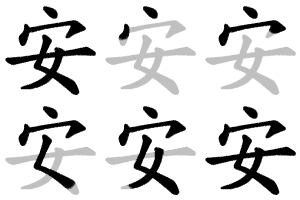
| Stroke order | |||
|---|---|---|---|
 | |||
Han character
安 (radical 40, 宀+3, 6 strokes, cangjie input 十女 (JV), four-corner 30404, composition ⿱宀女)
Derived characters
Descendants
References
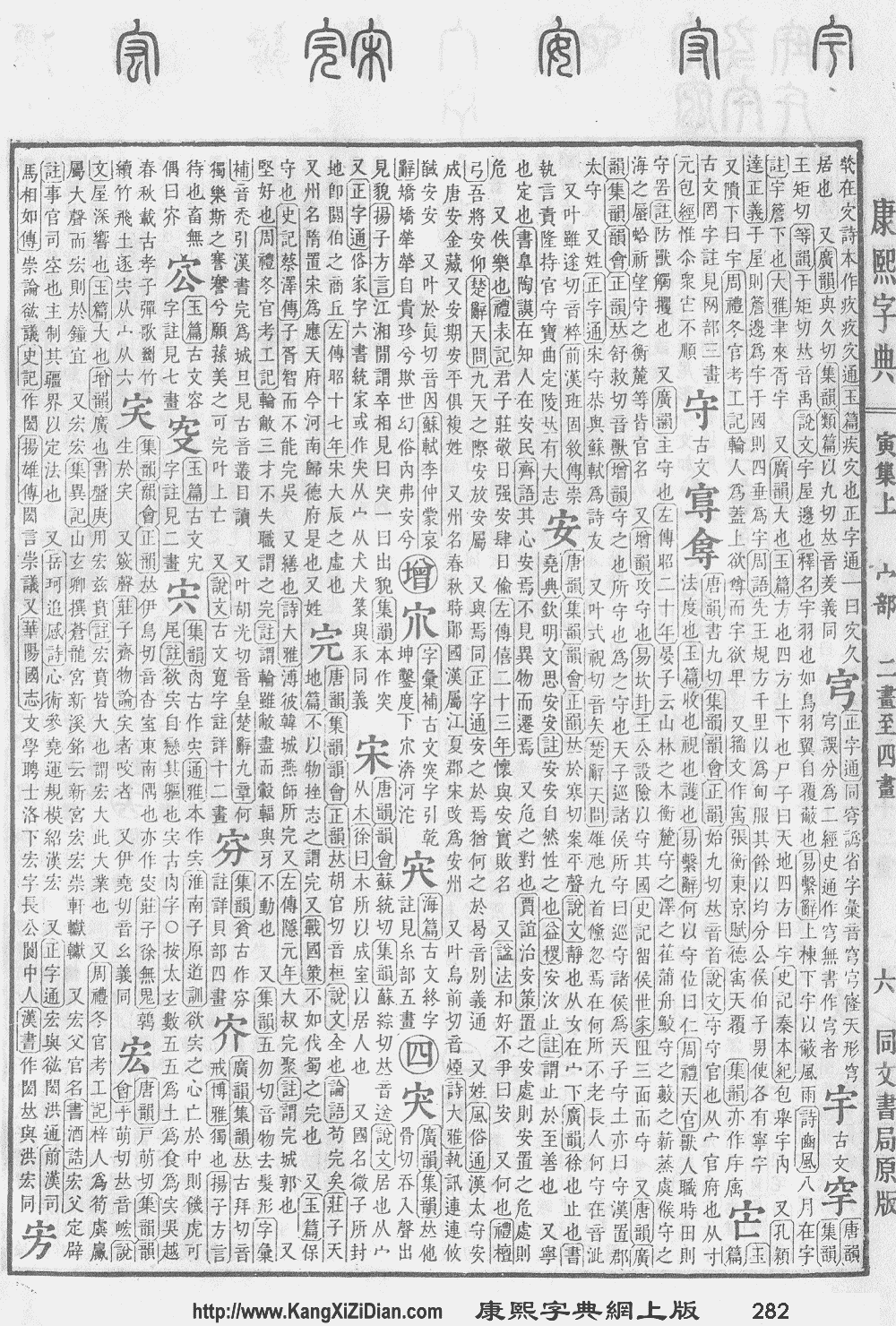
- KangXi: page 282, character 8
- Dai Kanwa Jiten: character 7072
- Dae Jaweon: page 552, character 5
- Hanyu Da Zidian: volume 2, page 913, character 9
- Unihan data for U+5B89
Chinese
| simp. and trad. |
安 | |
|---|---|---|
Glyph origin
| Historical forms of the character 安 | |||
|---|---|---|---|
| Shang | Western Zhou | Shuowen Jiezi (compiled in Han) | Liushutong (compiled in Ming) |
| Oracle bone script | Bronze inscriptions | Small seal script | Transcribed ancient scripts |
 |
 |
 |
 |
| Characters in the same phonetic series (安) (Zhengzhang, 2003) | |
|---|---|
| Old Chinese | |
| 安 | *qaːn |
| 鞍 | *qaːn |
| 鞌 | *qaːn |
| 侒 | *qaːn |
| 按 | *qaːns |
| 案 | *qaːns |
| 洝 | *qaːns |
| 荌 | *qaːns |
| 晏 | *qaːns, *qraːns |
| 鴳 | *qraːns |
| 騴 | *qraːns |
| 鷃 | *qraːns |
| 頞 | *qaːd |
| 胺 | *qaːd |
| 咹 | *qaːd |
Ideogrammic compound (會意) : 宀 (“house”) + 女 (“a woman or a kneeling person”) – person in a kneeling position sitting on the heels at home.
Etymology
A parallel stem is 宴 (OC *qeːns, “to be at ease; to rest”) (Wang, 1982; Schuessler, 2007).
Cognate with 按 (OC *qaːns, “to push down with hand”), an exoactive derivative, literally “to cause to be settled; calmed” (ibid.).
This etymology is incomplete. You can help Wiktionary by elaborating on the origins of this term.
Pronunciation
Definitions
安
- calm; peaceful; tranquil; quiet
- comfortable; at ease
- safe; secure
- to calm; to pacify
- to feel satisfied with
- to find a place for; to plant
- to fit; to install
- to cherish; to harbour
- to confer (a title); to bestow; to put (the blame on someone)
- where
- how; why
- (physics) Short for 安培 (Ānpéi, “ampere”).
- A surname.
Compounds
Derived terms from 安
|
|
|
Descendants
Japanese
Kanji
安
Readings
Compounds
Compounds
- 塩安 (en'an): ammonium chloride
- 硝安 (shōan): ammonium nitrate
- 炭安 (tan'an): ammonium carbonate
- 硫安 (ryūan): ammonium sulphate
- 燐安 (rin'an): ammonium phosphate
- 安易 (an'i)
- 安逸 (an'itsu)
- 安穏 (annon)
- 安危 (anki)
- 安心 (anshin), 安心 (anjin)
- 安息 (ansoku)
- 安泰 (antai)
- 安置 (anchi)
- 安直 (anchoku)
- 安堵 (ando)
- 安寧 (annei)
- 安否 (anpi)
- 安眠 (anmin)
- 安楽 (anraku)
- 安宿 (yasuyado)
Derived terms
Korean
Hanja
安 • (an) (hangeul 안, McCune–Reischauer an)
Compounds
Vietnamese
Han character
- This term needs a translation to English. Please help out and add a translation, then remove the text
{{rfdef}}.
This article is issued from
Wiktionary.
The text is licensed under Creative Commons - Attribution - Sharealike.
Additional terms may apply for the media files.