刀
| ||||||||
Translingual
| Stroke order | |||
|---|---|---|---|
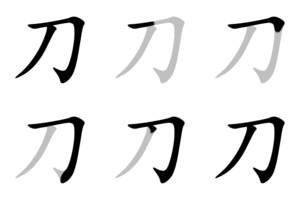 | |||
Alternative forms
- 刂 (when used as a right Radical)
Han character
刀 (radical 18, 刀+0, 2 strokes, cangjie input 尸竹 (SH), four-corner 17220)
- Kangxi radical #18, ⼑.
Descendants
- ㄉ
- ㆵ
Derived characters
- Index:Chinese radical/刀
- 罰
References
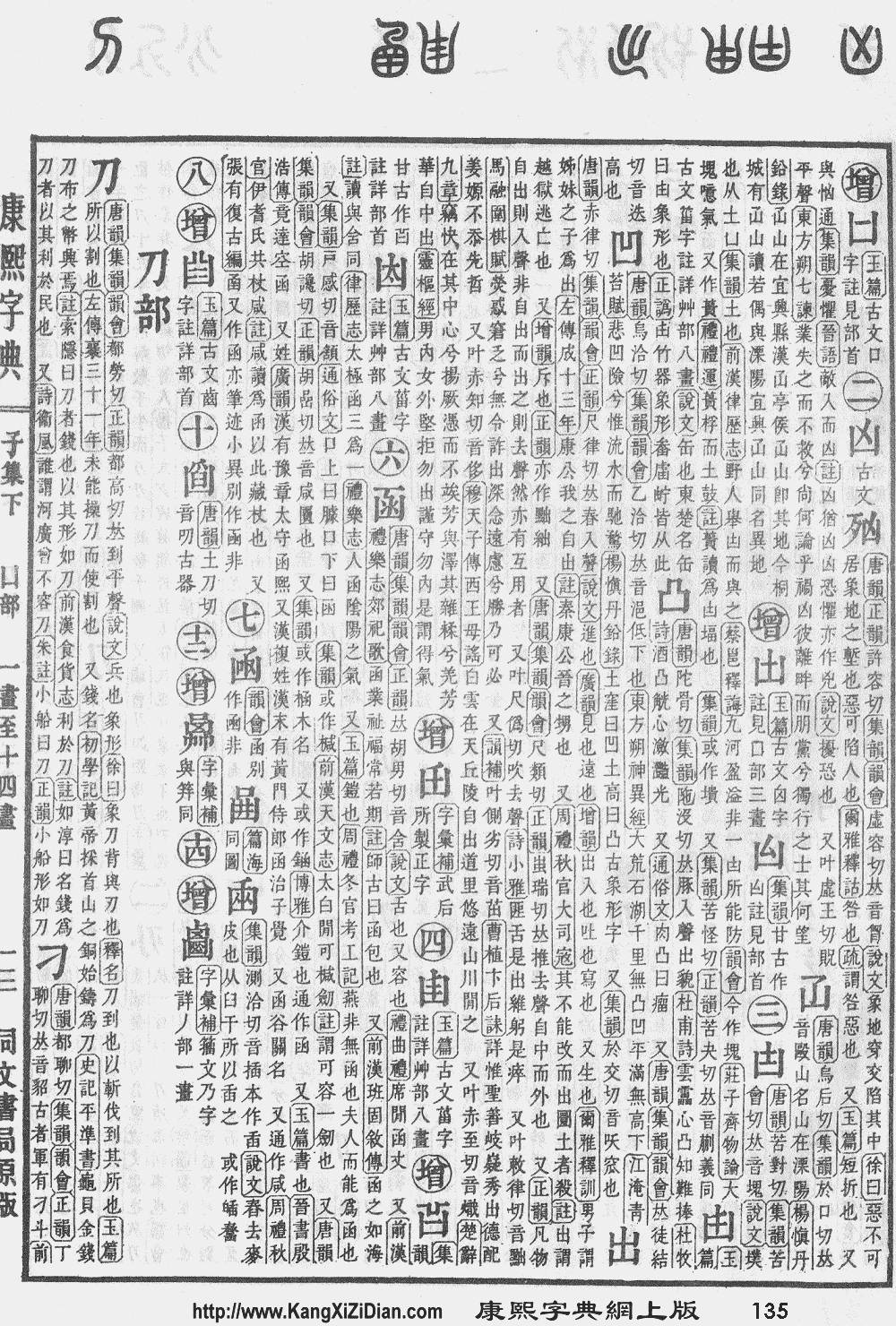
- KangXi: page 135, character 24
- Dai Kanwa Jiten: character 1845
- Dae Jaweon: page 304, character 4
- Hanyu Da Zidian: volume 1, page 319, character 12
- Unihan data for U+5200
Chinese
| simp. and trad. |
刀 | |
|---|---|---|
Glyph origin
| Historical forms of the character 刀 | |||||
|---|---|---|---|---|---|
| Shang | Western Zhou | Warring States | Shuowen Jiezi (compiled in Han) | Liushutong (compiled in Ming) | |
| Bronze inscriptions | Oracle bone script | Bronze inscriptions | Chu Slip and silk script | Small seal script | Transcribed ancient scripts |
 |
 |
 |
 |
 |
 |
| Characters in the same phonetic series (刀) (Zhengzhang, 2003) | |
|---|---|
| Old Chinese | |
| 刀 | *taːw |
| 忉 | *taːw |
| 鱽 | |
| 舠 | *taːw |
| 朷 | *taːw, *moːɡ |
| 叨 | *tuːw, *l̥ʰaːw |
| 倒 | *taːwʔ, *taːws |
| 到 | *taːws |
| 菿 | *taːws, *rtaːwɢ |
| 鞀 | *deːw |
| 鳭 | *rteːw, *teːw |
| 灱 | *hreːw |
| 菬 | *sdew, *tjewʔ |
| 超 | *tʰew |
| 怊 | *tʰew, *tʰjew |
| 欩 | *tʰew |
| 召 | *dews, *djews |
| 昭 | *tjew |
| 招 | *tjew |
| 鉊 | *tjew |
| 沼 | *tjewʔ |
| 照 | *tjews |
| 詔 | *tjews |
| 炤 | *tjews |
| 弨 | *tʰjew, *tʰjewʔ |
| 眧 | *tʰjewʔ |
| 韶 | *djew |
| 佋 | *djew, *djewʔ |
| 軺 | *djew, *lew |
| 玿 | *djew |
| 柖 | *djew |
| 紹 | *djewʔ |
| 袑 | *djewʔ |
| 綤 | *djewʔ |
| 邵 | *djews |
| 劭 | *djews |
| 卲 | *djews |
| 刁 | *teːw |
| 芀 | *teːw, *deːw |
| 貂 | *teːw |
| 蛁 | *teːw |
| 迢 | *deːw |
| 苕 | *deːw |
| 髫 | *deːw |
| 岧 | *deːw |
Pictogram (象形) : A knife
Pronunciation
Definitions
刀
Compounds
Derived terms from 刀
|
|
|
Descendants
Others:
Japanese
Kanji
刀
Readings
Compounds
Etymology 1
| Kanji in this term |
|---|
| 刀 |
| かたな Grade: 2 |
| kun’yomi |
Compound of 片 (kata, “one side”) + 刃 (na, “edge”).[1][2]
Pronunciation
Noun
刀 (hiragana かたな, rōmaji katana)
- (weaponry) a single-edged sword, such as a katana
- 1999 September 23, “鎧武者ゾンビ [Armored Musha Zombie]”, in Vol.5 (in Japanese), Konami:
- 怨念により蘇った武者。闇雲にふりまわすカタナに注意。
- Onnen ni yori yomigaetta musha. Yamikumo ni furimawasu katana ni chūi.
- A musha reanimated by deep hatred. Watch out when he brandishes his katana.
- 怨念により蘇った武者。闇雲にふりまわすカタナに注意。
-
- a small single-edged blade
Synonyms
- (small blade): 切れ物 (kiremono)
Coordinate terms
Related terms
- (sword, two-edged): 剣 (tsurugi)
Derived terms
Idioms
Idioms
- 刀折れ矢尽きる (katana ore ya tsukiru): “swords bent, out of arrows” → completely routed, a complete loss in battle
- 刀に懸けて (katana ni kakete): “[depending, swearing] on one's sword” → a metaphor for firm resolve to see something through
- 刀の錆び (katana no sabi): “sword rust” → a metaphor for killing someone or being killed, from the way that blood can cause the steel of a sword to rust; a derogatory term for someone who isn't even worth soiling a sword
Etymology 2
| Kanji in this term |
|---|
| 刀 |
| とう Grade: 2 |
| on’yomi |
From Middle Chinese 刀 (taw). Compare modern Mandarin 刀 (dāo).
Pronunciation
Noun
刀 (hiragana とう, rōmaji tō, historical hiragana たう)
- a sword, a katana
- a scalpel, such as that used by a surgeon
- a kind of bronze or copper money in ancient China, shaped a bit like a sword
Synonyms
Derived terms
Derived terms
References
Korean
Hanja
刀 • (do)
- This term needs a translation to English. Please help out and add a translation, then remove the text
{{rfdef}}.
Vietnamese
Han character
- This term needs a translation to English. Please help out and add a translation, then remove the text
{{rfdef}}.
References
This article is issued from
Wiktionary.
The text is licensed under Creative Commons - Attribution - Sharealike.
Additional terms may apply for the media files.