剣
| ||||||||
Translingual
| Traditional | 劍 |
|---|---|
| Shinjitai | 剣 |
| Simplified | 剑 |
Glyph origin
Unorthodox variant of 劍.
Han character
剣 (radical 18, 刀+8, 10 strokes, cangjie input 人人中弓 (OOLN) or X人人中弓 (XOOLN), composition ⿰㑒刂)
References
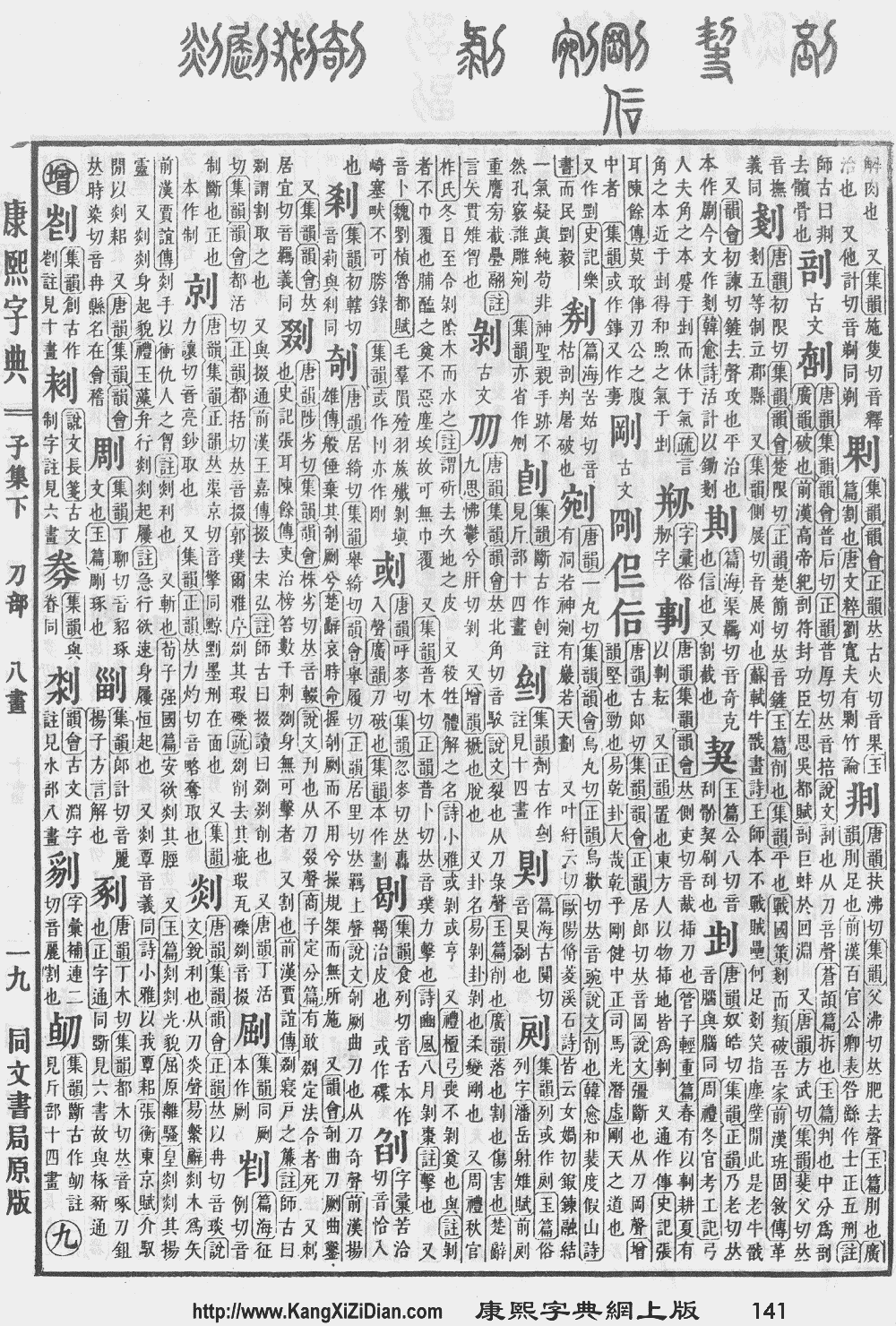
- KangXi: not present, would follow page 141, character 41
- Dai Kanwa Jiten: character 2076
- Dae Jaweon: page 321, character 13
- Hanyu Da Zidian: volume 1, page 345, character 4
- Unihan data for U+5263
Chinese
| For pronunciation and definitions of 剣 – see 劍 (“sword; dagger; sabre”). (This character, 剣, is a variant form of 劍.) |
Japanese
| 剣 | |
| 劍 |
.jpg)
Kanji
(common “Jōyō” kanji, shinjitai kanji, kyūjitai form 劍)
Readings
Etymology 1
| Kanji in this term |
|---|
| 剣 |
| けん Grade: S |
| on’yomi |
From Middle Chinese 劍 (kjæmH, “sword”). Compare modern Mandarin 劍/剑 (jiàn, “sword, dagger, saber”).
Pronunciation
Noun
剣 (hiragana けん, rōmaji ken, historical hiragana けむ)
Usage notes
This term refers to swords in general.[2]
Derived terms
- 聖剣 (せいけん, seiken): a holy or sanctified blade or sword
- 剣士 (けんし, kenshi): a swordsman or fencer
- 剣術 (けんじゅつ, kenjutsu): techniques of swordsmanship; kendo, the Japanese martial art of the sword
- 剣道 (けんどう, kendō): kendo, the Japanese martial art of the sword
- 木剣 (ぼっけん, bokken): a wooden sword
- 剣客 (けんかく, kenkaku): a swordsman or fencer
- 剣豪 (けんごう, kengō): a master fencer or great swordsman
Etymology 2
| Kanji in this term |
|---|
| 剣 |
| つるぎ Grade: S |
| kun’yomi |
Unknown. Also read as tsuruki in Old Japanese contexts.[2][1]
A surface analysis suggests that this might be a compound of tsuru (variously 釣る or 吊る, meaning “to hang, as at one's side”) + ki, but there is no clear etymon for the ki portion. One possibility would be 牙 (“fang”), read as kiba in modern Japanese but also appearing as ki in Old Japanese contexts. Such usage might parallel the combined tooth and blade meanings of the term ha, spelled more specifically as 歯 (“tooth”) and 刃 (“blade”), with these two senses listed as cognates in Japanese dictionaries.[2][1]
More tentative suggestions have been connections to Austronesian, such as Tagalog suligi (“dart; short spear”), but such possibilities seem only speculative at present.
Pronunciation
Noun
剣 (hiragana つるぎ, rōmaji tsurugi)
Usage notes
This term usually refers more specifically to double-edged swords, as opposed to the single-edged 刀 (katana).[2]
Synonyms
- 諸刃 (もろは, moroha): a double-edged sword
Etymology 3
| Kanji in this term |
|---|
| 剣 |
| まやか Grade: S |
Unknown. Japanese names often apply readings from other words to allude to different meanings.
Pronunciation
- IPA(key): [ma̠ja̠ka̠]
Proper noun
剣 (hiragana まやか, rōmaji Mayaka)
- A female given name.