骨
| ||||||||
Translingual
| Taiwanese stroke order | |||
|---|---|---|---|
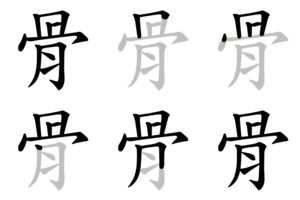 | |||
| Stroke order | |||
Simplified Chinese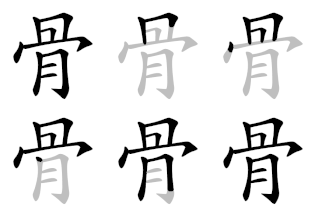 | |||
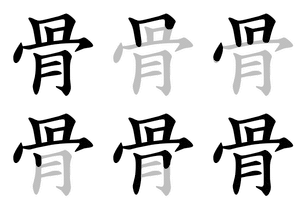
| Japanese stroke order | |||
|---|---|---|---|
 | |||
Alternative forms
The inner component on the top of the character is positioned to the left (◱) in simplified Chinese used in China, Singapore and Malaysia and also in Vietnamese Nom script (⻣) whereas the inner top component is positioned to the right (◲) in traditional Chinese (Taiwan, Hong Kong, Macau) as well as Japan and Korea which maintains the traditional form of the character (⾻).
Han character
骨 (radical 188, 骨+0, 10 strokes in traditional Chinese, 9 strokes in simplified Chinese, cangjie input 月月月 (BBB), four-corner 77227)
- Kangxi radical #188, ⾻.
Derived characters
References
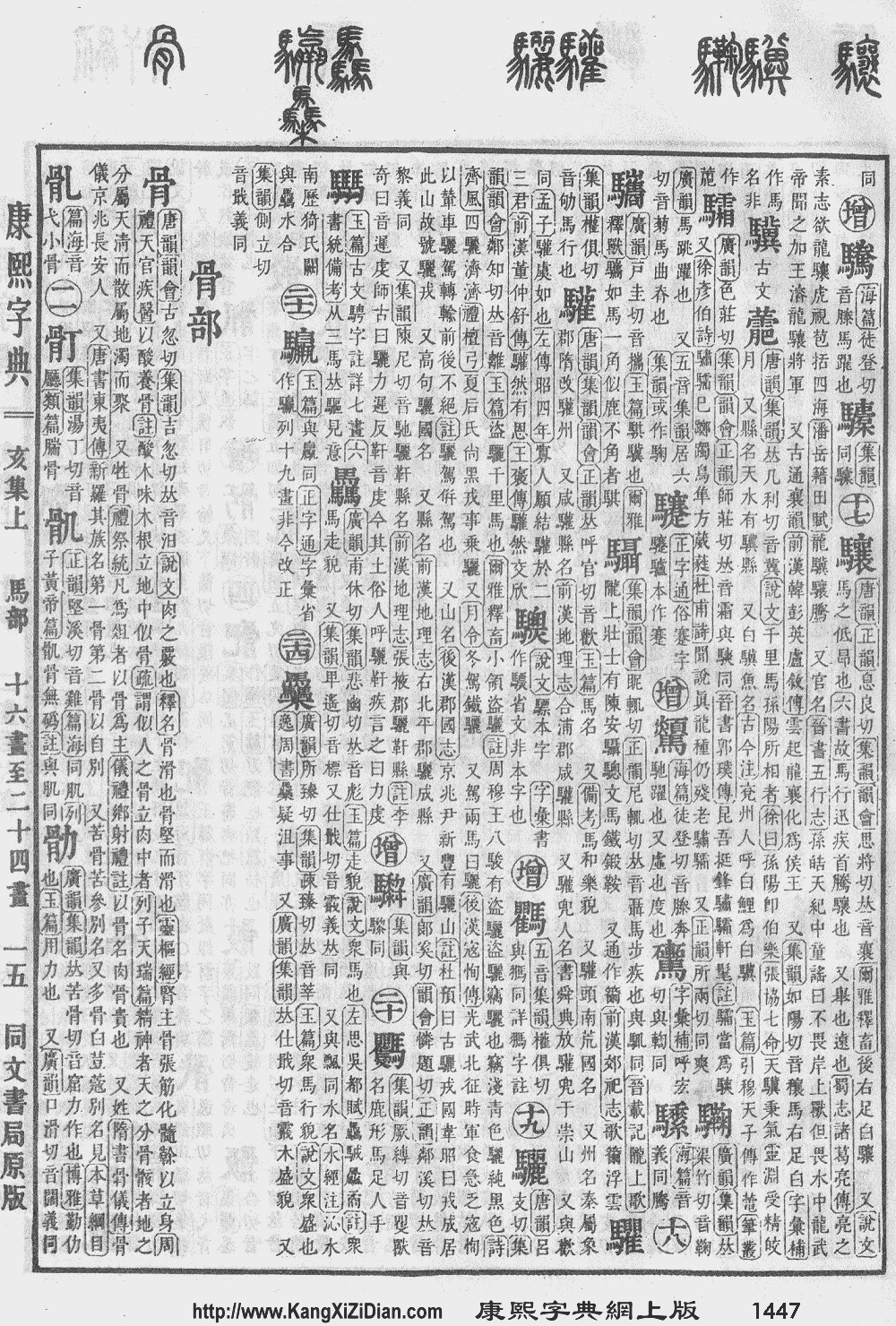
- KangXi: page 1447, character 25
- Dai Kanwa Jiten: character 45098
- Dae Jaweon: page 1973, character 7
- Hanyu Da Zidian: volume 7, page 4406, character 1
- Unihan data for U+9AA8
Chinese
| trad. | 骨 | |
|---|---|---|
| simp. # | 骨 | |
Glyph origin
| Historical forms of the character 骨 | |||||
|---|---|---|---|---|---|
| Shang | Warring States | Shuowen Jiezi (compiled in Han) | Liushutong (compiled in Ming) | ||
| Bronze inscriptions | Oracle bone script | Chu Slip and silk script | Qin slip script | Small seal script | Transcribed ancient scripts |
 |
 |
 |
 |
 |
 |
| Characters in the same phonetic series (骨) (Zhengzhang, 2003) | |
|---|---|
| Old Chinese | |
| 顝 | *kʰuːl, *kʰuːlʔ, *kʰuːd |
| 滑 | *ɡruːd, *kuːd, *ɡuːd |
| 猾 | *ɡruːd |
| 磆 | *ɡruːd |
| 螖 | *ɡruːd |
| 鶻 | *ɡruːd, *kuːd, *ɡuːd |
| 嗗 | *qruːd |
| 骨 | *kuːd |
| 縎 | *kuːd |
| 愲 | *kuːd |
| 蓇 | *kuːd |
| 尳 | *kuːd, *ɡuːd |
| 榾 | *kuːd |
| 搰 | *ɡuːd |
| 核 | *ɡuːd, *ɡrɯːɡ |
Pronunciation
Definitions
骨
Compounds
|
|
|
Japanese
Kanji
Readings
Compounds
- 鐙骨 (abumikotsu), 鐙骨 (tōkotsu): stapes
- 陰茎骨 (inkeikotsu): baculum
- 烏喙骨 (ukaikotsu): coracoid (bone)
- 烏口骨 (ukōkotsu): coracoid (bone)
- 烏骨鶏 (ukokkei): silky, silkie (breed of chicken)
- 烏啄骨 (utakukotsu): coracoid (bone)
- 顴骨 (kankotsu), 顴骨 (kenkotsu): cheekbone
- 砧骨 (kinutakotsu), 砧骨 (chinkotsu): incus
- 胸骨 (kyōkotsu): sternum, breastbone
- 頬骨 (kyōkotsu): cheekbone
- 距骨 (kyokotsu): anklebone
- 鯨骨 (geikotsu): whale bone
- 楔状骨 (ketsujōkotsu): cuneiform bone
- 肩甲骨 (kenkōkotsu), 肩胛骨 (kenkōkotsu): shoulder blade
- 骨格 (kokkaku): skeleton; framework; physique, build
- 骨角 (kokkaku): bone and horn; a protruding, horn-like bone
- 骨子 (kosshi): the gist, the main point
- 骨折 (kossetsu): a bone fracture, a broken bone
- 骨頂 (kotchō): (metaphorical) the height or pinnacle of something, such as "the height of folly"
- 骨董 (kottō): an antique; something ancient and anachronistic, something very old-fashioned
- 骨董品 (kottōhin): an antique; something ancient and anachronistic, something very old-fashioned
- 骨牌 (koppai): a certain kind of traditional Japanese playing card; a certain mah-jongg tile depicting animal bones
- 骨盤 (kotsuban): the pelvis
- 鎖骨 (sakotsu): clavicle
- 坐骨 (zakotsu): ischium
- 肢骨 (shikotsu): appendicular bone
- 指骨 (shikotsu): phalanx
- 趾骨 (shikotsu): phalanx (toe bone)
- 歯骨 (shikotsu): dentary bone
- 篩骨 (shikotsu): ethmoid bone
- 嘴骨 (shikotsu): rostral bone
- 膝蓋骨 (shitsugaikotsu): kneecap
- 尺骨 (shakkotsu): ulna
- 踵骨 (shōkotsu): heel bone
- 顳顬骨 (shōjukotsu): temporal bone
- 鋤骨 (jokotsu): vomer bone
- 脊椎骨 (sekitsuikotsu): vertebra
- 接骨 (sekkotsu): bonesetting
- 舌骨 (zetsukotsu): hyoid bone
- 仙骨 (senkotsu): sacrum
- 側頭骨 (sokutōkotsu): temporal bone
- 大腿骨 (daitaikotsu): femur
- 恥骨 (chikotsu): pubis
- 蝶形骨 (chōkeikotsu): sphenoid bone
- 椎骨 (tsuikotsu): vertebra
- 槌骨 (tsuchikotsu), 槌骨 (tsuikotsu): malleus
- 蹄骨 (teikotsu): coffin bone
- 橈骨 (tōkotsu): radius
- 頭骨 (tōkotsu): skull
- 頭蓋骨 (tōgaikotsu), 頭蓋骨 (zugaikotsu): cranium
- 腓骨 (hikotsu): fibula
- 尾骨 (bikotsu): coccyx, tailbone
- 尾骶骨 (biteikotsu): coccyx, tailbone
- 尾閭骨 (biryokotsu): coccyx, tailbone
- 涙骨 (ruikotsu): lacrimal bone
- 肋骨 (rokkotsu): rib
References
|
- Source: EDICT and KANJIDIC files licensed by the Electronic Dictionaries Research Group.
Etymology 1
| Kanji in this term |
|---|
| 骨 |
| ほね Grade: 6 |
| kun’yomi |
/pone/ → /ɸone/ → /hone/
From Old Japanese. Possibly cognate with Korean 뼈 (ppyeo, “bone”).
Pronunciation
Noun
Etymology 2
| Kanji in this term |
|---|
| 骨 |
| かわら Grade: 6 |
| kun’yomi |
/kapara/ → /kaɸara/ → /kawara/
Probably from Sanskrit कपालः (kapāla, “cup, bowl, skull”). Cognate with 瓦 (kawara, “tile, particularly for roofing or flooring”).[2]
Pronunciation
Alternative forms
Noun
Etymology 3
| Kanji in this term |
|---|
| 骨 |
| こつ Grade: 6 |
| on’yomi |
From Middle Chinese 骨 (kwot, “bone”).
Pronunciation
Noun
Alternative forms
- (knack, trick): コツ (kotsu)
References
Korean
Hanja
骨 • (gol) (hangeul 골, revised gol, McCune–Reischauer kol, Yale kol)
- This term needs a translation to English. Please help out and add a translation, then remove the text
{{rfdef}}.
Okinawan
Kanji
Noun
Vietnamese
Han character
- This term needs a translation to English. Please help out and add a translation, then remove the text
{{rfdef}}.