衛
| ||||||||
Translingual
Han character
衛 (radical 144, 行+9 in Chinese, 行+10 in Japanese, 15 strokes in Chinese, 16 strokes in Japanese, cangjie input 竹人木手弓 (HODQN), four-corner 21227, composition ⿴行韋)
References
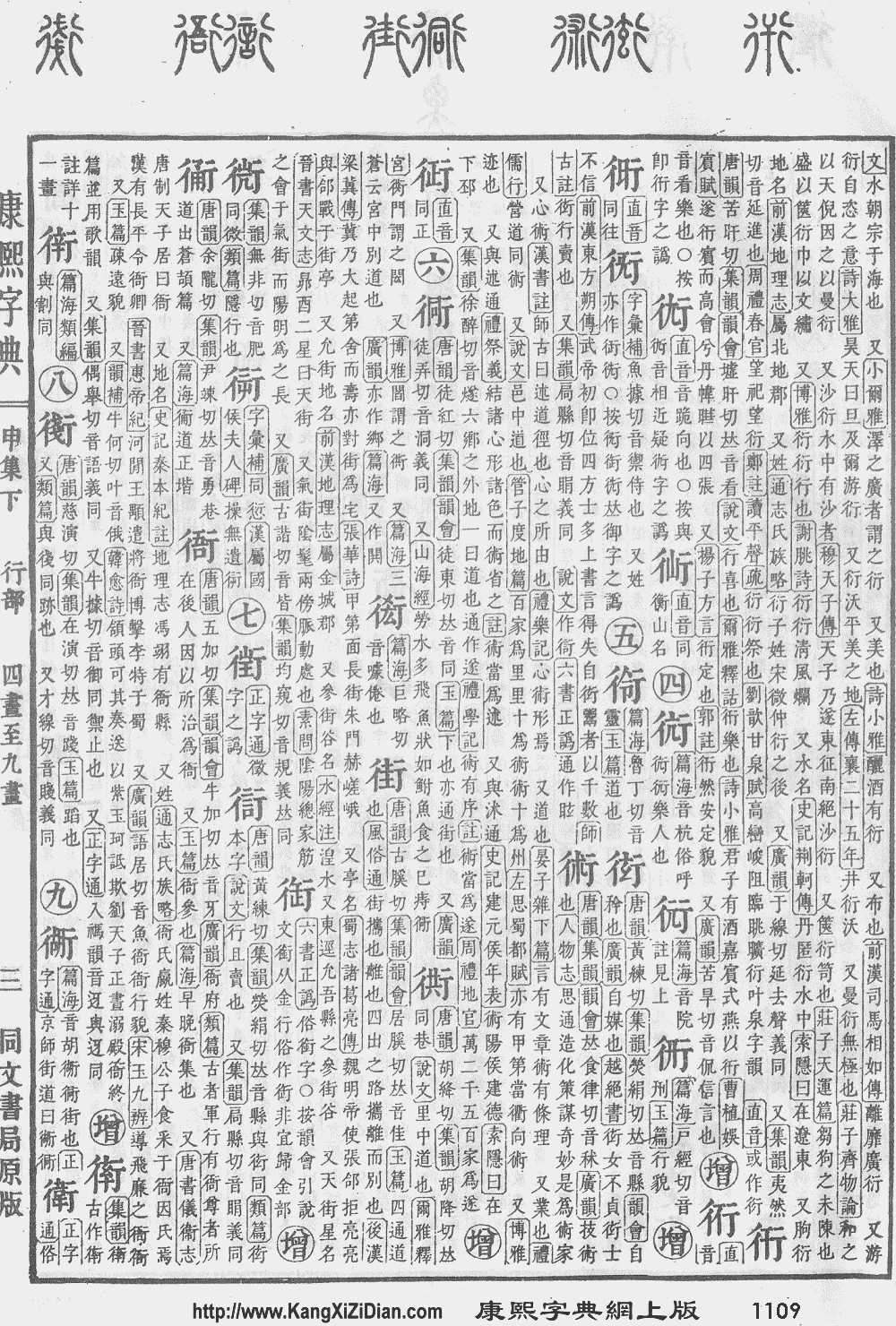
- KangXi: page 1109, character 29
- Dai Kanwa Jiten: character 34073
- Dae Jaweon: page 1574, character 11
- Hanyu Da Zidian: volume 2, page 845, character 4
- Unihan data for U+885B
Chinese
| trad. | 衛/衞 | |
|---|---|---|
| simp. | 卫 | |
| alt. forms | 䘙 𠀄 | |
Glyph origin
Phono-semantic compound (形聲, OC *ɢʷads) : semantic 行 + phonetic 韋 (OC *ɢʷɯl).
Pronunciation
Definitions
衛
Compounds
Derived terms from 衛
|
|
|
Japanese
| 衛 | |
| 衞 |
Kanji
衛
(grade 5 “Kyōiku” kanji, shinjitai kanji, kyūjitai form 衞)
Readings
Proper noun
衛 (hiragana まもる, rōmaji Mamoru)
- A male given name
Korean
Hanja
衛 • (wi) (hangeul 위, revised wi, McCune–Reischauer wi, Yale wi)
- This term needs a translation to English. Please help out and add a translation, then remove the text
{{rfdef}}.
Vietnamese
Han character
衛 (vệ)
- This term needs a translation to English. Please help out and add a translation, then remove the text
{{rfdef}}.
This article is issued from
Wiktionary.
The text is licensed under Creative Commons - Attribution - Sharealike.
Additional terms may apply for the media files.