荒
See also: 㐬
| ||||||||
Translingual
Han character
荒 (radical 140 艸+6, 9 strokes, cangjie input 廿卜女山 (TYVU), four-corner 44211, composition ⿱艹巟)
Derived characters
References
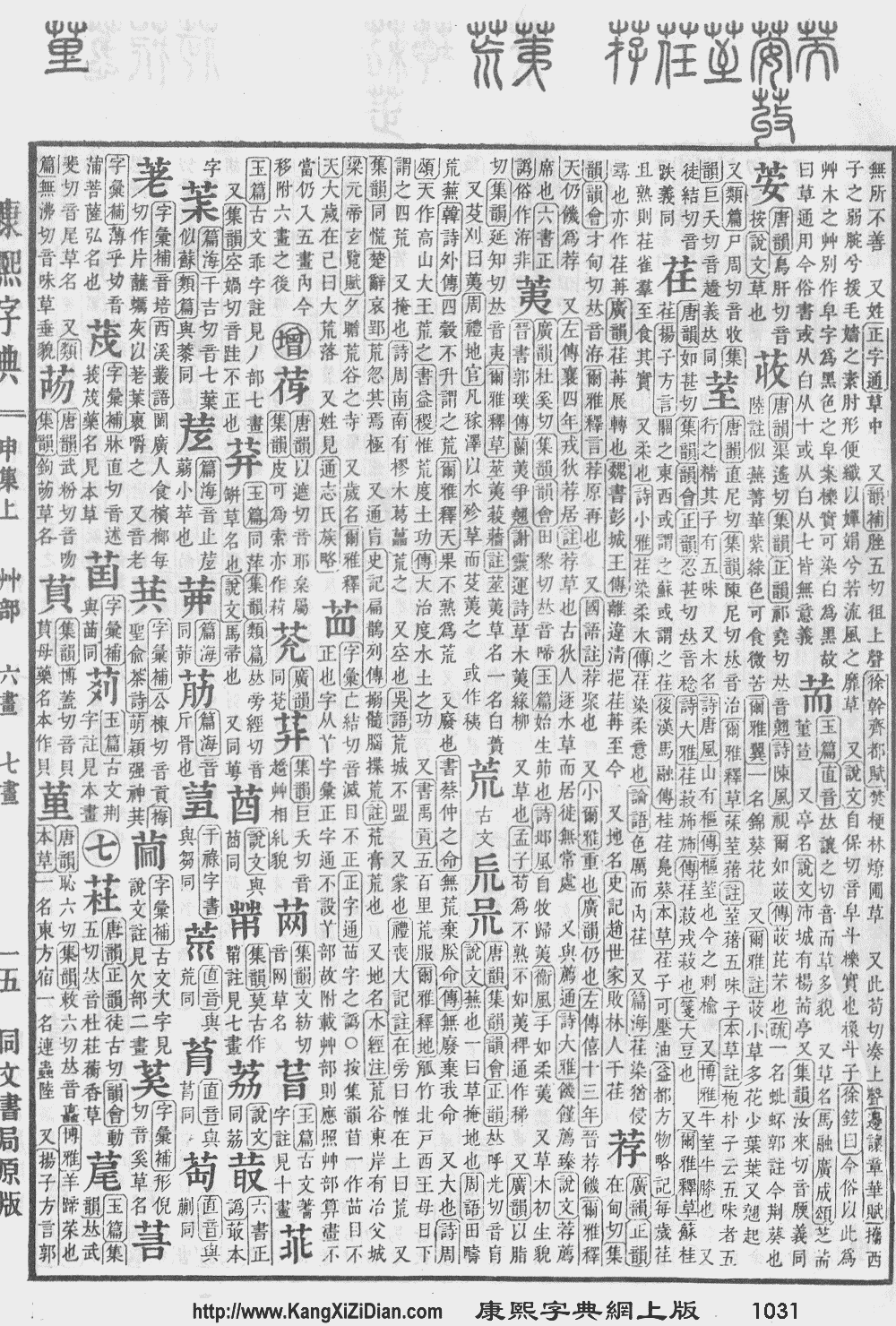
- KangXi: page 1031, character 8
- Dai Kanwa Jiten: character 30953
- Dae Jaweon: page 1490, character 8
- Hanyu Da Zidian: volume 5, page 3209, character 2
- Unihan data for U+8352
Chinese
| simp. and trad. |
荒 | |
|---|---|---|
Glyph origin
| Historical forms of the character 荒 | |
|---|---|
| Warring States | Shuowen Jiezi (compiled in Han) |
| Bronze inscriptions | Small seal script |
 |
 |
| Characters in the same phonetic series (亡) (Zhengzhang, 2003) | |
|---|---|
| Old Chinese | |
| 忙 | *maːŋ |
| 芒 | *maːŋ, *maŋ |
| 茫 | *maːŋ |
| 恾 | *maːŋ |
| 吂 | *maːŋ, *maːŋs |
| 汒 | *maːŋ, *maŋs |
| 朚 | *maːŋ, *hmaːŋ, *maŋ, *mraːŋ, *mraːŋs |
| 邙 | *maːŋ, *maŋ |
| 杗 | *maːŋ, *maŋ |
| 荒 | *hmaːŋ, *hmaːŋs |
| 肓 | *hmaːŋ |
| 衁 | *hmaːŋ |
| 巟 | *hmaːŋ |
| 詤 | *hmaːŋ, *hmaːŋʔ, *hmaŋʔ |
| 慌 | *hmaːŋ, *hmaːŋʔ |
| 謊 | *hmaːŋʔ |
| 喪 | *smaːŋs, *smaːŋ |
| 亡 | *maŋ |
| 望 | *maŋ, *maŋs |
| 莣 | *maŋ |
| 朢 | *maŋ, *maŋs |
| 鋩 | *maŋ |
| 硭 | *maŋ |
| 忘 | *maŋ, *maŋs |
| 网 | *mlaŋʔ |
| 罔 | *mlaŋʔ |
| 蛧 | *maŋʔ |
| 網 | *mlaŋʔ |
| 輞 | *maŋʔ |
| 棢 | *maŋʔ |
| 惘 | *maŋʔ |
| 菵 | *maŋʔ |
| 誷 | *maŋʔ |
| 魍 | *maŋʔ |
| 妄 | *maŋs |
| 盲 | *mraːŋ |
| 蝱 | *mraːŋ |
| 虻 | *mraːŋ |
| 氓 | *mraːŋ |
| 甿 | *mraːŋ |
Phono-semantic compound (形聲, OC *hmaːŋ, *hmaːŋs) : semantic 艹 (“grass, plant”) + phonetic 巟 (OC *hmaːŋ). Note: The middle part could be found as 亾 instead of 亡.
Etymology
From Proto-Sino-Tibetan *ma (“not”). Cognate with 亡 (OC *maŋ, “to disappear”). The voiceless initial is possibly from the devoicing effect of an early (i.e. Proto-Sino-Tibetan) causative prefix *s- on 亡 (i.e. PST *s-maŋ > *hmaŋ > Middle Chinese hwɑŋ) which was subsequently lost.
Pronunciation
Definitions
荒
Compounds
Derived terms from 荒
|
|
|
Japanese
Kanji
荒
Readings
- Goon: こう (kō, Jōyō)←くわう (kwau, historical)
- Kan’on: こう (kō, Jōyō)←くわう (kwau, historical)
- Kun: あれる (areru, 荒れる, Jōyō); あらい (arai, 荒い, Jōyō); あらす (arasu, 荒らす, Jōyō); あばら (abara, 荒); あばら (abara, 荒ら); すさむ (susamu, 荒む)
- Nanori: ら (ra)
Korean
Hanja
荒 • (hwang) (hangeul 황)
- This term needs a translation to English. Please help out and add a translation, then remove the text
{{rfdef}}.
Vietnamese
Han character
荒 (hoang, hoăng)
- This term needs a translation to English. Please help out and add a translation, then remove the text
{{rfdef}}.
This article is issued from
Wiktionary.
The text is licensed under Creative Commons - Attribution - Sharealike.
Additional terms may apply for the media files.