㐬
| ||||||||
Translingual
Han character
㐬 (radical 8, 亠+5, 7 strokes, cangjie input 卜戈竹山 (YIHU), composition ⿱𠫓川)
Derived characters
References
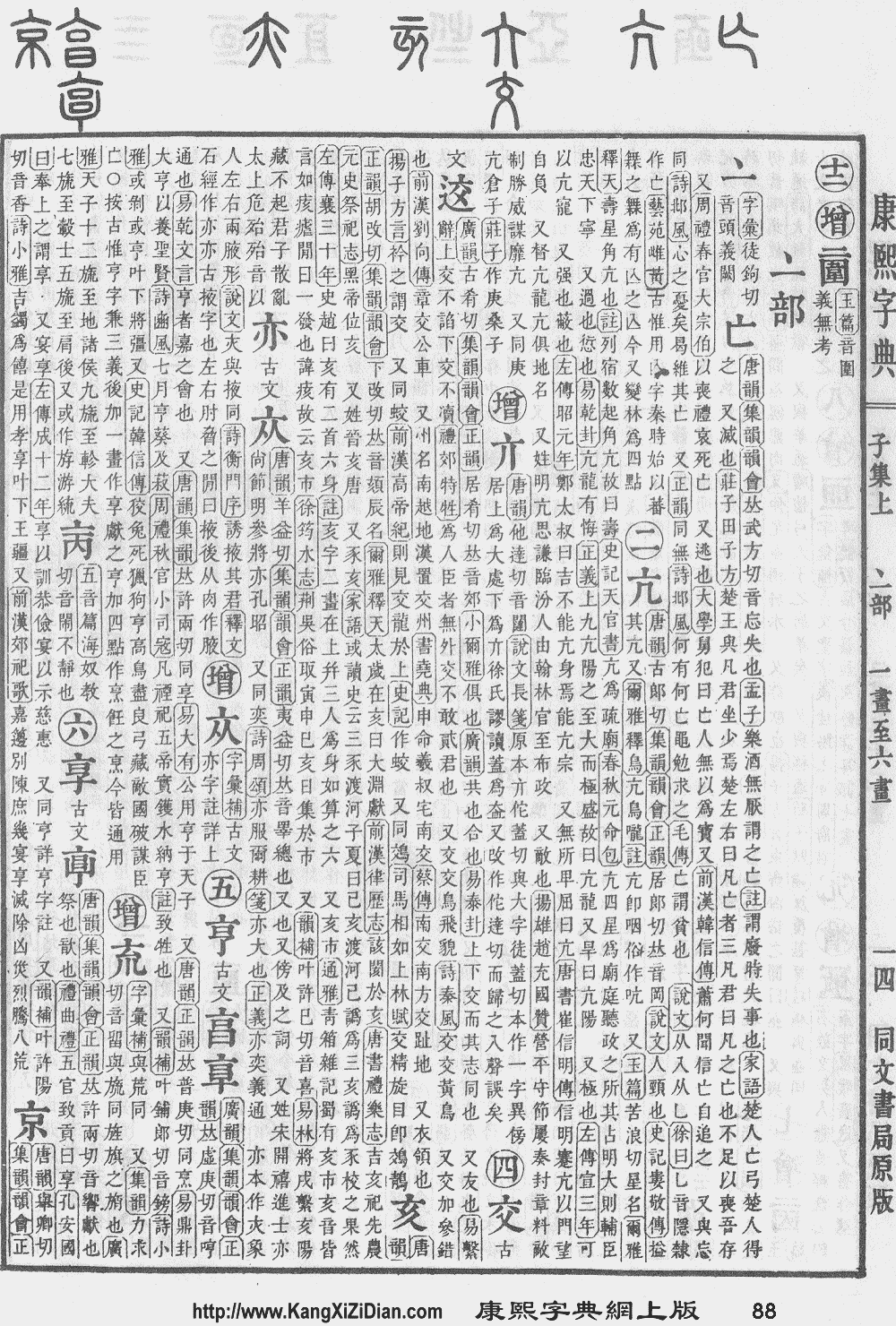
- KangXi: page 88, character 15
- Hanyu Da Zidian: volume 1, page 284, character 4
- Unihan data for U+342C
Chinese
Glyph origin
Pictogram (象形) : a newborn baby, shown upside down. The upper portion is an inverted 子. The three lower lines represent amniotic fluid or hair, the latter interpretation thought almost certainly incorrect by Henshall.[1] The interpretation as fluid is supported by the comparison of 旒 and 游, originally variants of one another. (Note that the oracle bone form of 子 also depicted hair.)(Can this(+) etymology be sourced?)
Etymology 1
| For pronunciation and definitions of 㐬 – see 荒 (“wasteland, desert; uncultivated”). (This character, 㐬, is a variant form of 荒.) |
Etymology 2
| For pronunciation and definitions of 㐬 – see 不 (“not; no; etc.”). (This character, 㐬, is a variant form of 不.) |
Etymology 3
| For pronunciation and definitions of 㐬 – see 巟 (“a watery waste; to reach”). (This character, 㐬, is a variant form of 巟.) |
Etymology 4
| For pronunciation and definitions of 㐬 – see 旒 (“fringes of pearls on crowns”). (This character, 㐬, is a variant form of 旒.) |
Etymology 5
| For pronunciation and definitions of 㐬 – see 𠫓 (“to dash forward; to stick out; etc.”). (This character, 㐬, is a variant form of 𠫓.) |
Korean
Hanja
㐬 • (ryu)
- This term needs a translation to English. Please help out and add a translation, then remove the text
{{rfdef}}.
- ↑ Henshall, Kenneth G. (1998). A Guide to Remembering Japanese Characters (2nd ed.). Singapore: Tuttle Publishing. p. 124. →ISBN
This article is issued from
Wiktionary.
The text is licensed under Creative Commons - Attribution - Sharealike.
Additional terms may apply for the media files.