desert
English
Etymology 1
From Middle English desert, deseert, from Old French deserte, from deservir (“to deserve”). This in turn is from the Vulgar Latin deservire (“to gain or merit by giving service”).
Pronunciation
Noun
desert (plural deserts)
- (usually in the plural) That which is deserved or merited; a just punishment or reward
- 1600, John Dowland, Flow My Tears
- From the highest spire of contentment / my fortune is thrown; / and fear and grief and pain for my deserts / are my hopes, since hope is gone.
- 1609, William Shakespeare, Sonnet 17:
- Who will believe my verse in time to come,
- If it were fill'd with your most high deserts?
- 1897, Bram Stoker, Dracula Chapter 21
- "Nonsense, Mina. It is a shame to me to hear such a word. I would not hear it of you. And I shall not hear it from you. May God judge me by my deserts, and punish me with more bitter suffering than even this hour, if by any act or will of mine anything ever come between us!"
- A. Hamilton
- His reputation falls far below his desert.
- 1971 John Rawls, A Theory of Justice
- "It is true that certain common sense precepts of justice, particularly those which concern the protection of liberties and rights, or which express the claims of desert, seem to contradict this contention."
- 1600, John Dowland, Flow My Tears
Derived terms
Translations
Etymology 2
Borrowed from French désert or Old French desert, from Latin dēsertum, past participle of dēserō (“to abandon”).
Pronunciation
Noun
desert (countable and uncountable, plural deserts)
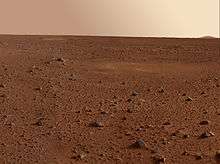
- A barren area of land or desolate terrain, especially one with little water or vegetation; a wasteland.
- Alexander Pope (1688-1744)
- Not thus the land appear'd in ages past, / A dreary desert and a gloomy waste.
- 1892, James Yoxall, chapter 5, in The Lonely Pyramid:
- The desert storm was riding in its strength; the travellers lay beneath the mastery of the fell simoom. Whirling wreaths and columns of burning wind, rushed around and over them.
- Alexander Pope (1688-1744)
- (figuratively) Any barren place or situation.
- 1858, William Howitt, Land, Labour, and Gold; Or, Two Years in Victoria (page 54)
- He declared that the country was an intellectual desert; that he was famishing for spiritual aliment, and for discourse on matters beyond mere nuggets, prospectings, and the price of gold.
- 2006, Philip N. Cooke, Creative Industries in Wales: Potential and Pitfalls (page 34)
- So the question that is commonly asked is, why put a media incubator in a media desert and have it managed by a civil servant?
- 1858, William Howitt, Land, Labour, and Gold; Or, Two Years in Victoria (page 54)
Translations
|
|


Adjective
desert (not comparable)
- Abandoned, deserted, or uninhabited; usually of a place.
- They were marooned on a desert island in the Pacific.
- Bible, Luke ix. 10
- He […] went aside privately into a desert place.
- Gray
- Full many a flower is born to blush unseen, / And waste its sweetness on the desert air.
Derived terms
- desert boot
- desert island
- desert lynx
- desert pavement
- desert pea
- desert rat
- desert soil
- desert varnish
- desertification
- food desert
- preach in the desert
Translations
Etymology 3
Borrowed from French déserter, from Late Latin desertare, from Latin desertus, from desero (“abandon”).
Pronunciation
- enPR: dĭzû(r)t', IPA(key): /dɪˈzɜː(ɹ)t/
Audio (US), verb (file)
Verb
desert (third-person singular simple present deserts, present participle deserting, simple past and past participle deserted)
- To leave (anything that depends on one's presence to survive, exist, or succeed), especially when contrary to a promise or obligation; to abandon; to forsake.
- You can't just drive off and desert me here, in the middle of nowhere.
- To leave one's duty or post, especially to leave a military or naval unit without permission.
- Anyone found deserting will be shot.
Derived terms
Translations
|
|
|
|
Anagrams
Catalan
Etymology
First attested 14th century[1]. From Latin dēsertum, possibly a semi-learned term.
Noun
desert m (plural deserts)
- desert (desolate terrain)
References
Friulian
Alternative forms
Etymology
From Latin dēsertum (in this form possibly a semi-learned term; cf. the variant form).
Noun
desert m (plural deserts)
Middle French
Etymology
From Old French desert.
Noun
desert m (plural desers)
- desert (desolate terrain)
Descendants
- French: désert
Old French
Etymology
Noun
desert m (oblique plural deserz or desertz, nominative singular deserz or desertz, nominative plural desert)
- desert (desolate terrain)
Descendants
Serbo-Croatian
Etymology
Pronunciation
- IPA(key): /děsert/
- Hyphenation: de‧sert
Noun
dèsert m (Cyrillic spelling дѐсерт)
Declension
Antonyms
References
- “desert” in Hrvatski jezični portal