睪
See also: 睾
| ||||||||
Translingual
Han character
睪 (radical 109, 目+8, 13 strokes, cangjie input 田中土廿十 (WLGTJ), four-corner 26401, composition ⿱罒幸)
Derived characters
References
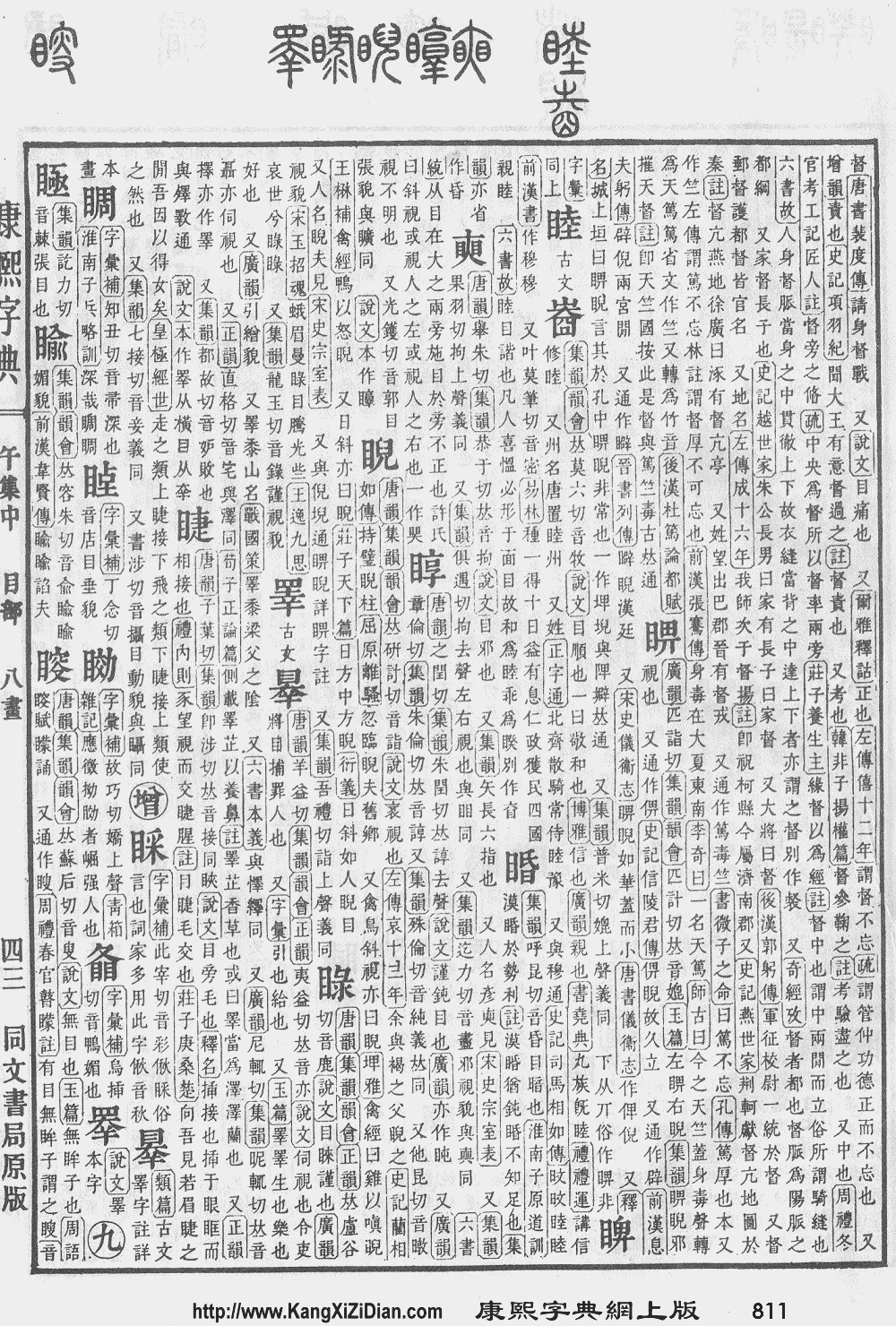
- KangXi: page 811, character 10
- Dai Kanwa Jiten: character 23466
- Dae Jaweon: page 1226, character 9
- Hanyu Da Zidian: volume 4, page 2918, character 6
- Unihan data for U+776A
Chinese
Glyph origin
| Characters in the same phonetic series (睪) (Zhengzhang, 2003) | |
|---|---|
| Old Chinese | |
| 斁 | *ʔl'aːɡs, *l'aːɡs, *laːɡ |
| 籜 | *l̥ʰaːɡ |
| 蘀 | *l̥ʰaːɡ |
| 鐸 | *l'aːɡ |
| 凙 | *l'aːɡ |
| 襗 | *l'aːɡ, *rlaːɡ, *laːɡ |
| 擇 | *rlaːɡ |
| 澤 | *rlaːɡ |
| 鸅 | *rlaːɡ |
| 蠌 | *rlaːɡ |
| 檡 | *rlaːɡ, *hljaɡ |
| 釋 | *hljaɡ |
| 繹 | *laːɡ |
| 睪 | *neb, *laːɡ, *kuː |
| 譯 | *laːɡ |
| 嶧 | *laːɡ |
| 懌 | *laːɡ |
| 驛 | *laːɡ |
| 醳 | *laːɡ |
| 圛 | *laːɡ |
| 墿 | *laːɡ |
| 燡 | *laːɡ |
Etymology 1
| trad. | 睪 | |
|---|---|---|
| simp. | 𠬤 | |
| alt. forms | 𥇝 𥇡 𦎝 | |
Pronunciation
Definitions
睪
- to spy on
Etymology 2
| trad. | 睪/睾 | |
|---|---|---|
| simp. | 睾 | |
Pronunciation
Definitions
睪
Usage notes
In Taiwan, 睪 is the preferred form, while 睾 is considered to be a variant form of 睪. In mainland China and Hong Kong, 睾 is the preferred form.
Compounds
Etymology 3
| For pronunciation and definitions of 睪 – see 澤 (“Eupatorium”). (This character, 睪, is an ancient form of 澤.) |
Etymology 4
| For pronunciation and definitions of 睪 – see 皋 (“the high land along a river; marsh, pool; etc.”). (This character, 睪, is an ancient form of 皋.) |
Japanese
Kanji
睪
- This term needs a translation to English. Please help out and add a translation, then remove the text
{{rfdef}}.
Readings
Korean
Hanja
睪 • (go) (hangeul 고, revised go, McCune–Reischauer ko, Yale ko)
- This term needs a translation to English. Please help out and add a translation, then remove the text
{{rfdef}}.
Vietnamese
Han character
- This term needs a translation to English. Please help out and add a translation, then remove the text
{{rfdef}}.
This article is issued from
Wiktionary.
The text is licensed under Creative Commons - Attribution - Sharealike.
Additional terms may apply for the media files.