益
| ||||||||
| ||||||||
| ||||||||
Translingual
Han character
益 (radical 108, 皿+5, 10 strokes, cangjie input 廿金月廿 (TCBT), four-corner 80107, composition ⿳䒑八皿)
Derived characters
References
- KangXi: page 793, character 18
- Dai Kanwa Jiten: character 22972
- Dae Jaweon: page 1208, character 18
- Hanyu Da Zidian: volume 4, page 2560, character 6
- Unihan data for U+76CA
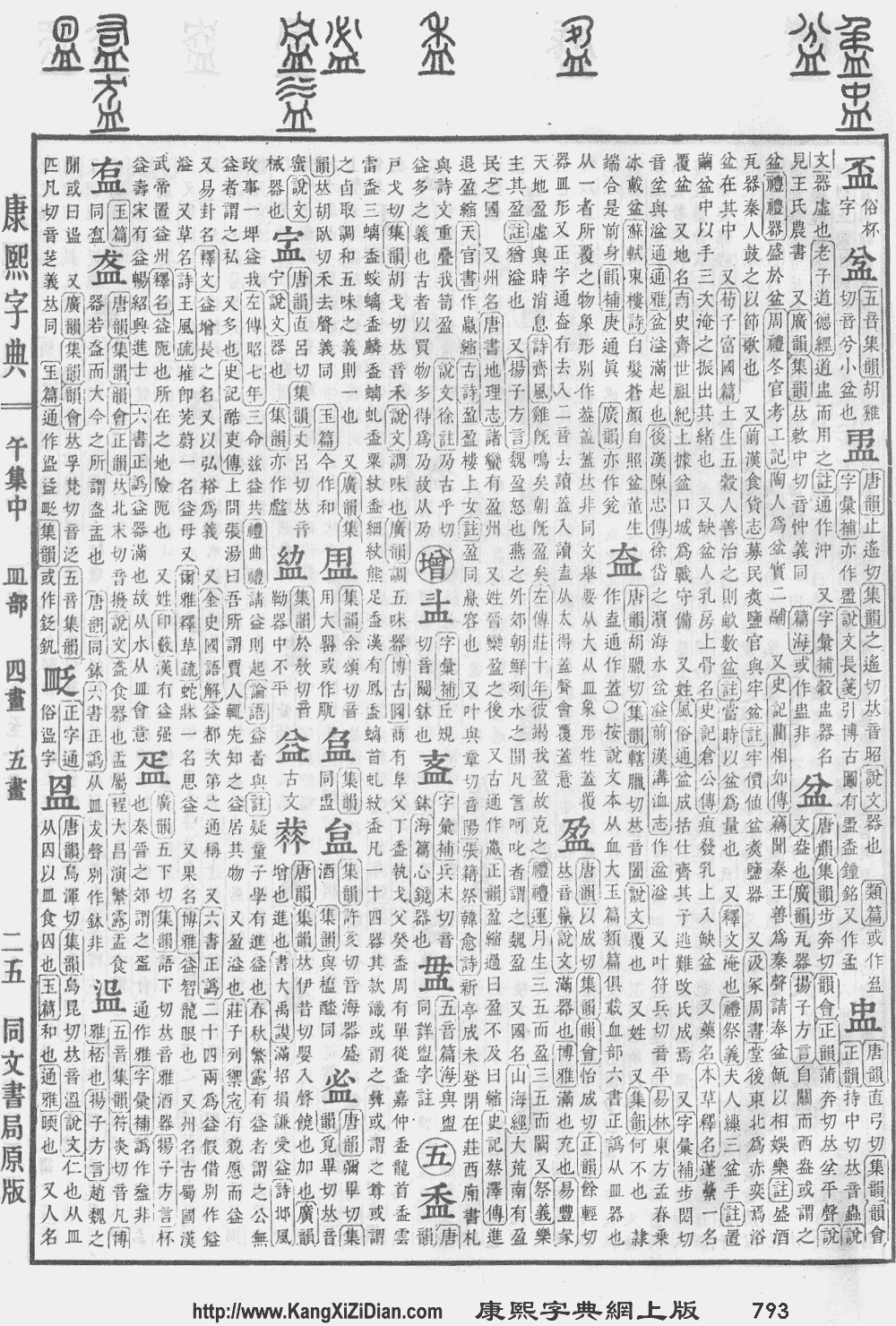
Chinese
| simp. and trad. |
益 | |
|---|---|---|
Glyph origin
| Characters in the same phonetic series (益) (Zhengzhang, 2003) | |
|---|---|
| Old Chinese | |
| 隘 | *qreːɡs |
| 賹 | *qreːɡs |
| 搤 | *qreːɡs, *qreːɡ |
| 縊 | *qleːɡs, *qleɡs |
| 螠 | *qleɡs |
| 謚 | *ɢliɡs, *qleɡ |
| 諡 | *ɢliɡs |
| 蠲 | *kʷliːŋ |
| 溢 | *liɡ |
| 鎰 | *liɡ |
| 齸 | *lig, *qleg |
| 貖 | *qreːɡ |
| 益 | *qleɡ |
| 嗌 | *qleɡ |
| 膉 | *qleɡ |
| 鷁 | *ŋɡleːɡ |
| 艗 | *ŋɡleːɡ |
Pronunciation
Definitions
益
Compounds
Derived terms from 益
|
|
|
Japanese
Kanji
益
Readings
Etymology 1
| Kanji in this term |
|---|
| 益 |
| えき Grade: 5 |
| on’yomi |
From Middle Chinese 益 (ʔjiek, “increase”). The kan'on reading, so likely a later borrowing.
Pronunciation
Noun
Derived terms
- 益獣 (ekijū, “beneficial animal”)
- 益虫 (ekichū, “beneficial insect”)
- 益鳥 (ekichō, “beneficial bird”)
Etymology 2
| Kanji in this term |
|---|
| 益 |
| やく Grade: 5 |
| on’yomi |
From Middle Chinese 益 (ʔjiek, “increase”). The goon reading, so likely the initial borrowing.
Pronunciation
Noun
Etymology 3
| Kanji in this term |
|---|
| 益 |
| ますます Grade: 5 |
| kun’yomi |
Reduplication of 増す (masu).[1]
Pronunciation
Alternative forms
- 益益, 増す増す
Noun
益 (hiragana ますます, rōmaji masumasu)
- even more
References
Korean
Hanja
益 • (ik) (hangeul 익, revised ik, McCune–Reischauer ik, Yale ik)
Vietnamese
Han character
- This term needs a translation to English. Please help out and add a translation, then remove the text
{{rfdef}}.
This article is issued from
Wiktionary.
The text is licensed under Creative Commons - Attribution - Sharealike.
Additional terms may apply for the media files.