璽
See also: 玺
| ||||||||
Translingual
Han character
璽 (radical 96 玉+14, 19 strokes, cangjie input 一月一土戈 (MBMGI), four-corner 10103, composition ⿱爾玉)
References
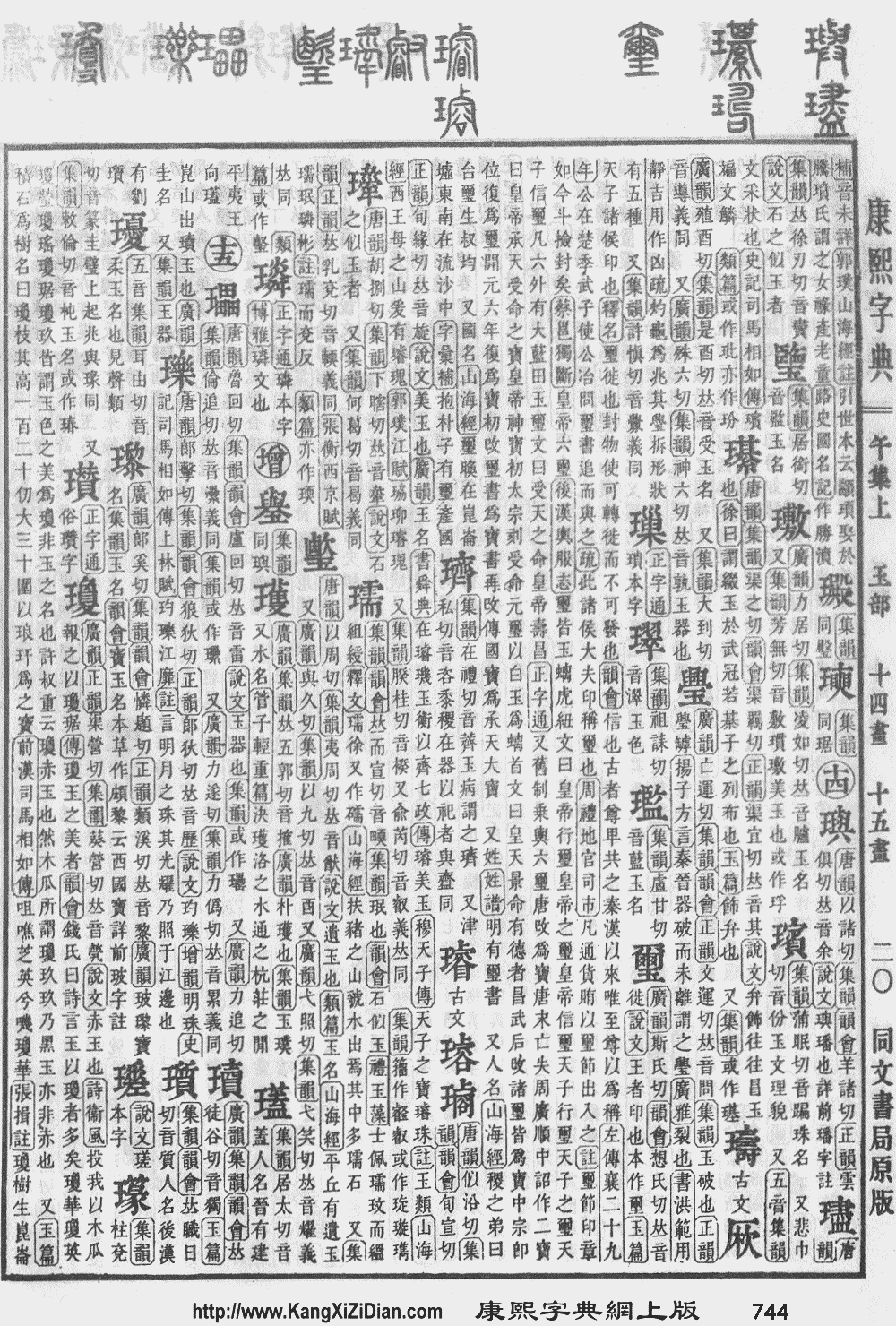
- KangXi: page 744, character 15
- Dai Kanwa Jiten: character 21309
- Dae Jaweon: page 1153, character 2
- Hanyu Da Zidian: volume 2, page 1144, character 5
- Unihan data for U+74BD
Chinese
| trad. | 璽 | |
|---|---|---|
| simp. | 玺 | |
| alt. forms | 鉨 | |
Glyph origin
| Characters in the same phonetic series (爾) (Zhengzhang, 2003) | |
|---|---|
| Old Chinese | |
| 嬭 | *rneːlʔ, *niːlʔ |
| 禰 | *niːlʔ |
| 镾 | *niːlʔ, *mnel |
| 薾 | *niːlʔ |
| 檷 | *niːlʔ |
| 鑈 | *niːlʔ, *neːb |
| 瀰 | *niːlʔ, *mnel, *mnelʔ |
| 獼 | *mnel |
| 瓕 | *mnel |
| 彌 | *mnel |
| 鸍 | *mnel, *hnjel |
| 擟 | *mnel |
| 濔 | *mnelʔ |
| 壐 | *smlelʔ |
| 璽 | *smlelʔ |
| 爾 | *njelʔ |
| 邇 | *njelʔ |
| 獮 | *smlenʔ |
| 籋 | *neb, *neːb |
Pronunciation
Definitions
璽
Compounds
Japanese
Kanji
璽
Readings
Etymology 1
From Middle Chinese 璽 (MC siᴇX). Compare modern Mandarin 璽/玺.
The reading changed from an initial borrowing of /shi/, [ɕi] to the current reading of /ji/, [d͡ʑi].
Pronunciation
Noun
- a seal or sigil carved into a jewel
- more specifically, such a seal belonging to the Chinese emperor of the Qin Dynasty or later, or belonging to the Japanese emperor
- 八尺瓊曲玉 (Yasakani no Magatama), the jewel that is one of the three sacred treasures comprising the Imperial Regalia of Japan
Synonyms
Derived terms
Derived terms
- 璽綬 (じじゅ, jiju): the imperial seal and the braided cord attached to it
- 璽書 (じしょ, jisho): a document that has been stamped with the imperial seal
- 璽符 (じふ, jifu): the imperial seal
- 印璽 (いんじ, inji): common term for the emperor's personal seal or sigil and the national seal or sigil used for state business
- 玉璽 (ぎょくじ, gyokuji): the emperor's personal seal or sigil
- 御璽 (ぎょじ, gyoji): the emperor's personal seal or sigil
- 御名御璽 (ぎょめいぎょじ, gyomei gyoji): the emperor's name and the emperor's personal seal or sigil
- 剣璽 (けんじ, kenji): 草薙の剣 (Kusanagi no Tsurugi) and 八尺瓊勾玉 (Yasakani no Magatama), two of the sacred treasures comprising the Imperial Regalia of Japan; alternately, all three of the sacred treasures
- 剣璽渡御 (けんじとぎょ, kenji togyo): the ceremony of imperial succession, where the Imperial Regalia of Japan are passed from the preceding emperor to the new one
- 剣璽の案 (けんじのあん, kenji no an): the shelf on which the Imperial Regalia of Japan were placed, from the Heian period through the Muromachi period
- 国璽 (こくじ, kokuji): the national seal or sigil used for state business
- 国璽尚書 (こくじしょうしょ, kokuji shōsho): the Lord Privy Seal, the minister or official in England responsible for keeping the national seal
- 掌璽官 (しょうじかん, shōjikan): under the Ritsuryō system of ancient Japan, the minister in responsible for keeping the imperial seal
- 神璽 (しんじ, shinji): 八尺瓊勾玉 (Yasakani no Magatama), one of the sacred treasures comprising the Imperial Regalia of Japan; alternately, all three of the sacred treasures; the emperor's personal seal or sigil
- 伝国の璽 (でんこくのじ, denkoku no ji): the imperial seal belonging to the Chinese emperor of the Qin Dynasty or later
- 宝璽 (ほうじ, hōji): the emperor's personal seal or sigil
- 霊璽 (れいじ, reiji): an honorific term for the emperor's personal seal or sigil; something worshipped to offer prayers to the soul of someone who has passed away
Etymology 2
Noun derived from the 連用形 (ren'yōkei, “stem form”) shirushi of verb 印す (shirusu, “to stamp with a seal or sigil; to mark or brand”).[1][2]
Pronunciation
Alternative forms
Noun
璽 (hiragana しるし, rōmaji shirushi)
- the emperor's personal seal or sigil or the national seal or sigil used for state business
- the mark made by such a seal or sigil
- 八尺瓊勾玉 (Yasakani no Magatama), one of the sacred treasures comprising the Imperial Regalia of Japan
- all three of the sacred treasures
Synonyms
- (imperial seal): 印璽 (いんじ, inji), 御璽 (ぎょじ, gyoji)
- (emperor's seal): 印璽 (いんじ, inji), 御璽 (ぎょじ, gyoji), 璽符 (じふ, jifu), 宝璽 (ほうじ, hōji), 霊璽 (れいじ, reiji)
- (national seal): 国璽 (こくじ, kokuji)
- (imperial regalia): 八尺瓊勾玉 (やさかにのまがたま, Yasakani no Magatama)
- (all three imperial regalia): 三種の神器 (さんしゅのしんき, Sanshu no Shinki)
Derived terms
Derived terms
- 璽の御筥 (しるしのみはこ, shirushi no mihako): the box containing the 八尺瓊勾玉 (Yasakani no Magatama), one of the sacred treasures comprising the Imperial Regalia of Japan; by extension, 八尺瓊勾玉 (Yasakani no Magatama) itself
- 天つ璽 (あまつしるし, ama tsu shirushi): the mark or borderline separating the earthly realm from the heavenly realm; an item received from the gods as proof of imperial status
- 御璽 (みしるし, mishirushi): the sacred Imperial Regalia of Japan that symbolize imperial succession
Etymology 3
Compound of 御 (mi, honorific prefix) + 璽 (shirushi, “imperial mark, seal, or sigil”).[1][2]
Pronunciation
Alternative forms
- 御璽, 御印
Noun
璽 (hiragana みしるし, rōmaji mishirushi)
- a mark or seal indicating imperial status
- a sacred item indicating imperial status
- the emperor's personal seal or sigil
Synonyms
References
Korean
Hanja
璽 • (sae) (hangeul 새, revised sae, McCune–Reischauer sae, Yale say)
Vietnamese
Han character
- This term needs a translation to English. Please help out and add a translation, then remove the text
{{rfdef}}.
This article is issued from
Wiktionary.
The text is licensed under Creative Commons - Attribution - Sharealike.
Additional terms may apply for the media files.