寝
See also: 寢
| ||||||||
Translingual
Han character
寝 (radical 40 宀+10, 13 strokes, cangjie input 十中一水 (JLME), composition ⿱宀⿰丬𠬶)
References
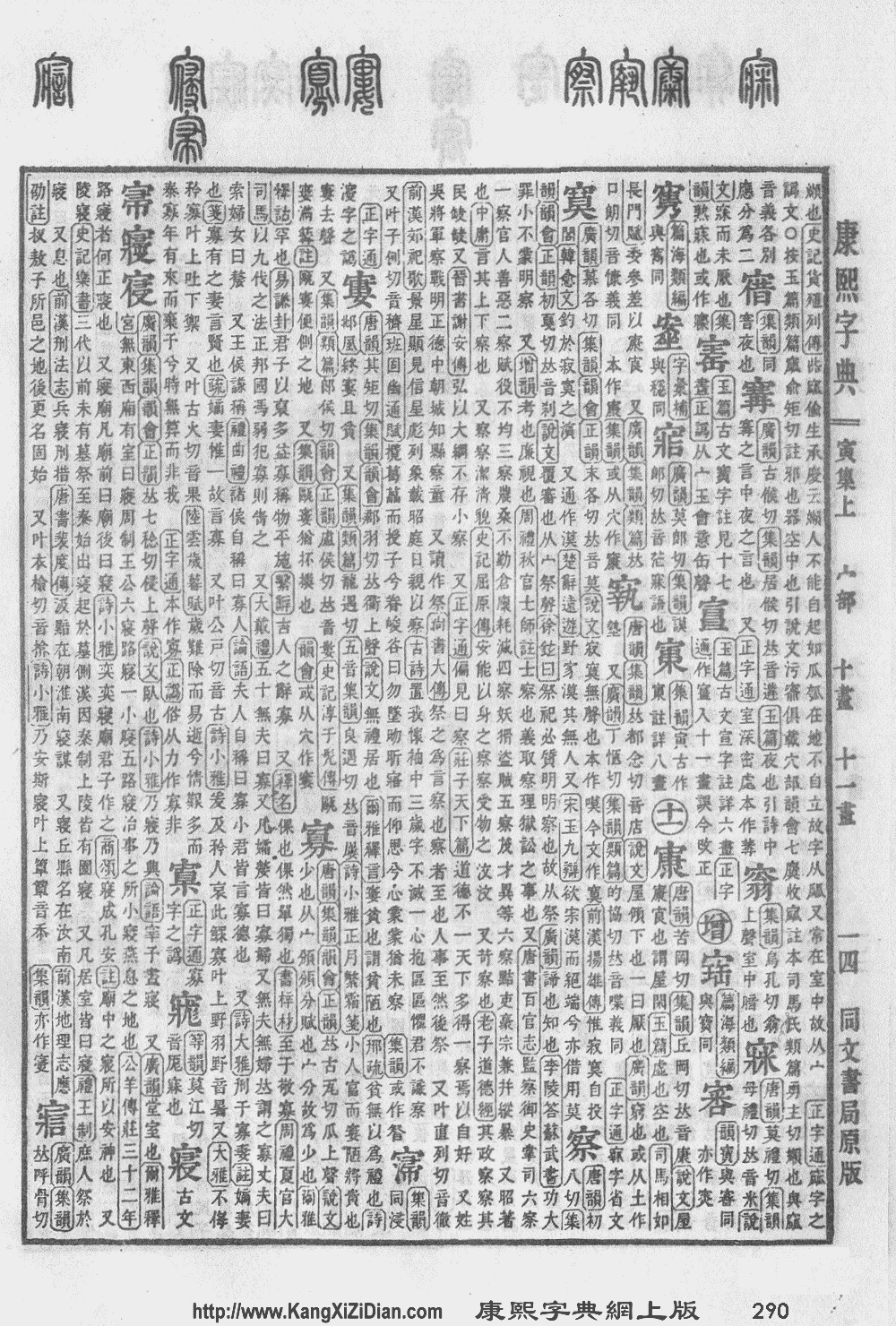
- KangXi: not present, would follow page 290, character 12
- Dai Kanwa Jiten: character 7278
- Dae Jaweon: page 574, character 16
- Hanyu Da Zidian: volume 2, page 946, character 7
- Unihan data for U+5BDD
Chinese
| For pronunciation and definitions of 寝 – see 寢 (“to sleep; room”). (This character, 寝, is the simplified and variant form of 寢.) |
Notes:
|
Japanese
| 寝 | |
| 寢 |
Kanji
寝
(common “Jōyō” kanji, shinjitai kanji, kyūjitai form 寢)
Readings
Compounds
Etymology 1
Pronunciation
- IPA(key): /i/
Noun
- sleep
- c. 890: Taketori Monogatari (page 5)
- そのあたりの垣にも、家の門にも、をる人だにたはやすく見るまじき物を、夜るはやすき寝(い)も寝(ね)ず、闇の夜に出て、穴をくじり、かひ間見、まとひあへり。
- c. 890: Taketori Monogatari (page 5)
Derived terms
See also
Etymology 2
Pronunciation
- IPA(key): /nu/
Verb
寝 (intransitive, nidan conjugation, hiragana ぬ, rōmaji nu)
- to sleep
Derived terms
Etymology 3
| Kanji in this term |
|---|
| 寝 |
| しん Grade: S |
| on’yomi |
From Middle Chinese 寢 (tshimX, “sleep”).
Pronunciation
Noun
- sleep
Etymology 4
| Kanji in this term |
|---|
| 寝 |
| ね Grade: S |
| kun’yomi |
Pronunciation
Noun
- sleep
Derived terms
References
- Horiuchi, Hideaki; Ken Akiyama (1997) Taketori Monogatari, Ise Monogatari, Tōkyō: Iwanami Shoten, →ISBN
Korean
Hanja
寝 • (chim) (hangeul 침, revised chim, McCune–Reischauer ch'im)
- This term needs a translation to English. Please help out and add a translation, then remove the text
{{rfdef}}.
This article is issued from
Wiktionary.
The text is licensed under Creative Commons - Attribution - Sharealike.
Additional terms may apply for the media files.