機
| ||||||||
Translingual
| Japanese | 機∣机 |
|---|---|
| Simplified | 机 |
| Traditional | 機∣机 |
Han character
機 (radical 75, 木+12, 16 strokes, cangjie input 木女戈戈 (DVII), four-corner 42953, composition ⿰木幾)
Derived characters
- 𣡯
Related characters
Descendants
- き (Hiragana character derived from Man'yōgana)
- キ (Katakana character derived from Man'yōgana)
References
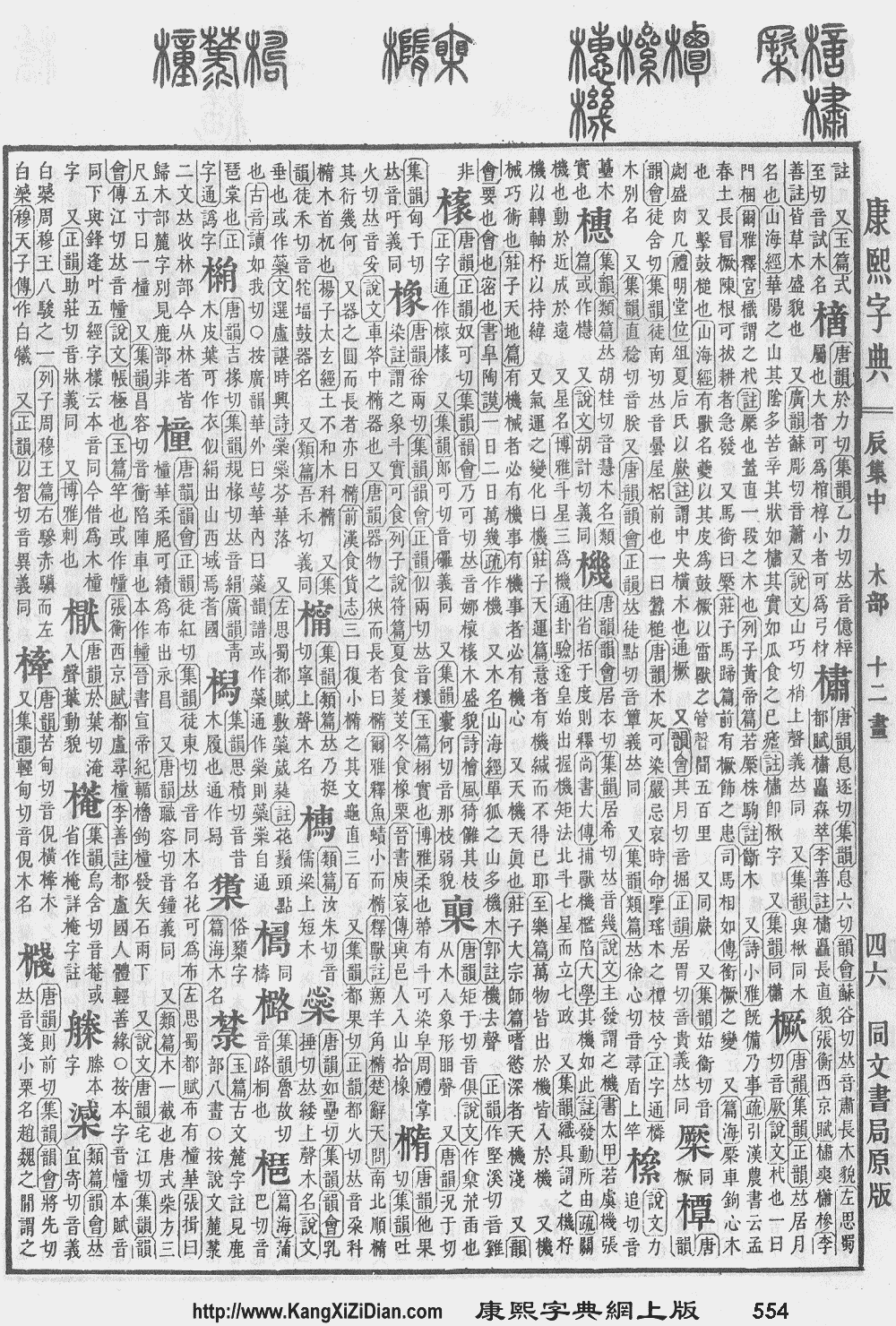
- KangXi: page 554, character 8
- Dai Kanwa Jiten: character 15561
- Dae Jaweon: page 942, character 20
- Hanyu Da Zidian: volume 2, page 1298, character 4
- Unihan data for U+6A5F
Usage notes
Note that in Japanese, both 机 and 機 are used with separate meanings (机: desk and 機: machine; airplane; chance) while in simplified Chinese, 机 is the simplified form of 機.
Chinese
| trad. | 機 | |
|---|---|---|
| simp. | 机* | |
Glyph origin
| Historical forms of the character 機 |
|---|
| Shuowen Jiezi (compiled in Han) |
| Small seal script |
 |
| Characters in the same phonetic series (幾) (Zhengzhang, 2003) | |
|---|---|
| Old Chinese | |
| 機 | *kɯl |
| 譏 | *kɯl |
| 嘰 | *kɯl |
| 磯 | *kɯl |
| 鞿 | *kɯl |
| 饑 | *kɯl |
| 禨 | *kɯl, *kɯls |
| 幾 | *kɯl, *kɯlʔ, *ɡɯl, *ɡɯls |
| 鐖 | *kɯl |
| 僟 | *kɯl |
| 璣 | *kɯl |
| 蟣 | *kɯlʔ, *ɡɯl |
| 穖 | *kɯlʔ |
| 畿 | *ɡɯl |
Phono-semantic compound (形聲, OC *kɯl) : semantic 木 + phonetic 幾 (OC *kɯl, *kɯlʔ, *ɡɯl, *ɡɯls).
Pronunciation
Definitions
機
- weaving machine; spinning machine
- machine; apparatus; device
- Short for 飛機 (“aircraft”).
- mechanism; process
- cause; reason
- secret; confidential (affair)
- opportunity; chance; crucial point
- plan; idea
- flexible; quick-witted
Compounds
|
|
|
Japanese
Kanji
Readings
Compounds
Usage notes
Often used interchangeably in compounds with 器 (ki) to indicate “machine”, with the distinction that 機 implies a larger machine, such as an airplane, while 器 implies a smaller device, possibly hand-held. Compare 飛行機 (hikōki, “airplane”) with 食器 (shokki, “tableware”).
Alternative forms
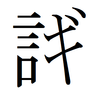
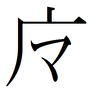
機 has many ryakuji (handwritten abbreviations), as it is a common character with many strokes (16):



Etymology 1
| Kanji in this term |
|---|
| 機 |
| き Grade: 4 |
| on’yomi |
From Middle Chinese 機 (kjɨj, “mechanism”). Compare modern Min Nan reading ki.
Pronunciation
Noun
- a machine, a device; a contraption
- a loom
- an opportunity, a chance to do something; the right time or moment
- something of great importance: the linchpin of the matter
- resourcefulness
- (Buddhism) the moment of being moved into action by the teachings of the Buddha: see 機根 (kikon)
- by extension, the workings of the heart or mind in general
- in Noh theater, the breath of the mind
- short for 飛行機 (hikōki): an airplane, an aircraft
- short for 機関銃 (kikanjū): a machine gun
Idioms
- 機が熟する (ki ga jukusuru): the time is ripe; a golden opportunity
- 機に乗じる (ki ni jōjiru), 機に投じる (ki ni tōjiru): to sieze the moment, to jump at the chance
- 機に臨み変に応ずる (ki ni nozomi hen ni ōzuru), 機に応ずる (ki ni ōzuru): to move with the times
- 機に因って法を説く (ki ni yotte hō o toku): to change the message to suit one's audience: to alter the format or presentation for better acceptance, without changing the core ideas being conveyed
- 機を逸する (ki o issuru), 機を失する (ki o shissuru): to miss the boat, to miss out
Etymology 2
| Kanji in this term |
|---|
| 機 |
| こぶち Grade: 4 |
| kun’yomi |
Alteration from こうべうち (kōbeuchi),[3] itself a compound of 首 (kōbe, “head”) + 打ち (uchi, “striking, hitting”).[3][1]
Pronunciation
Alternative forms
- 首打
Noun
機 (hiragana こぶち, rōmaji kobuchi)
Etymology 3
| Kanji in this term |
|---|
| 機 |
| はた Grade: 4 |
| kun’yomi |
From onomatopoeic はた (hata), possibly for the sound of the shuttle running back and forth, or for the sound of a woven cloth moving in the wind, compare 旗 (hata, “a flag”).
Pronunciation
Noun
Etymology 4
| Kanji in this term |
|---|
| 機 |
| わかつり Grade: 4 |
| kun’yomi |
The 連用形 (ren'yōkei, “continuative or stem form”) of verb 機る (wakatsuru, “to manipulate something”),[3] itself an alteration of 誘る (okotsuru, “to manipulate or con someone”),[3] a compound of 痴 (oko, “a fool”) + 釣る (tsuru, “to fish, to draw out”).[3]
Pronunciation
Noun
機 (hiragana わかつり, rōmaji wakatsuri)
- to manipulate (as in a device)
- to manipulate (as in a person): to deceive, to take in someone
- to get on someone's right side; to humor someone; to make an effort to please someone
References
Korean
Hanja
機 • (gi) (hangeul 기, McCune–Reischauer ki, Yale ki)
- This term needs a translation to English. Please help out and add a translation, then remove the text
{{rfdef}}.
Vietnamese
Han character
- This term needs a translation to English. Please help out and add a translation, then remove the text
{{rfdef}}.