勾
See also: 句
| ||||||||
Translingual
Han character
勾 (radical 20 勹+2, 4 strokes, cangjie input 心戈 (PI), four-corner 27720, composition ⿹勹厶)
Derived characters
References
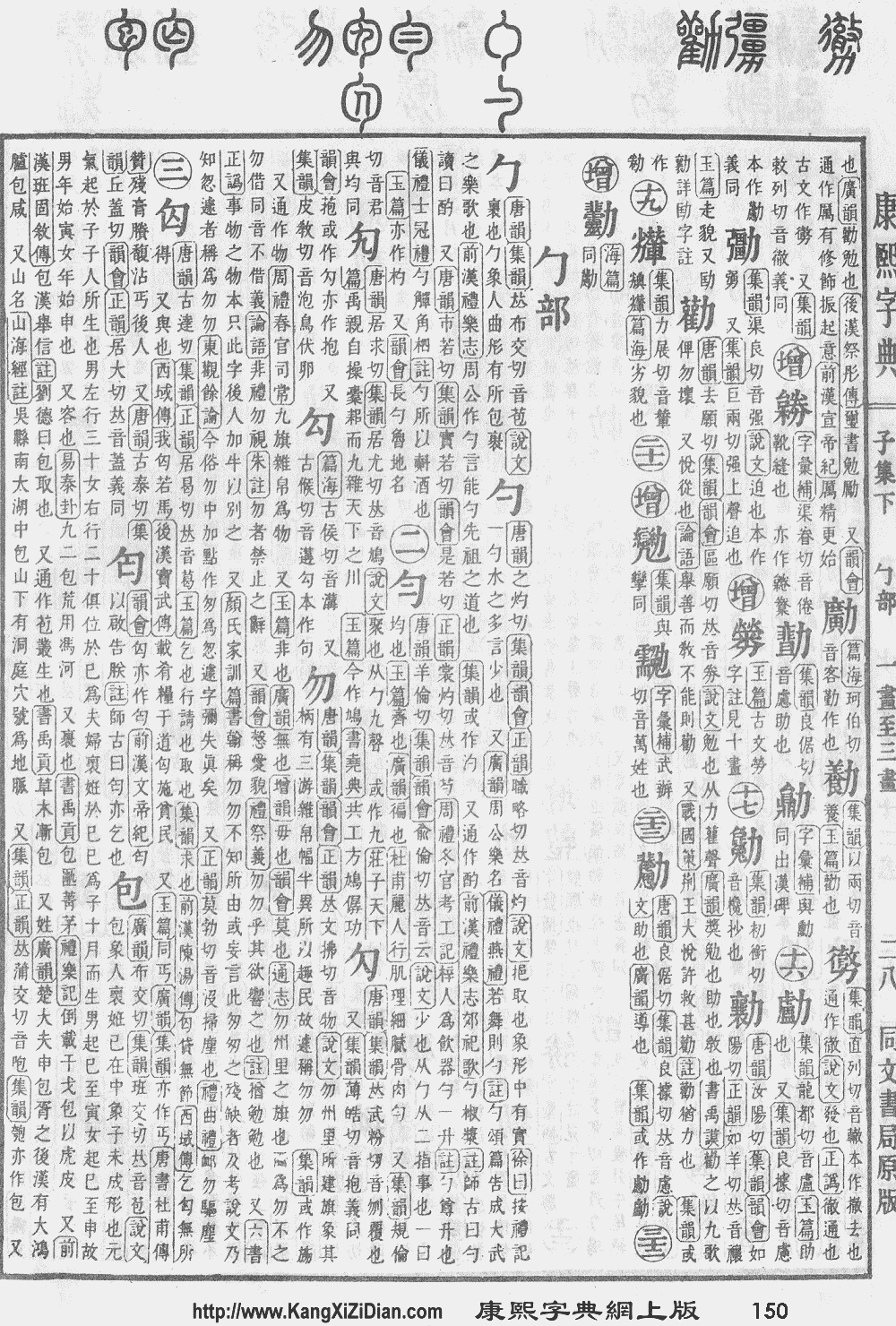
- KangXi: page 150, character 23
- Dai Kanwa Jiten: character 2500
- Dae Jaweon: page 339, character 13
- Hanyu Da Zidian: volume 1, page 256, character 3
- Unihan data for U+52FE
Chinese
| simp. and trad. |
勾 | |
|---|---|---|
| alt. forms | 句 | |
Glyph origin
| Characters in the same phonetic series (句) (Zhengzhang, 2003) | |
|---|---|
| Old Chinese | |
| 勾 | *koː, *koːs |
| 鉤 | *koː |
| 鴝 | *koː, *ɡo |
| 句 | *koː, *koːs, *kos, *ɡo |
| 夠 | *koː, *koːs, *kʰoː |
| 枸 | *koː, *koːʔ, *koʔ |
| 軥 | *koː, *koːs, *ɡo |
| 狗 | *koːʔ |
| 苟 | *koːʔ |
| 岣 | *koːʔ, *ko |
| 笱 | *koːʔ |
| 玽 | *koːʔ |
| 耇 | *koːʔ |
| 豿 | *koːʔ, *qʰroːɡ |
| 敂 | *koːʔ |
| 怐 | *koːs, *kʰoːs, *qʰoːs, *kos |
| 雊 | *koːs |
| 竘 | *kʰoːʔ, *kʰoʔ |
| 齁 | *qʰoː |
| 呴 | *qʰoːʔ, *qʰos |
| 蚼 | *qʰoːʔ, *ɡo |
| 豞 | *qʰoːs |
| 訽 | *qʰoːs, *ɡoːs |
| 佝 | *qʰoːs |
| 拘 | *ko |
| 駒 | *ko |
| 眗 | *ko |
| 跔 | *ko |
| 鮈 | *ko |
| 痀 | *ko |
| 蒟 | *koʔ, *kos |
| 絇 | *kos, *ɡo |
| 邭 | *kos |
| 劬 | *ɡo |
| 朐 | *ɡo |
| 鼩 | *ɡo |
| 斪 | *ɡo |
| 翑 | *ɡo |
| 葋 | *ɡo |
| 姁 | *ɡo, *qʰo, *qʰoʔ, *qʰos |
| 欨 | *qʰo, *qʰoʔ |
| 喣 | *qʰoʔ |
| 煦 | *qʰoʔ, *qʰos |
| 昫 | *qʰos |
Etymology 1
Pronunciation 1
Definitions
勾
- to bend; to curve; to crook; to hook
- to draw; to delineate
- to tick; to mark; to tick off
- to cut off or cut out; to strike out; to cross out
- to collude; to conspire
- to entice; to induce; to attract
- to catch; to arrest
- (cooking) to mix thoroughly to make something thicken
- to get; to call; to summon
- (historical geometry) The shorter leg of a right triangle
Coordinate terms
- (geometry): 股 (gǔ)
Compounds
Derived terms from 勾
Pronunciation 2
Definitions
勾
Compounds
Etymology 2
| For pronunciation and definitions of 勾 – see 鉤 (“hook, barb; sickle; etc.”). (This character, 勾, is the second-round simplified form of 鉤.) |
Notes:
|
Japanese
Kanji
勾
- This term needs a translation to English. Please help out and add a translation, then remove the text
{{rfdef}}.
Readings
- On (unclassified): こう (kō, Jōyō)
- Kun: まがる (magaru, 勾がる); とらえる (toraeru, 勾える); かぎ (kagi); のぞく (nozoku)
Korean
Hanja
勾 • (gu, gwi) (hangeul 구, 귀, revised gu, gwi, McCune–Reischauer ku, kwi)
- This term needs a translation to English. Please help out and add a translation, then remove the text
{{rfdef}}.
Vietnamese
Han character
- This term needs a translation to English. Please help out and add a translation, then remove the text
{{rfdef}}.
This article is issued from
Wiktionary.
The text is licensed under Creative Commons - Attribution - Sharealike.
Additional terms may apply for the media files.