pes
English
Etymology
Noun
pes (plural pedes)
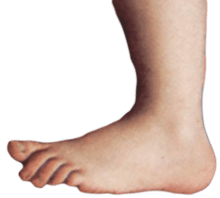
- the foot of a human
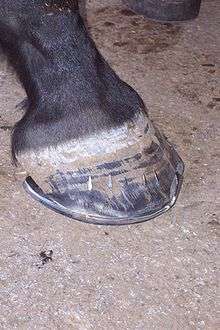
- the hoof of a quadruped
- clubfoot or talipes
- (music) a neume representing two notes ascending
Synonyms
- (neume): podatus
Anagrams
Catalan
Etymology
From Old Occitan pes, from Vulgar Latin *pēsum, from Latin pensum.
Pronunciation
Noun
pes m (plural pesos)
- weight (clarification of this definition is needed)
Derived terms
Related terms
Further reading
- “pes” in Diccionari de la llengua catalana, segona edició, Institut d’Estudis Catalans.
Cornish
Alternative forms
Noun
pes f (singulative pesen)
- (Revived Late Cornish) peas
Czech
Pronunciation
- IPA(key): /pɛs/
audio (file) - Rhymes: -ɛs
Etymology 1
From Proto-Slavic *pьsъ.
Noun
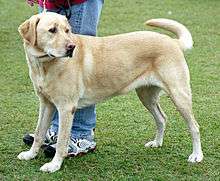
pes m anim
Declension
Antonyms
- (male dog): fena
Derived terms
- hlídací pes
- honicí pes
- chování řeznického psa
- mnoho psů, zajícova smrt
Further reading
Noun
pes
- genitive plural of peso
Alternative forms
Friulian
Alternative forms
- peš (alternative orthography)
Etymology
From Latin piscis, piscem.
Noun
pes m (plural pes)
Related terms
Latin
Etymology
From Proto-Indo-European *pṓds (compare Sanskrit पद् (pád), Ancient Greek πούς (poús) and Old English fōt, English foot).
Pronunciation
- (Classical) IPA(key): /peːs/
Audio (Classical) (file)
Noun
pēs m (genitive pedis); third declension
- a foot, in its senses as
- (anatomy) a human foot
- ...ne manus, nec pedes, nec alia membra...
- ...not the hands, not the feet, and not the other limbs...
- (zoology) any equivalent body part of an animal, including hooves, paws, etc.
- (units of measure) any of various units of length notionally based on the adult human foot, especially (historical) the Roman foot.
- (poetry) a metrical foot: the basic unit of metered poetry
- (geography) the base of a mountain
- (furniture) the bottom of a leg of a table, chair, stool, etc.
- (anatomy) a human foot
- (figuratively) a place to tread one's foot: territory, ground, soil
- (nautical) a rope attached to a sail in order to set
- (music) tempo, pace, time
- (botany) the pedicel or stalk of a fruit
Inflection
Third declension.
| Case | Singular | Plural |
|---|---|---|
| nominative | pēs | pedēs |
| genitive | pedis | pedum |
| dative | pedī | pedibus |
| accusative | pedem | pedēs |
| ablative | pede | pedibus |
| vocative | pēs | pedēs |
Hyponyms
- (metrical foot): trochaeus; pes dissyllbus or disyllbus, pes bibrevis, choreus, jambus, spondeus, spondius, spondeos (2-syllable feet); pes trisyllabus, amphibrachus, amphibrachys, amphimacrus, dactylus, extensipes, molossus, pes anapaestus, pes antanapaestus, pes antibacchius, pes bacchius, pes creticus, pes hippius (3-syllable feet); pes tetrasyllbus, antispastus, chorjambus, dichoreus, dijambus, dispondeus, epitritus, paeon, proceleumaticus, proceleusmaticus (4-syllable feet); pes pentasyllbus, dochmius, mesobrachys, mesomacros, pariambodes, probrachys, pes amoebaeus, pes antamoebaeus, pes orthius (5-syllable feet)
Meronyms
- (unit of length): decempeda (10 pedes)
Derived terms
Related terms
Descendants
- Aragonese: piet
- Aromanian: pezã
- Asturian: pie
- Corsican: pede
- Dalmatian: pi
- English: pes
- Esperanto: piedo
- Extremaduran: pie
- Franco-Provençal: pied
- Old French: pié
- Friulian: pît
- Ido: pedo
- Interlingua: pede
- Istriot: peîe, pèie
- Italian: piede
- Leonese: pía
- Mirandese: pie
- Mozarabic: péde
- Neapolitan: pere
- Old Portuguese: pee
- Old Occitan: pe
- Italian: pé
- Romanian: piez
- Romansch: pe
- Sardinian: pee, pei
- Sicilian: pedi, peri
- Spanish: pie
- Venetian: pìe, piè, pè
References
- pes in Charlton T. Lewis and Charles Short (1879) A Latin Dictionary, Oxford: Clarendon Press
- pes in Charlton T. Lewis (1891) An Elementary Latin Dictionary, New York: Harper & Brothers
- pes in Charles du Fresne du Cange’s Glossarium Mediæ et Infimæ Latinitatis (augmented edition, 1883–1887)
- pes in Gaffiot, Félix (1934) Dictionnaire Illustré Latin-Français, Hachette
- Carl Meissner; Henry William Auden (1894) Latin Phrase-Book, London: Macmillan and Co.
- to begin a journey (on foot, on horseback, by land): iter ingredi (pedibus, equo, terra)
- to go on foot: pedibus ire
- to trample under foot: pedibus obterere, conculcare
- to have the gout: ex pedibus laborare, pedibus aegrum esse
- to vote for some one's motion: discedere (pedibus), ire in alicuius sententiam (Liv. 23. 10)
- to serve in the cavalry, infantry: equo, pedibus merere (Liv. 27. 11)
- (ambiguous) a hand-to-hand engagement ensued: tum pes cum pede collatus est (Liv. 28. 2)
- (ambiguous) to fall at some one's feet: ad pedes alicuius accidere
- (ambiguous) to throw oneself at some one's feet: ad pedes alicuius se proicere, se abicere, procumbere, se prosternere
- (ambiguous) to prostrate oneself before a person: ad pedes alicuius iacēre, stratum esse (stratum iacēre)
- (ambiguous) to fail to see what lies before one: quod ante pedes est or positum est, non videre
- (ambiguous) to never set foot out of doors: domo pedem non efferre
- (ambiguous) to cross the threshold: pedem limine efferre
- (ambiguous) a hand-to-hand engagement ensued: tum pes cum pede collatus est (Liv. 28. 2)
- (ambiguous) hand to hand: collato pede (Liv. 6. 12)
- (ambiguous) to retire (without turning one's back on the enemy): pedem referre
- to begin a journey (on foot, on horseback, by land): iter ingredi (pedibus, equo, terra)
- pes in Harry Thurston Peck, editor (1898) Harper's Dictionary of Classical Antiquities, New York: Harper & Brothers
- pes in William Smith et al., editor (1890) A Dictionary of Greek and Roman Antiquities, London: William Wayte. G. E. Marindin
Old French
Etymology
Noun
pes f (oblique plural pes, nominative singular pes, nominative plural pes)
- Alternative form of pais (“peace”)
- circa 1250, Marie de France, Guigemar
- Va t'en de ci ! Lai me aveir pes.
- Go, leave me! Let me have peace.
- Va t'en de ci ! Lai me aveir pes.
- circa 1250, Marie de France, Guigemar
Serbo-Croatian
Etymology
From Proto-Slavic *pьsъ.
Pronunciation
- IPA(key): /pɛs/
Noun
pes m (Cyrillic spelling пес)
Synonyms
Slovak
Etymology
From Proto-Slavic *pьsъ.
Pronunciation
- IPA(key): /ˈpɛs/
Noun
pes m (genitive singular psa, nominative plural psi, psy, genitive plural psov)
Usage notes
Declension pattern dub if you are referring to dogs in general or chlap if you are referring to them as pets (that is you think of them as persons).
Declension
Derived terms
Further reading
- pes in Slovak dictionaries at korpus.sk
Slovene
Etymology
From Proto-Slavic *pьsъ.
Pronunciation
- IPA(key): /ˈpə́s/
- Tonal orthography: pə̏s
Noun
pès m anim (genitive psà, nominative plural psì, feminine psíca)
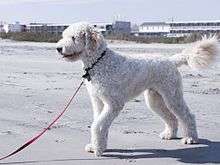
- dog
- Imamo tri pse.
- We have three dogs.
- Na sprehod grem s svojim psom.
- I'm going on a walk with my dog.
Declension
Synonyms
Spanish
Pronunciation
- IPA(key): /pes/
- Homophone: pez (non-Castilian)
Noun
pes
- plural of pe
Tok Pisin
Etymology
Noun
pes
- (anatomy) face
- 1989, Buk Baibel long Tok Pisin, Bible Society of Papua New Guinea, Genesis 3:19 (translation here):
- Na bai yu wok hat tru long kisim kaikai bilong yu na tuhat bai i kamap long pes bilong yu. Na bai yu hatwok oltaim inap yu dai na yu go bek long graun. Long wanem, mi bin wokim yu long graun, na bai yu go bek gen long graun.”
- 1989, Buk Baibel long Tok Pisin, Bible Society of Papua New Guinea, Genesis 3:19 (translation here):
Torres Strait Creole
Etymology 1
From English face.
Noun
pes
Etymology 2
Noun
pes
Usage notes
Pes is the fifth stage of coconut growth. It is preceded by kopespes and followed by u.