peri
English
WOTD – 12 November 2013
WOTD – 12 November 2014
Etymology
Pronunciation
- (UK) IPA(key): /ˈpɪə.ɹi/
Noun
peri (plural peris)
- (Persian mythology) A sprite or supernatural being.
- 1829, The Adventures of Hatim-Beni-Tye, The Asiatic Journal and Monthly Register for British India and Its Dependencies, Volume 27: January—June 1829, page 549,
- He sent a Peri to Chundum Dew with a message: "If you wish to live, release the mortal in your power: if not, every demon in your service will immediately be put to the sword."
- 1916 (Mar 16), Alfred Richard Orage, Arthur Moore, The New Age: A Weekly Review of Politics, Literature and Art, page 473
- In an hour they hovered above Hampstead Heath, and the peri looked down for a lonely spot where she might alight in the sulphurous gloom of a dog-day sunset too blinding for anyone to look at […]
- 2008, A Fire in My Heart: Kurdish Tales, page 75
- The Padishah's son was also there, and he realized that the peri looked very familiar.
- 1829, The Adventures of Hatim-Beni-Tye, The Asiatic Journal and Monthly Register for British India and Its Dependencies, Volume 27: January—June 1829, page 549,
Synonyms
Translations
sprite in Persian mythology
Anagrams
Finnish
Verb
peri
Anagrams
Italian
Noun
peri (f plural)
- plural of pero
Anagrams
Latin
Verb
perī
- second-person singular active imperative of pereō
Latvian
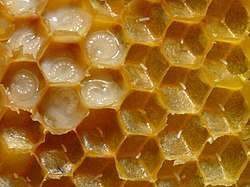
Peri
Etymology
Singular form pers, cognate with Lithuanian pẽras (“larva”), derived from perēt (“to nest, hatch”).[1]
Pronunciation
- IPA(key): [pæɾi]
Noun
peri m (1st declension)
- (chiefly in the plural) bee larvae
- peru puve ― larvae rot (bee larvae disease)
- peru pieniņš ― larvae milk (a secretion of working bees used to feed the larvae)
Usage notes
There is a singular form pers, only sporadically attested.
Declension
Declension of peri (1st declension)
| singular (vienskaitlis) | plural (daudzskaitlis) | |
|---|---|---|
| nominative (nominatīvs) | — | peri |
| accusative (akuzatīvs) | — | perus |
| genitive (ģenitīvs) | — | peru |
| dative (datīvs) | — | periem |
| instrumental (instrumentālis) | — | periem |
| locative (lokatīvs) | — | peros |
| vocative (vokatīvs) | — | peri |
References
- ↑ Karulis, Konstantīns (1992), “peri”, in Latviešu Etimoloģijas Vārdnīca (in Latvian), Rīga: AVOTS, →ISBN
Portuguese
Noun
peri m (plural peris)
Romanian
Noun
peri m pl
- plural of păr
Sranan Tongo
Noun
peri
Turkish
Etymology
Pronunciation
- Hyphenation: pe‧ri
Noun
peri (definite accusative periyi, plural periler)
Declension
| Inflection | ||||||||||||||||||||||||||
|---|---|---|---|---|---|---|---|---|---|---|---|---|---|---|---|---|---|---|---|---|---|---|---|---|---|---|
| Nominative | peri | |||||||||||||||||||||||||
| Definite accusative | periyi | |||||||||||||||||||||||||
| Singular | Plural | |||||||||||||||||||||||||
| Nominative | peri | periler | ||||||||||||||||||||||||
| Definite accusative | periyi | perileri | ||||||||||||||||||||||||
| Dative | periye | perilere | ||||||||||||||||||||||||
| Locative | peride | perilerde | ||||||||||||||||||||||||
| Ablative | periden | perilerden | ||||||||||||||||||||||||
| Genitive | perinin | perilerin | ||||||||||||||||||||||||
| ||||||||||||||||||||||||||
| ||||||||||||||||||||||||||
Welsh
Etymology
From Proto-Celtic *kʷert, from Proto-Indo-European *kʷer-.
Verb
peri (first-person singular present paraf)
Conjugation
Conjugation (literary)
| singular | plural | impersonal | ||||||
|---|---|---|---|---|---|---|---|---|
| first | second | third | first | second | third | |||
| present indicative/future | paraf | peri | pair, pâr | parwn | perwch, parwch | parant | perir | |
| imperfect (indicative/subjunctive)/ conditional |
parwn | parit | parai | parem | parech | parent | perid | |
| preterite | perais | peraist | parodd | parasom | parasoch | parasant | parwyd | |
| pluperfect | paraswn | parasit | parasai | parasem | parasech | parasent | parasid, paresid | |
| present subjunctive | parwyf | perych | paro | parom | paroch | paront | parer | |
| imperative | — | pâr | pared | parwn | perwch, parwch | parent | parer | |
| verbal noun | peri | |||||||
| verbal adjectives | paredig paradwy | |||||||
Conjugation (colloquial)
| Inflected colloquial forms | singular | plural | ||||
|---|---|---|---|---|---|---|
| first | second | third | first | second | third | |
| future | para i, paraf i | pari di | parith o/e/hi, pariff e/hi | parwn ni | parwch chi | paran nhw |
| conditional | parwn i, parswn i | paret ti, parset ti | parai fo/fe/hi, parsai fo/fe/hi | paren ni, parsen ni | parech chi, parsech chi | paren nhw, parsen nhw |
| preterite | parais i, pares i | paraist ti, parest ti | parodd o/e/hi | paron ni | paroch chi | paron nhw |
| imperative | — | para | — | — | parwch | — |
| Note: All other forms are periphrastic, as usual in colloquial Welsh. | ||||||
Derived terms
- peiriant (“machine, engine”)
Mutation
| Welsh mutation | |||
|---|---|---|---|
| radical | soft | nasal | aspirate |
| peri | beri | mheri | pheri |
| Note: Some of these forms may be hypothetical. Not every possible mutated form of every word actually occurs. | |||
This article is issued from
Wiktionary.
The text is licensed under Creative Commons - Attribution - Sharealike.
Additional terms may apply for the media files.