alto
English
Etymology
Pronunciation
Noun
alto (plural altos)
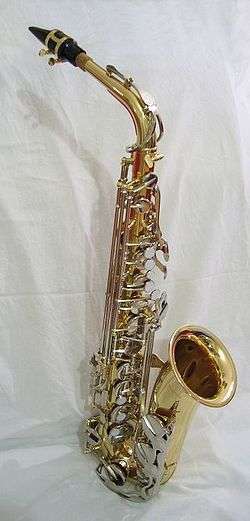
- A musical part or section higher than tenor and lower than soprano, formerly the part that performed a countermelody above the tenor or main melody.
- A person or musical instrument that performs the alto part.
Usage notes
Synonyms
- (musical part or section): contratenor altus, high countertenor
Coordinate terms
Translations
- The translations below need to be checked and inserted above into the appropriate translation tables, removing any numbers. Numbers do not necessarily match those in definitions. See instructions at Wiktionary:Entry layout#Translations.
Further reading

Anagrams
Asturian
Adjective
alto n sg
- neuter singular of altu
Dutch
Etymology
From a shortening of alternatieveling or alternatief + -o.
Pronunciation
- IPA(key): /ˈɑl.toː/
Audio (file) - Hyphenation: al‧to
Noun
alto m (plural alto's)
- (Netherlands, pejorative) Someone who participates in an alternative subculture (e.g. a hipster, emo or punk).
- Synonyms: alternatieveling, alternativo
Esperanto
Etymology
Noun
alto (accusative singular alton, plural altoj, accusative plural altojn)
- height; elevation; altitude
- Vladimír Váňa (translator), Aventuroj de la Brava Soldato Ŝvejk dum la Mondmilito (The Good Soldier Švejk) by Jaroslav Hašek, Part 1, Chapter 15,
- Pri kio morgaŭ prelegi al unujaraj volontuloj en la lernejo? Ĉu pri tio, kiel ni difinas la alton de monteto? Kial ni mezuras la alton ĉiam de la marnivelo? Kiel el altoj super la marnivelo elkalkuli propran alton de la monteto ekde ĝia piedo?
- What should he lecture on to the volunteers in the school tomorrow? How do we determined the height of a given hill? Why do we reckon the height from sea level? How can we establish from its height above sea level the height of a mountain from its foot? (Cecil Parrott translation, Heinemann, 1973)
- Pri kio morgaŭ prelegi al unujaraj volontuloj en la lernejo? Ĉu pri tio, kiel ni difinas la alton de monteto? Kial ni mezuras la alton ĉiam de la marnivelo? Kiel el altoj super la marnivelo elkalkuli propran alton de la monteto ekde ĝia piedo?
- Sergio Pokrovskij (translator), La Majstro kaj Margarita (The Master and Margarita) by Mikhail Bulgakov, Book Two, Chapter 24,
- [...] la peza fenestra kurteno ŝoviĝis flanken, la fenestro larĝe malfermiĝis kaj en la fora alto vidiĝis la plena [...] luno.
- [...] the heavy curtain over the window was pushed aside, the window opened wide, and high above (lit. in the distant height) appeared the full moon.
- [...] la peza fenestra kurteno ŝoviĝis flanken, la fenestro larĝe malfermiĝis kaj en la fora alto vidiĝis la plena [...] luno.
- Vladimír Váňa (translator), Aventuroj de la Brava Soldato Ŝvejk dum la Mondmilito (The Good Soldier Švejk) by Jaroslav Hašek, Part 1, Chapter 15,
See also
French
Pronunciation
- IPA(key): /al.to/
Audio (file)
Noun
alto m (plural altos)
Further reading
- “alto” in le Trésor de la langue française informatisé (The Digitized Treasury of the French Language).
Galician
Etymology
From Old Portuguese alto, from Latin altus. This form is probably semi-learned or influenced by learned orthography, as with Portuguese alto and Spanish alto. Cf. also the now archaic form outo, which was probably popularly inherited from an unattested hypothetical Old Portuguese *outo, from the same Latin word (compare also Old Spanish oto, still found in some placenames today).
Adjective
alto m (feminine singular alta, masculine plural altos, feminine plural altas)
Antonyms
- (high): baixo
Derived terms
Related terms
Italian
Etymology
From Latin altus (“high”), ultimately of Proto-Indo-European origin.
Pronunciation
Audio (file)
Adjective
alto (feminine singular alta, masculine plural alti, feminine plural alte)
Antonyms
Derived terms
Related terms
Descendants
- German: Alt
Anagrams
Ladino
Etymology
Adjective
alto m (Latin spelling)
Latin
Pronunciation
- (Classical) IPA(key): /ˈal.toː/, [ˈaɫ.toː]
Etymology 1
From altus (“high, deep”) + -ō.
Verb
altō (present infinitive altāre); first conjugation, no perfect
Inflection
| Conjugation of alto (first conjugation, defective) | |||||||
|---|---|---|---|---|---|---|---|
| indicative | singular | plural | |||||
| first | second | third | first | second | third | ||
| active | present | altō | altās | altat | altāmus | altātis | altant |
| imperfect | altābam | altābās | altābat | altābāmus | altābātis | altābant | |
| future | altābō | altābis | altābit | altābimus | altābitis | altābunt | |
| passive | present | altor | altāris, altāre | altātur | altāmur | altāminī | altantur |
| imperfect | altābar | altābāris, altābāre | altābātur | altābāmur | altābāminī | altābantur | |
| future | altābor | altāberis, altābere | altābitur | altābimur | altābiminī | altābuntur | |
| subjunctive | singular | plural | |||||
| first | second | third | first | second | third | ||
| active | present | altem | altēs | altet | altēmus | altētis | altent |
| imperfect | altārem | altārēs | altāret | altārēmus | altārētis | altārent | |
| passive | present | alter | altēris, altēre | altētur | altēmur | altēminī | altentur |
| imperfect | altārer | altārēris, altārēre | altārētur | altārēmur | altārēminī | altārentur | |
| imperative | singular | plural | |||||
| first | second | third | first | second | third | ||
| active | present | — | altā | — | — | altāte | — |
| future | — | altātō | altātō | — | altātōte | altantō | |
| passive | present | — | altāre | — | — | altāminī | — |
| future | — | altātor | altātor | — | — | altantor | |
| non-finite forms | active | passive | |||||
| present | perfect | future | present | perfect | future | ||
| infinitives | altāre | — | — | altārī | — | — | |
| participles | altāns | — | — | — | — | altandus | |
| verbal nouns | gerund | supine | |||||
| nominative | genitive | dative/ablative | accusative | accusative | ablative | ||
| altāre | altandī | altandō | altandum | — | — | ||
Etymology 2
See etymology on the main entry.
Participle
altō
- inflection of altus:
- dative masculine singular
- dative neuter singular
- ablative masculine singular
- ablative neuter singular
References
- alto in Charlton T. Lewis and Charles Short (1879) A Latin Dictionary, Oxford: Clarendon Press
- alto in Charles du Fresne du Cange’s Glossarium Mediæ et Infimæ Latinitatis (augmented edition, 1883–1887)
- alto in Gaffiot, Félix (1934) Dictionnaire Illustré Latin-Français, Hachette
- Carl Meissner; Henry William Auden (1894) Latin Phrase-Book, London: Macmillan and Co.
- (ambiguous) the tide is coming in: aestus ex alto se incitat (B. G. 3.12)
- (ambiguous) the storm drives some one on an unknown coast: procella (tempestas) aliquem ex alto ad ignotas terras (oras) defert
- (ambiguous) to make fast boats to anchors: naves (classem) constituere (in alto)
- (ambiguous) the tide is coming in: aestus ex alto se incitat (B. G. 3.12)
Portuguese
Pronunciation
Etymology 1
From Old Portuguese alto, from Latin altus, ultimately of Proto-Indo-European origin. This form is likely a semi-learned term, or was influenced by learned elements of the language and uses such an orthography, as with Galician and Spanish alto (which have popularly inherited variants outo and oto, respectively). There was once likely an *outo in Old Portuguese that is not attested[1], but which left an inherited descendant in Galician. See also outeiro, a related word.
Adjective
alto m (feminine singular alta, masculine plural altos, feminine plural altas, comparable)
Inflection
| singular | plural | |||
|---|---|---|---|---|
| masculine | feminine | masculine | feminine | |
| positive | alto | alta | altos | altas |
| comparative | mais alto | mais alta | mais altos | mais altas |
| superlative | o mais alto altíssimo |
a mais alta altíssima |
os mais altos altíssimos |
as mais altas altíssimas |
| augmentative | altão | altona | altões | altonas |
| diminutive | altinho | altinha | altinhos | altinhas |
Derived terms
Related terms
Adverb
alto (comparative mais alto superlative o mais alto)
- loud; loudly
- 2003, Lya Wyler (translator), J. K. Rowling (English author), Harry Potter e a Ordem da Fênix (Harry Potter and the Order of the Phoenix), Rocco, page 445:
- Não fale tão alto...
- Don't speak so loud...
- Não fale tão alto...
- 2003, Lya Wyler (translator), J. K. Rowling (English author), Harry Potter e a Ordem da Fênix (Harry Potter and the Order of the Phoenix), Rocco, page 445:
Descendants
- Kabuverdianu: altu
Etymology 2
From the imperative of German halten.
Interjection
alto!
- halt!
See also
References
Spanish

Pronunciation
- IPA(key): /ˈalto/, [ˈal̪t̪o]
Etymology 1
From Latin altus, ultimately of Proto-Indo-European origin. The form alto represents a pronunciation influenced by the most learned layers of the language, and is not the normal phonetic result expected in a naturally inherited word. Cf. the now archaic form oto, which was used more often in Old Spanish and is the form of the word that was completely popularly inherited, preserved in some toponyms/placenames[1], and its derivative otear and the rare or regional otar[2]. Compare also archaic Galician outo (versus the standard alto today). See also the related Spanish otero (and Portuguese outeiro).
Adjective
alto (feminine singular alta, masculine plural altos, feminine plural altas) (superlative altísimo)
- tall
- Antonym: bajo
- Esas chicas son altas.
- Those girls are tall.
- high
- Antonym: bajo
- Es un número alto.
- It's a high number.
- loud
- En voz alta.
- Out loud.
Derived terms
Related terms
Etymology 2
Noun
alto m (plural altos)
Antonyms
- (red light): siga
Derived terms
|
|
Interjection
¡alto!
- halt!; stop!
Further reading
- “alto” in Diccionario de la lengua española, Vigésima tercera edición, Real Academia Española, 2014.