viola
English
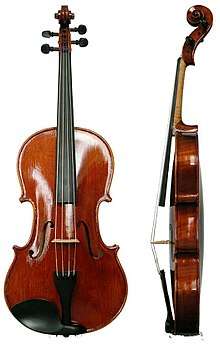
Etymology 1
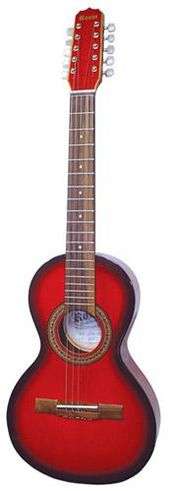
From Italian viola, from Old Occitan viola (modern Occitan viula), from Medieval Latin vitula (“stringed instrument”). Compare viol.
Pronunciation
Noun
viola (plural violas)
- (music) A stringed instrument of the violin family, somewhat larger than a violin, played under the chin, and having a deeper tone.
- (music) An organ stop having a similar tone.
- (music) A 10-string steel-string acoustic guitar, used in Brazilian folk music.
Derived terms
Translations
|
|
- The translations below need to be checked and inserted above into the appropriate translation tables, removing any numbers. Numbers do not necessarily match those in definitions. See instructions at Wiktionary:Entry layout#Translations.
References
Etymology 2
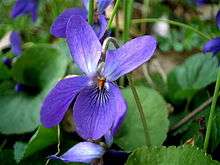
Pronunciation
Noun
viola (plural violas)
Translations
References
Etymology 3
Interjection
viola
- Misconstruction of voila
- 2011, Hedge Funds for Dummies:
- [...] ; you fill out a form; you write your check; and viola! You're a mutual fund shareholder.
- 2011, Hedge Funds for Dummies:
References
-

-

-
Anagrams
Asturian
Adjective
viola
Catalan
Etymology 1
Noun
viola f (plural violes)
Derived terms
- viola alba (V. alba)
- viola boscana (V. sylvestris, now V. reichenbachiana)
- viola canina (V. canina)
- viola d'olor or viola vera (V. odorata)
Etymology 2
Uncertain origin, probably from Occitan viula, derivative of viular (“playing a string instrument” or “wind”)
Noun
viola m, f (plural violes)
Synonyms
- (violist): violista
Etymology 3
Noun
viola f (plural violes)
Etymology 4
Verb
viola
- third-person singular present indicative form of violar
- second-person singular imperative form of violar
Czech
Noun
viola f
- viola (musical instrument of the violin family)
Esperanto
Adjective
viola (accusative singular violan, plural violaj, accusative plural violajn)
- of or relating to the flower violet
- the color of such flowers, violet violet colour:
Finnish
Noun
viola
Declension
| Inflection of viola (Kotus type 12/kulkija, no gradation) | |||
|---|---|---|---|
| nominative | viola | violat | |
| genitive | violan | violoiden violoitten | |
| partitive | violaa | violoita | |
| illative | violaan | violoihin | |
| singular | plural | ||
| nominative | viola | violat | |
| accusative | nom. | viola | violat |
| gen. | violan | ||
| genitive | violan | violoiden violoitten violainrare | |
| partitive | violaa | violoita | |
| inessive | violassa | violoissa | |
| elative | violasta | violoista | |
| illative | violaan | violoihin | |
| adessive | violalla | violoilla | |
| ablative | violalta | violoilta | |
| allative | violalle | violoille | |
| essive | violana | violoina | |
| translative | violaksi | violoiksi | |
| instructive | — | violoin | |
| abessive | violatta | violoitta | |
| comitative | — | violoineen | |
Anagrams
French
Verb
viola
- third-person singular past historic of violer
Anagrams
Italian
Etymology 1
Adjective
viola (invariable)
Synonyms
Noun
viola f (plural viole)
Synonyms
Derived terms
Etymology 2
Possibly from Old Occitan viola (modern Occitan viula), ultimately from Medieval Latin *vitula (“stringed instrument”).
Noun
viola f (plural viole)
Derived terms
- viola da braccio
- viola da gamba
- viola del pensiero
Etymology 3
Verb
viola
See also
| Colors in Italian · colori (layout · text) | |||||
|---|---|---|---|---|---|
| bianco | grigio | nero | marrone | ||
| rosa | rosso ; cremisi | arancione | giallo ; crema | ||
| limetta | verde | ciano ; blu petrolio, foglia di tè | |||
| azzurro | blu | violetto ; indaco | magenta ; viola | ||
Anagrams
Latin
Etymology
Related to Ancient Greek ἴον (íon, “violet”) (from ϝίον). Probably from a pre-I.E. Mediterranean language. See also Middle Persian wnpšk'.
Pronunciation
- (Classical) IPA(key): /ˈwi.o.la/, [ˈwi.ɔ.ɫa]
Noun
viola f (genitive violae); first declension
- violet (flower)
Inflection
First declension.
| Case | Singular | Plural |
|---|---|---|
| nominative | viola | violae |
| genitive | violae | violārum |
| dative | violae | violīs |
| accusative | violam | violās |
| ablative | violā | violīs |
| vocative | viola | violae |
Verb
violā
- first-person singular present active imperative of violō
Descendants
References
- viola in Charlton T. Lewis and Charles Short (1879) A Latin Dictionary, Oxford: Clarendon Press
- viola in Charlton T. Lewis (1891) An Elementary Latin Dictionary, New York: Harper & Brothers
- viola in Charles du Fresne du Cange’s Glossarium Mediæ et Infimæ Latinitatis (augmented edition, 1883–1887)
Portuguese
Pronunciation
Etymology 1
From Old Portuguese viola, from Old Occitan viola, from Medieval Latin vitula, from Vitula, Roman goddess of joy and victory.
Noun
viola f (plural violas)
- (music) viola (a bowed instrument larger than a violin)
- (music) viol (a bowed instrument of the violin family held between the legs)
- (music) viola; viola caipira (10-string acoustic guitar used in Brazilian folk music)
- (music, Brazil, loosely or affectionate) acoustic guitar
- guitarfish (any of the rays in the Rhinobatidae family)
Synonyms
- (viol): viola da gamba
- (viola caipira): viola caipira
- (acoustic guitar): violão, guitarra
- (guitarfish): cação-viola, raia-viola, arraia-viola
Derived terms
- violinha (diminutive)
|
|
|
Related terms
Etymology 2
Verb
viola
- third-person singular (ele and ela, also used with você and others) present indicative of violar
- second-person singular (tu, sometimes used with você) affirmative imperative of violar
Romanian
Etymology
Pronunciation
- IPA(key): /vjoˈla/
Verb
a viola (third-person singular present violează, past participle violat) 1st conj.
Spanish
Etymology 1
Noun
viola f (plural violas)
- viola (musical instrument)
Etymology 2
Verb
viola