館
| ||||||||
Translingual
Han character
館 (radical 184, 食+8, 16 strokes, cangjie input 人戈十口口 (OIJRR), four-corner 83777, composition ⿰飠官)
References
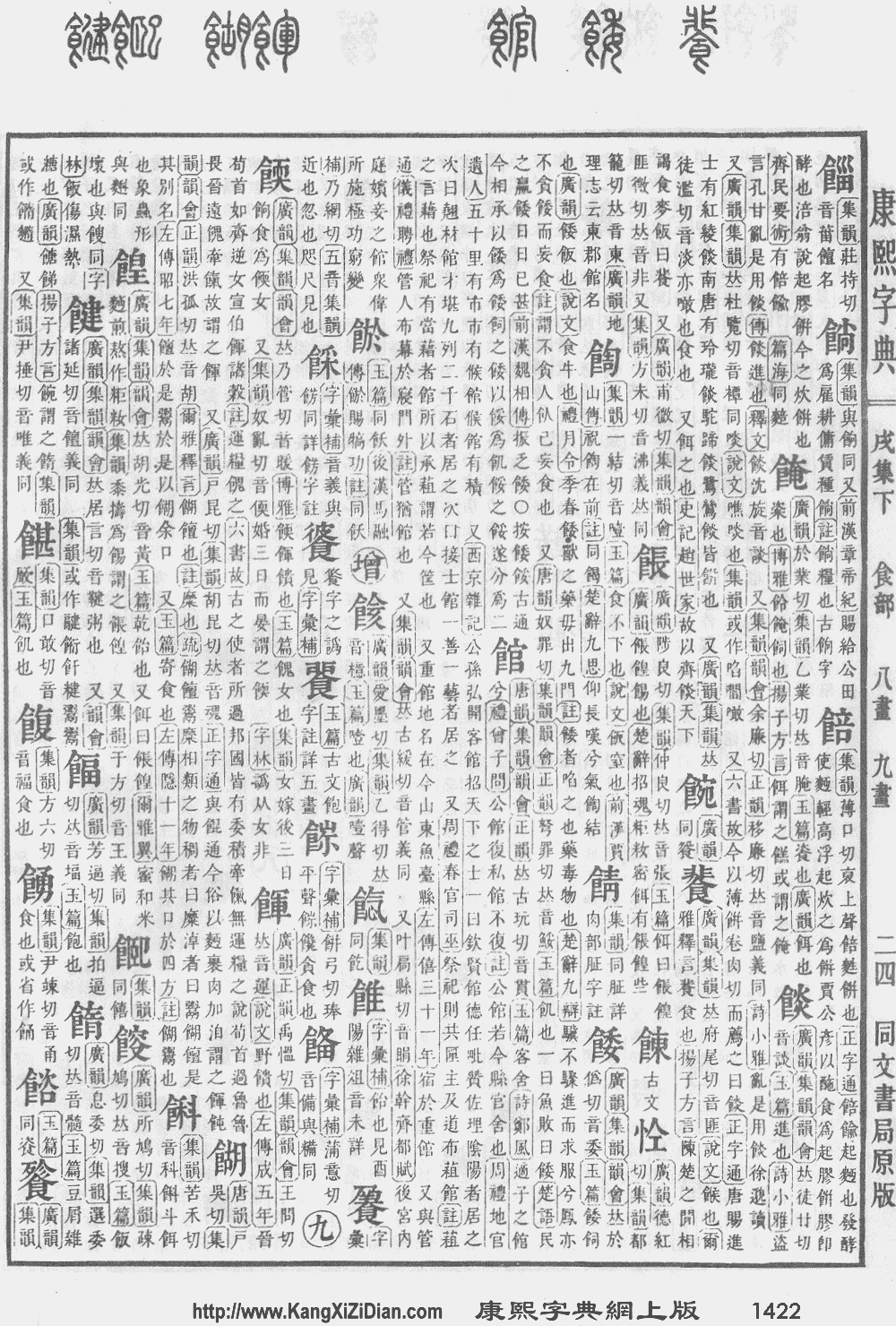
- KangXi: page 1422, character 14
- Dai Kanwa Jiten: character 44237
- Dae Jaweon: page 1947, character 31
- Hanyu Da Zidian: volume 7, page 4461, character 13
- Unihan data for U+9928
Chinese
| trad. | 館 | |
|---|---|---|
| simp. | 馆 | |
| alt. forms | 舘 | |
Glyph origin
| Historical forms of the character 館 | |
|---|---|
| Shuowen Jiezi (compiled in Han) | Liushutong (compiled in Ming) |
| Small seal script | Transcribed ancient scripts |
 |
 |
| Characters in the same phonetic series (官) (Zhengzhang, 2003) | |
|---|---|
| Old Chinese | |
| 官 | *koːn |
| 棺 | *koːn, *koːns |
| 倌 | *koːn, *kroːns |
| 悹 | *koːn, *koːnʔ, *koːns |
| 涫 | *koːn, *koːns |
| 管 | *koːnʔ |
| 琯 | *koːnʔ, *kuːns |
| 痯 | *koːnʔ, *koːns |
| 輨 | *koːnʔ |
| 錧 | *koːnʔ, *koːns |
| 館 | *koːnʔ, *koːns |
| 婠 | *koːns, *qoːn, *qruːd |
| 悺 | *koːns |
| 逭 | *ɡoːns |
| 菅 | *kroːn |
| 綰 | *qroːnʔ, *qroːns |
| 捾 | *qoːd |
Phono-semantic compound (形聲, OC *koːnʔ, *koːns) : semantic 飠 + phonetic 官 (OC *koːn).
Pronunciation
Definitions
館
Compounds
|
|
|
Japanese
Kanji
Readings
Etymology 1
| Kanji in this term |
|---|
| 館 |
| やかた Grade: 3 |
| kun’yomi |
Compound of 屋 (ya, “house, hut, structure”) + 形 (kata, “shape, form”).[1][2]
Pronunciation
Alternative forms
- 屋形
Noun
館 (hiragana やかた, rōmaji yakata)
- a roofed structure on a boat, shaped like a house
- a house-shaped structure on a cart, such as a caravan
- a temporary house, a temporary shelter
- a mansion, a manor house, an estate
- (honorific, archaic) a form of address or reference for a noble
- Clipping of 屋形船 (yakata-bune): a houseboat
Synonyms
- (structure on a boat): 船屋形 (funeyakata)
- (temporary house): 仮屋 (kariya), 寓居 (gūkyo)
- (mansion, manor): 邸宅 (teitaku), 館 (tate, tachi - see above)
- (honorific): 館 (tate, tachi - see above)
- (houseboat): 屋形船 (yakata-bune)
Etymology 2
| Kanji in this term |
|---|
| 館 |
| たて Grade: 3 |
| kun’yomi |
Likely derived as the 連用形 (ren'yōkei, “continuative or stem form”) tate of verb 建てる (tateru, “to erect a structure”), in turn from the verb 立つ (tatsu, “to stand, to stand up”).[1][2]
The reading tate is most common in eastern Japan, correlating to the tachi reading in western Japan.[1][2]
Pronunciation
Noun
Etymology 3
| Kanji in this term |
|---|
| 館 |
| たち Grade: 3 |
| kun’yomi |
Likely derived as the 連用形 (ren'yōkei, “continuative or stem form”) tachi of verb 立つ (tatsu, “to stand, to stand up”).[1][2] Alternatively, may be a shift in pronunciation from tate above.
The reading tachi is most common in western Japan, correlating to the tate reading in eastern Japan.[1][2]
Pronunciation
Noun
Etymology 4
| Kanji in this term |
|---|
| 館 |
| かん Grade: 3 |
| on’yomi |
/kwan/ → /kan/
From Middle Chinese 館 (MC kuɑnH, “house; lodge; residence; premises”).
Pronunciation
Noun
Suffix
館 (hiragana かん, rōmaji -kan, historical hiragana くわん)
Derived terms
Etymology 5
| Kanji in this term |
|---|
| 館 |
| むろつみ Grade: 3 |
| kun’yomi |
Compound of 室 (muro, “cellar; room”) + 積み (tsumi, “piling up, heaping up, stacking up”, the 連用形 (ren'yōkei, “continuative or stem form”) of verb 積む tsumu, “to pile, heap, or stack up”),[1] possibly in reference to the way that the oldest such buildings may have started out as simple pithouses.
Pronunciation
Alternative forms
- 室積
Noun
館 (hiragana むろつみ, rōmaji murotsumi)
- (rare, archaic) lodgings along a stagecoach route, an inn
References
Korean
Hanja
館 • (gwan) (hangeul 관)
- This term needs a translation to English. Please help out and add a translation, then remove the text
{{rfdef}}.
Vietnamese
Han character
館 (quán)
- This term needs a translation to English. Please help out and add a translation, then remove the text
{{rfdef}}.