雄
| ||||||||
Translingual
Han character
雄 (radical 172, 隹+4, 12 strokes, cangjie input 大戈人土 (KIOG), four-corner 40014, composition ⿰厷隹)
References
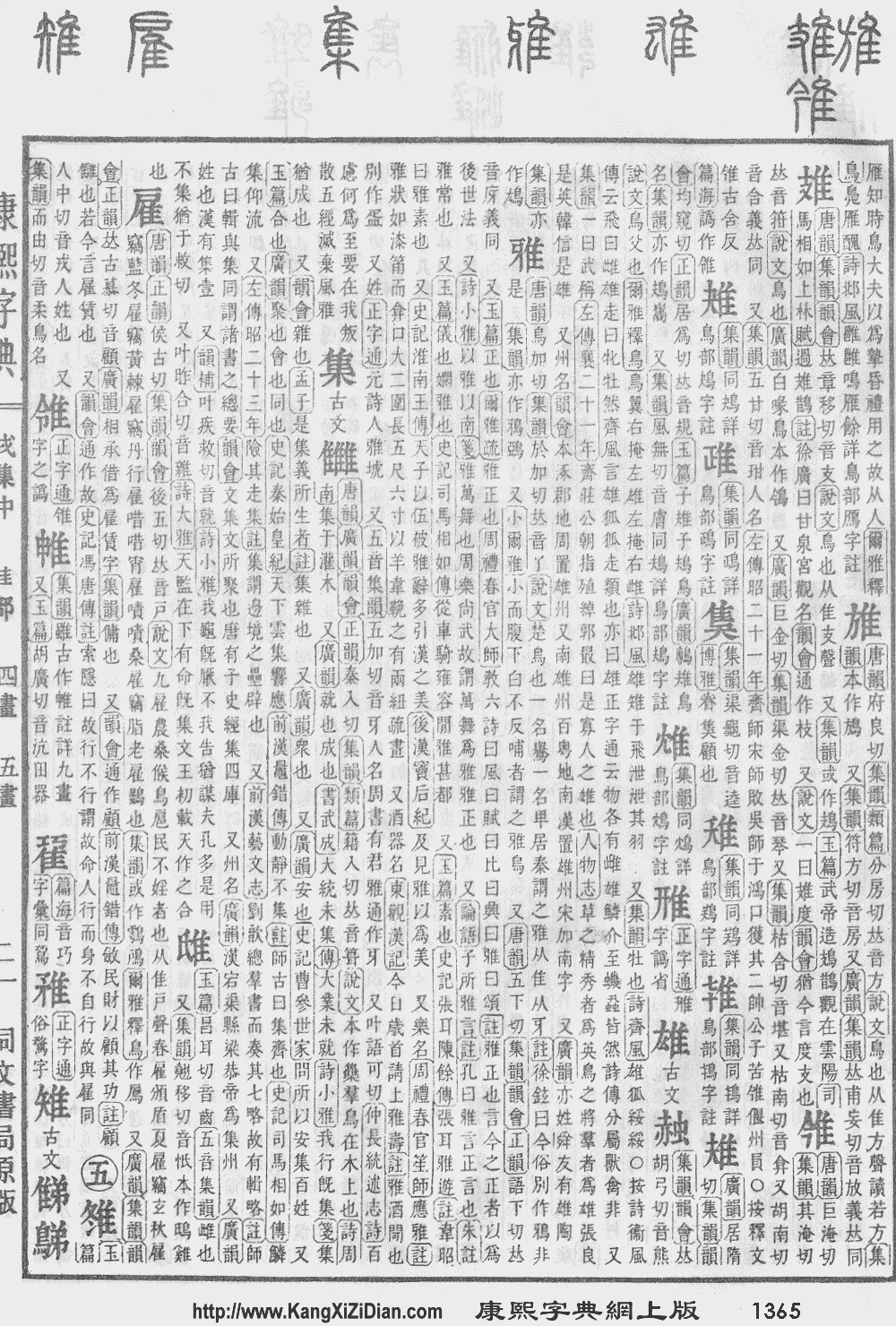
- KangXi: page 1365, character 12
- Dai Kanwa Jiten: character 41972
- Dae Jaweon: page 1869, character 1
- Hanyu Da Zidian: volume 6, page 4093, character 3
- Unihan data for U+96C4
Chinese
| simp. and trad. |
雄 | |
|---|---|---|
| alt. forms | 䧺 | |
Glyph origin
| Characters in the same phonetic series (厷) (Zhengzhang, 2003) | |
|---|---|
| Old Chinese | |
| 肱 | *kʷɯːŋ |
| 宏 | *ɡʷrɯːŋ |
| 閎 | *ɡʷrɯːŋ |
| 吰 | *ɡʷrɯːŋ |
| 竑 | *ɡʷrɯːŋ |
| 谹 | *ɡʷrɯːŋ |
| 翃 | *ɡʷrɯːŋ |
| 紘 | *ɡʷrɯːŋ |
| 鈜 | *ɡʷrɯːŋ |
| 浤 | *ɡʷrɯːŋ |
| 耾 | *ɡʷrɯːŋ |
| 雄 | *ɡʷɯŋ |
Phono-semantic compound (形聲, OC *ɡʷɯŋ) : phonetic 厷 (OC *kʷɯːŋ) + semantic 隹.
Pronunciation
Definitions
雄
Usage notes
Antonyms
- 雌 (cí, “female”)
Compounds
|
|
|
Japanese
Kanji
Readings
Etymology 1
| Kanji in this term |
|---|
| 雄 |
| ゆう Grade: S |
| on’yomi |
From Middle Chinese 雄 (hjuwng, “male”).
Pronunciation
Noun
Derived terms
Etymology 2
| Kanji in this term |
|---|
| 雄 |
| お Grade: S |
| kun’yomi |
/wo/ → /o/
From Old Japanese. Persists in compounds, such as the first element o- in the modern Japanese term 男 (otoko, “man”).[2][1]
Pronunciation
Alternative forms
Noun
雄 (hiragana お, rōmaji o, historical hiragana を)
- (obsolete in isolation) man, male
- 711-712, Kojiki (上巻 [Kamitsumaki])
- 汝こそは遠にいませば
- na koso wa o ni imaseba
- As you yourself be male / a man...
- 汝こそは遠にいませば
- 711-712, Kojiki (上巻 [Kamitsumaki])
- (obsolete) husband
- 711-712, Kojiki (上巻 [Kamitsumaki])
- 吾はもよ女にしあれば汝を除て男は無し汝を除て夫は無し
- wa wa moyo me ni shiareba na o kite o wa nashi na o kite tsuma wa nashi
- As I am a woman, without you, there are no husbands. Without you, there are no wives...
- 吾はもよ女にしあれば汝を除て男は無し汝を除て夫は無し
- 711-712, Kojiki (上巻 [Kamitsumaki])
- something large, powerful, or otherwise masculine
- 雄叫び/雄滝/大夫
- otakebi/odaki/masurao
- a war cry / the larger of two waterfalls / manliness
- 雄叫び/雄滝/大夫
- yang (as opposed to yin)
- 女男、陰陽
- meo, meo
- yin-yang (two different kanji spellings, same reading and derivation)
- 女男、陰陽
Usage notes
- Not used in isolation in modern Japanese.
Derived terms
- 雄臼 (ousu): in a traditional Japanese stone or wooden mill or grinder, the bottom of the two pieces, two which the drive shaft is attached
- 雄鹿 (ojika): a buck, a male deer
- 雄滝 (odaki): the larger of two waterfalls
- 雄叫び (otakebi): a war cry
- 男 (otoko): man
- 夫 (otto): husband
- 雄花 (obana): a male flower
- 須佐之男 (Susanō): Susanoo, the male god of storms
- 益荒男, 丈夫, 大夫 (masurao): manliness
- 女男, 陰陽 (meo): yin-yang
Antonyms
Etymology 3
| Kanji in this term |
|---|
| 雄 |
| おす Grade: S |
| kun’yomi |
/wosu/ → /osu/
Compound of 雄 (o, “male”) + す (su), but the derivation of the su element is unknown.
Pronunciation
Alternative forms
Noun
雄 (hiragana おす, katakana オス, rōmaji osu, historical hiragana をす)
Usage notes
- This is the most common reading of this term in modern Japanese when used as a standalone noun.
- Only used to refer to non-human male organisms.
- As with many terms that name organisms, this term is often spelled in katakana, especially in biological contexts, as オス.
Synonyms
- (human male): 男性 (dansei)
Antonyms
Etymology 4
| Kanji in this term |
|---|
| 雄 |
| おん Grade: S |
| kun’yomi |
/won/ → /on/
Compound of 雄 (o, “male”) + ん (n). The latter -n element might be a contraction of the possessive particle の (no).
Pronunciation
Alternative forms
Noun
雄 (hiragana おん, rōmaji on, historical hiragana をん)
Usage notes
- Not used in isolation in modern Japanese.
Derived terms
References
Korean
Hanja
雄 • (ung) (hangeul 웅, revised ung, McCune–Reischauer ung, Yale wung)
- This term needs a translation to English. Please help out and add a translation, then remove the text
{{rfdef}}.
Vietnamese
Han character
雄 (hùng)
- This term needs a translation to English. Please help out and add a translation, then remove the text
{{rfdef}}.