織
See also: 织
| ||||||||
Translingual
Han character
織 (radical 120 糸+12, 18 strokes, cangjie input 女火卜戈日 (VFYIA), four-corner 23950, composition ⿰糹戠)
References
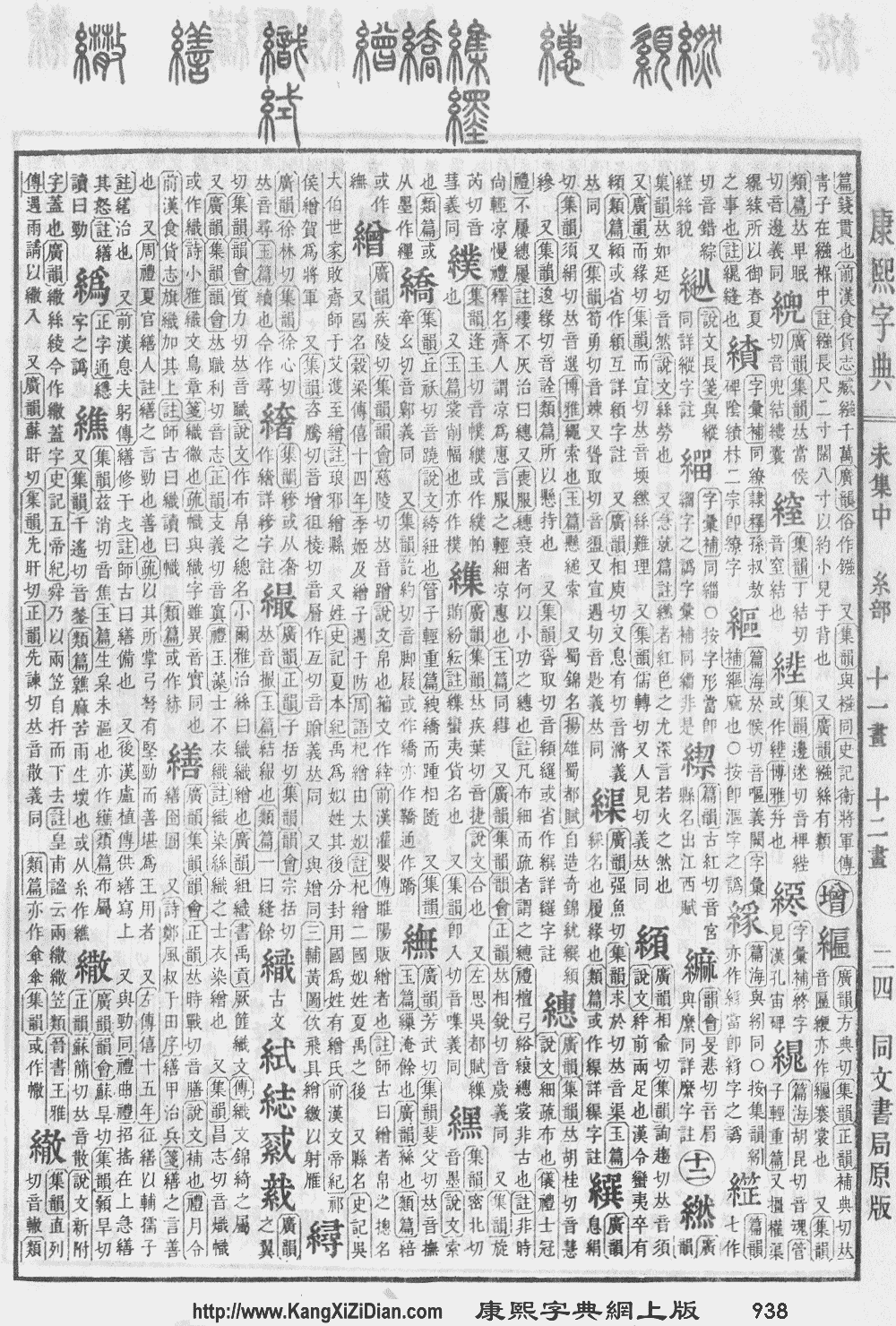
- KangXi: page 938, character 29
- Dai Kanwa Jiten: character 27892
- Dae Jaweon: page 1377, character 28
- Hanyu Da Zidian: volume 5, page 3453, character 17
- Unihan data for U+7E54
Chinese
| trad. | 織 | |
|---|---|---|
| simp. | 织 | |
Glyph origin
| Historical forms of the character 織 | ||
|---|---|---|
| Shang | Shuowen Jiezi (compiled in Han) | Liushutong (compiled in Ming) |
| Oracle bone script | Small seal script | Transcribed ancient scripts |
 |
 |
 |
| Characters in the same phonetic series (戠) (Zhengzhang, 2003) | |
|---|---|
| Old Chinese | |
| 識 | *tjɯɡs, *hljɯɡ |
| 幟 | *tjɯɡs, *tʰjɯɡs, *hljɯɡs |
| 織 | *tjɯɡs, *tjɯɡ |
| 熾 | *tʰjɯɡs |
| 樴 | *dɯːɡ, *tjɯɡ |
| 職 | *tjɯɡ |
| 軄 | *tjɯɡ |
| 戠 | *tjɯɡ |
| 膱 | *tjɯɡ |
| 蟙 | *tjɯɡ |
Phono-semantic compound (形聲, OC *tjɯɡs, *tjɯɡ) : semantic 糸 (“silk”) + phonetic 戠 (OC *tjɯɡ).
Etymology
From Proto-Sino-Tibetan *tak ~ dak (“to weave”).
Pronunciation
Definitions
織
Compounds
Japanese
Kanji
織
- This term needs a translation to English. Please help out and add a translation, then remove the text
{{rfdef}}.
Readings
- Goon: しき (shiki, Jōyō); し (shi)
- Kan’on: しょく (shoku, Jōyō); し (shi)
- Kun: おる (oru, 織る, Jōyō); おり (ori)
Korean
Hanja
織 • (jik) (hangeul 직, revised jik, McCune–Reischauer chik, Yale cik)
- This term needs a translation to English. Please help out and add a translation, then remove the text
{{rfdef}}.
Vietnamese
Han character
- This term needs a translation to English. Please help out and add a translation, then remove the text
{{rfdef}}.
This article is issued from
Wiktionary.
The text is licensed under Creative Commons - Attribution - Sharealike.
Additional terms may apply for the media files.