獅
| ||||||||
Translingual
Han character
獅 (radical 94, 犬+10, 13 strokes, cangjie input 大竹竹口月 (KHHRB), four-corner 41227, composition ⿰犭師)
References
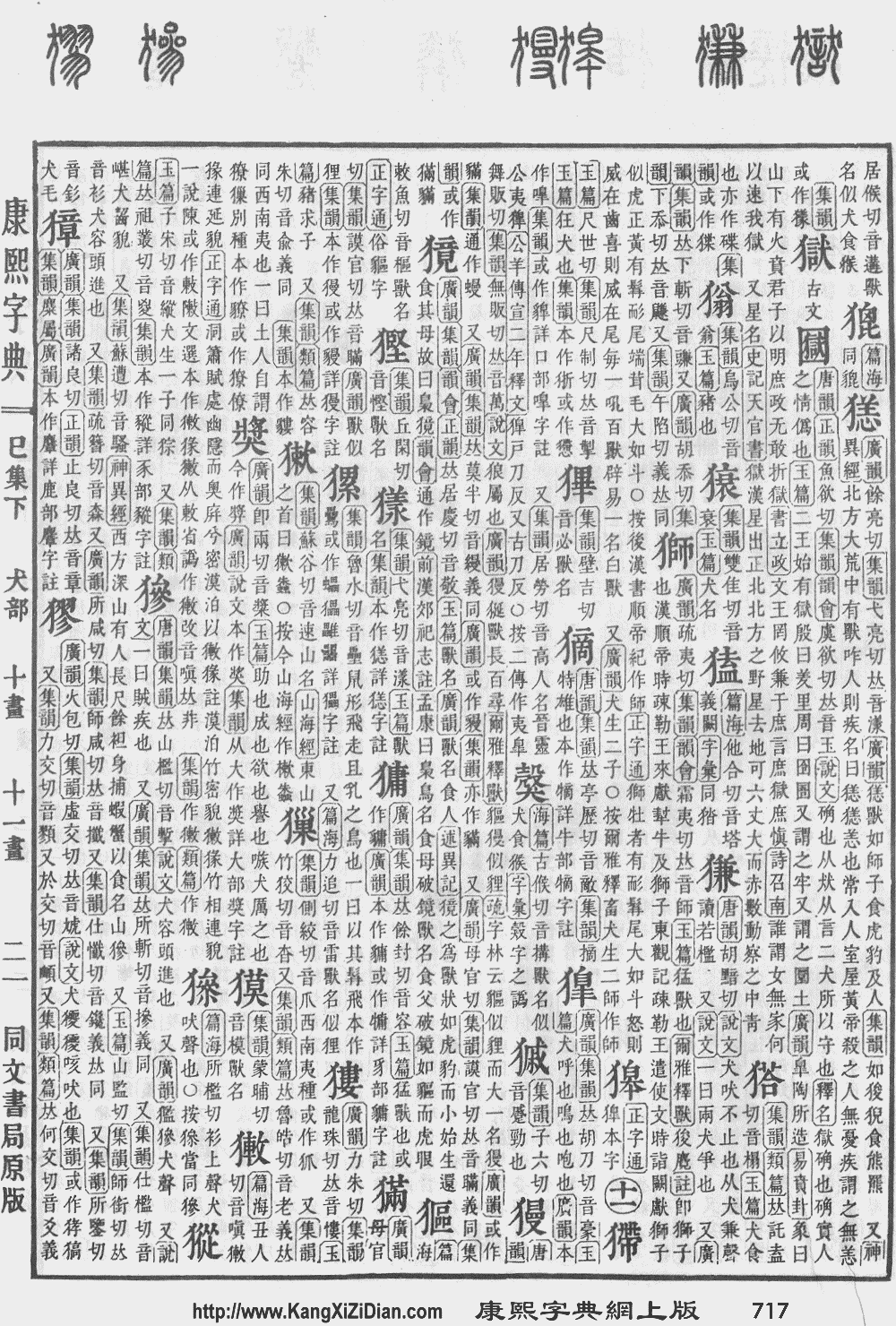
- KangXi: page 717, character 10
- Dai Kanwa Jiten: character 20609
- Dae Jaweon: page 1128, character 25
- Hanyu Da Zidian: volume 2, page 1363, character 4
- Unihan data for U+7345
Chinese
| trad. | 獅 | |
|---|---|---|
| simp. | 狮 | |
| alt. forms | 師/师 | |
Glyph origin
| Characters in the same phonetic series (師) (Zhengzhang, 2003) | |
|---|---|
| Old Chinese | |
| 篩 | *sreːl, *srel, *sri |
| 師 | *sri |
| 鰤 | *sri |
| 蒒 | *sri |
| 獅 | *sri |
| 螄 | *sri |
Phono-semantic compound (形聲, OC *sri) : semantic 犬 (“dog”) + phonetic 師 (OC *sri).
Etymology
First mentioned in the Book of Han [1st century CE], in the description of the "specialties" from the 烏弋山離 (OC *ʔˤa lək srar raj, “Alexandria”) country in the Western Regions. The country referred to is likely "Alexandria Prophthasia", which was part of the Parthian Empire during the time of Han, speaking an Indo-Iranian language.
Compare Middle Persian šgl (šagr, šēr, “lion; (astronomy) Leo”), Khotanese sarau (sarau, “lion”). Related to 狻猊 (OC *sloːn ŋeː).
Pronunciation
Definitions
獅
Compounds
Japanese
Kanji
(“Jinmeiyō” kanji used for names)
- a lion
Readings
Etymology
From Middle Chinese 獅 (MC ʃˠiɪ).
Pronunciation
Noun
Usage notes
Very rarely used on its own. The shishi reading is almost always spelled as 獅子.
Korean
Hanja
獅 • (sa) (hangeul 사, revised sa, McCune–Reischauer sa, Yale sa)
- This term needs a translation to English. Please help out and add a translation, then remove the text
{{rfdef}}.
Vietnamese
Han character
獅 (sư)
- This term needs a translation to English. Please help out and add a translation, then remove the text
{{rfdef}}.
Readings
- Nôm: sư
References
- Thiều Chửu : Hán Việt Tự Điển Hà Nội 1942
- Trần Văn Chánh: Từ Điển Hán Việt NXB Trẻ, Ho Chi Minh Ville, 1999
- Vũ Văn Kính: Đại Tự Điển Chữ Nôm, NXB Văn Nghệ, Ho Chi Minh Ville, 1999