嘔
See also: 呕
| ||||||||
Translingual
Han character
嘔 (radical 30 口+11, 14 strokes, cangjie input 口尸口口 (RSRR), four-corner 61016, composition ⿰口區)
References
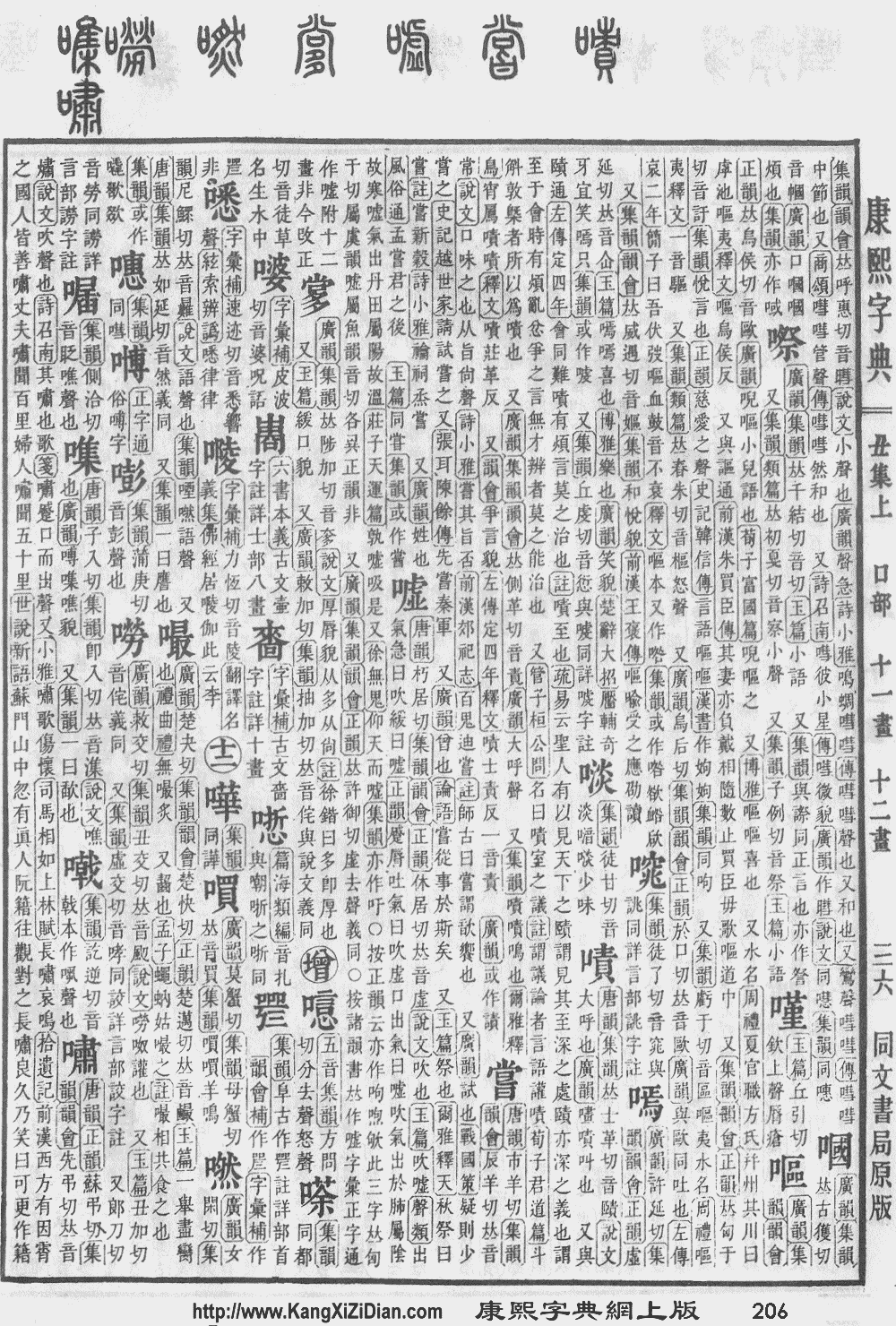
- KangXi: page 206, character 4
- Dai Kanwa Jiten: character 4200
- Dae Jaweon: page 429, character 2
- Hanyu Da Zidian: volume 1, page 674, character 12
- Unihan data for U+5614
Chinese
Glyph origin
| Characters in the same phonetic series (區) (Zhengzhang, 2003) | |
|---|---|
| Old Chinese | |
| 摳 | *kʰoː, *kʰo |
| 彄 | *kʰoː |
| 剾 | *kʰoː, *qoː |
| 謳 | *qoː |
| 歐 | *qoː, *qoːʔ |
| 區 | *qoː, *kʰo |
| 鷗 | *qoː |
| 甌 | *qoː |
| 漚 | *qoː, *qoːs |
| 瞘 | *qoː |
| 嘔 | *qoː, *qoːʔ |
| 櫙 | *qoː |
| 膒 | *qoː |
| 蓲 | *qoː, *kʰu, *qo, *qos |
| 醧 | *qoː, *qas |
| 鏂 | *qoː |
| 毆 | *qoːʔ |
| 塸 | *qoːʔ |
| 貙 | *kʰl'o |
| 樞 | *kʰjo |
| 驅 | *kʰo, *kʰos |
| 軀 | *kʰo |
| 嶇 | *kʰo |
| 鰸 | *kʰo |
| 敺 | *kʰo |
| 傴 | *qoʔ |
| 嫗 | *qos |
| 饇 | *qos |
Etymology 1
| trad. | 嘔 | |
|---|---|---|
| simp. | 呕 | |
| alt. forms | 歐 original form 𠴰 㰶 𣢨 𧖼 | |
Pronunciation
Definitions
嘔
- to vomit
Synonyms
| Dialectal synonyms of 嘔吐 (“to vomit”) [map] | ||
|---|---|---|
| Variety | Location | Words |
| Formal (Written Standard Chinese) | 嘔吐 | |
| Mandarin | Beijing | 吐 |
| Taiwan | 吐 | |
| Jinan | 吐 | |
| Xi'an | 吐 | |
| Wuhan | 嘔、吐、哇 | |
| Chengdu | 吐、發吐 | |
| Yangzhou | 吐、噁 | |
| Hefei | 吐 | |
| Cantonese | Guangzhou | 嘔 |
| Hong Kong | 嘔 | |
| Taishan | 嘔 | |
| Yangjiang | 嘔 | |
| Gan | Nanchang | 嘔 |
| Hakka | Meixian | 嘔、翻 |
| Miaoli (N. Sixian) | 嘔、翻、翻肚 | |
| Liudui (S. Sixian) | 嘔、翻、翻肚 | |
| Hsinchu (Hailu) | 嘔、翻、翻肚 | |
| Dongshi (Dabu) | 噁、翻、翻肚 | |
| Zhuolan (Raoping) | 嘔、翻、翻肚 | |
| Yunlin (Zhao'an) | 吐、貶腹 | |
| Jin | Taiyuan | 吐 |
| Min Bei | Jian'ou | 吐 |
| Min Dong | Fuzhou | 吐、哊、嘔 |
| Min Nan | Xiamen | 吐 |
| Quanzhou | 吐 | |
| Zhangzhou | 吐 | |
| Taipei | 吐 | |
| Kaohsiung | 吐 | |
| Chaozhou | 吐 | |
| Wu | Suzhou | 嘔 |
| Wenzhou | 吐 | |
| Xiang | Changsha | 嘔 |
| Shuangfeng | 嘔 | |
Compounds
Etymology 2
| trad. | 嘔 | |
|---|---|---|
| simp. | 呕 | |
Pronunciation
Definitions
嘔
- Alternative form of 謳/讴 (ōu, “to sing”).
- (onomatopoeia) Used to describe orchestral music, cooing, etc.
Compounds
|
|
|
Etymology 3
Pronunciation
Definitions
嘔
- to make someone angry
- to become angry
Compounds
|
Etymology 4
Pronunciation
Definitions
嘔
Compounds
|
|
|
Etymology 5
Pronunciation
Definitions
嘔
Etymology 6
Pronunciation
Definitions
嘔
- An informal greeting.
Japanese
Kanji
嘔
(uncommon “Hyōgai” kanji, kyūjitai kanji, shinjitai form 呕)
- This term needs a translation to English. Please help out and add a translation, then remove the text
{{rfdef}}.
Readings
Korean
Hanja
嘔 • (gu, hu) (hangeul 구, 후, revised gu, hu, McCune–Reischauer ku, hu)
- This term needs a translation to English. Please help out and add a translation, then remove the text
{{rfdef}}.
Vietnamese
Han character
- This term needs a translation to English. Please help out and add a translation, then remove the text
{{rfdef}}.
This article is issued from
Wiktionary.
The text is licensed under Creative Commons - Attribution - Sharealike.
Additional terms may apply for the media files.