厭
See also: 厌
| ||||||||
Translingual
Han character
厭 (radical 27 厂+12, 14 strokes, cangjie input 一日月大 (MABK), four-corner 71234, composition ⿸厂猒)
Derived terms
References
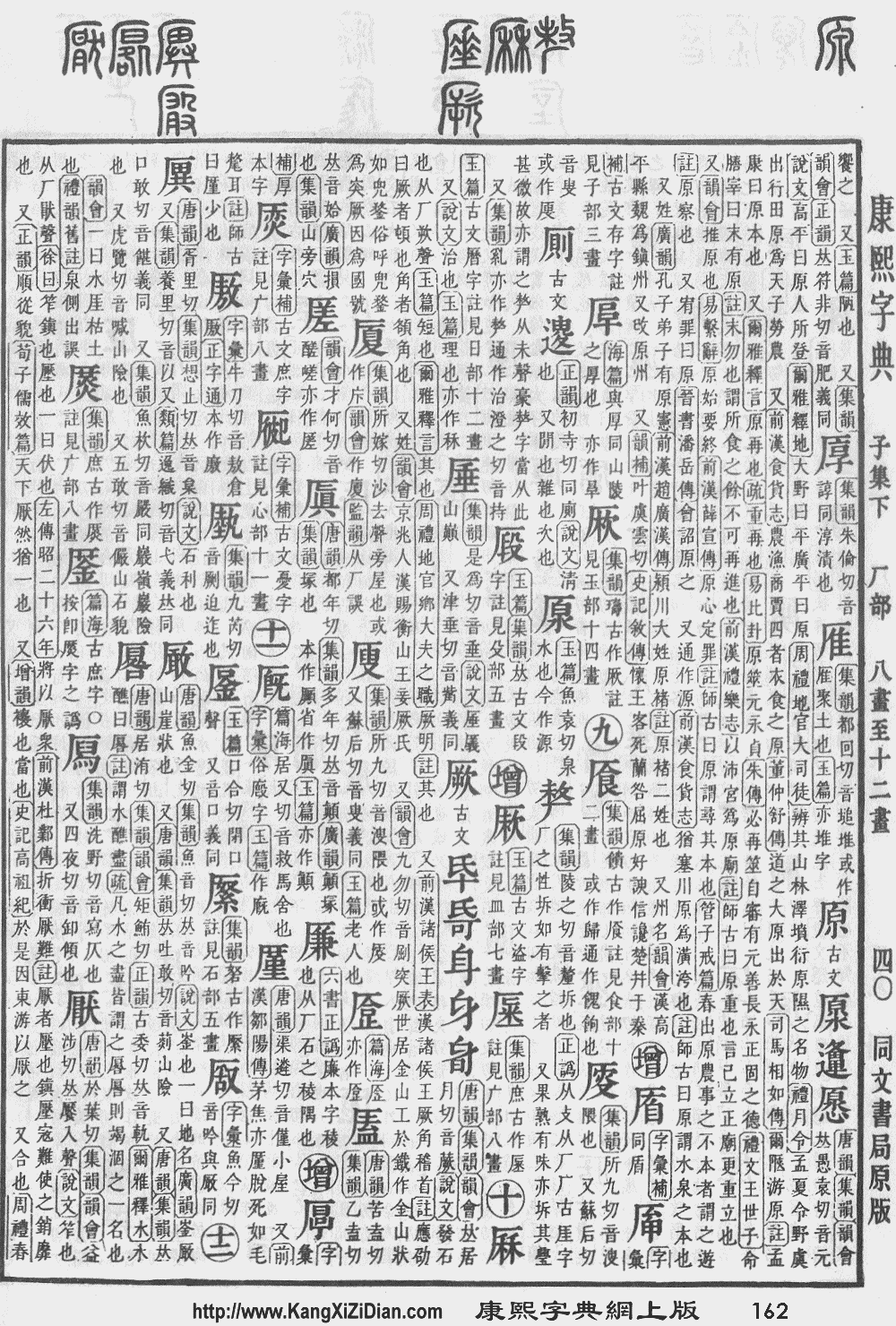
- KangXi: page 162, character 51
- Dai Kanwa Jiten: character 3025
- Dae Jaweon: page 370, character 30
- Hanyu Da Zidian: volume 1, page 78, character 3
- Unihan data for U+53AD
Chinese
| trad. | 厭 | |
|---|---|---|
| simp. | 厌 | |
Glyph origin
| Historical forms of the character 厭 | ||
|---|---|---|
| Western Zhou | Warring States | Shuowen Jiezi (compiled in Han) |
| Bronze inscriptions | Chu Slip and silk script | Small seal script |
 |
 |
 |
| Characters in the same phonetic series (猒) (Zhengzhang, 2003) | |
|---|---|
| Old Chinese | |
| 猒 | *qem, *qems |
| 懕 | *qem |
| 饜 | *qem, *qems |
| 嬮 | *qem, *qems, *qeb |
| 厭 | *qemʔ, *qems, *qeb |
| 黶 | *qemʔ |
| 檿 | *qemʔ |
| 魘 | *qemʔ, *qeb |
| 厴 | *qemʔ |
| 擪 | *qemʔ, *qeb |
| 壓 | *qreːb |
| 靨 | *qeb |
Phono-semantic compound (形聲, OC *qemʔ, *qems, *qeb) : semantic 厂 + phonetic 猒 (OC *qem, *qems).
Pronunciation
Definitions
厭
Compounds
Japanese
Kanji
厭
Readings
- Goon: えん (en)←えん (en, historical)←えむ (emu, ancient); よう (yō)←えふ (efu, historical)
- Kan’on: えん (en)←えん (en, historical)←えむ (emu, ancient); よう (yō)←えふ (efu, historical)
- Kan’yōon: おん (on)←おん (on, historical)←おむ (omu, ancient)
- On: あん (an)←あん (an, historical)←あむ (amu, ancient); おう (ō)←おふ (ofu, historical); ゆう (yū)←いふ (ifu, historical)
- Kun: あきる (akiru, 厭きる); いとう (itou, 厭う)←いとふ (itofu, historical); いとわしい (itowashii, 厭わしい); いや (iya, 厭); おさえる (osaeru, 厭える)←おさへる (osaferu, historical); きらう (kirau, 厭う)←きらふ (kirafu, historical)
Etymology 1
Shared root with 秋 (aki, "autumn"). Current meaning possibly arising from metaphorical use of the meaning "autumn".
Noun
Alternative forms
- 厭き
- 飽
- 飽き
Idioms
- 厭きが来る: One will become fed up with or lose interest in something that was formerly satisfying.
Etymology 2
Probably originally onomatopoetic, much like the English yuck.
Adjective
厭 (-na inflection, hiragana いや, rōmaji iya)
Inflection
Inflection of 厭
| Stem forms | |||
|---|---|---|---|
| Imperfective (未然形) | 厭だろ | いやだろ | iya daro |
| Continuative (連用形) | 厭で | いやで | iya de |
| Terminal (終止形) | 厭だ | いやだ | iya da |
| Attributive (連体形) | 厭な | いやな | iya na |
| Hypothetical (仮定形) | 厭なら | いやなら | iya nara |
| Imperative (命令形) | 厭であれ | いやであれ | iya de are |
| Key constructions | |||
| Informal negative | 厭ではない 厭じゃない |
いやではない いやじゃない |
iya de wa nai iya ja nai |
| Informal past | 厭だった | いやだった | iya datta |
| Informal negative past | 厭ではなかった 厭じゃなかった |
いやではなかった いやじゃなかった |
iya de wa nakatta iya ja nakatta |
| Formal | 厭です | いやです | iya desu |
| Formal negative | 厭ではありません 厭じゃありません |
いやではありません いやじゃありません |
iya de wa arimasen iya ja arimasen |
| Formal past | 厭でした | いやでした | iya deshita |
| Formal negative past | 厭ではありませんでした 厭じゃありませんでした |
いやではありませんでした いやじゃありませんでした |
iya de wa arimasen deshita iya ja arimasen deshita |
| Conjunctive | 厭で | いやで | iya de |
| Conditional | 厭なら(ば) | いやなら(ば) | iya nara (ba) |
| Provisional | 厭だったら | いやだったら | iya dattara |
| Volitional | 厭だろう | いやだろう | iya darō |
| Adverbial | 厭に | いやに | iya ni |
| Degree | 厭さ | いやさ | iyasa |
Interjection
Korean
Hanja
厭 • (yeom, yeop) (hangeul 염, 엽, revised yeom, yeop, McCune–Reischauer yŏm, yŏp, Yale yem, yep)
- This term needs a translation to English. Please help out and add a translation, then remove the text
{{rfdef}}.
Vietnamese
Han character
- This term needs a translation to English. Please help out and add a translation, then remove the text
{{rfdef}}.
This article is issued from
Wiktionary.
The text is licensed under Creative Commons - Attribution - Sharealike.
Additional terms may apply for the media files.