擪
| ||||||||
Translingual
Etymology
Phono-semantic compound (形聲, OC *qemʔ, *qeb) : phonetic 厭 (OC *qemʔ, *qems, *qeb) + semantic 手 (“hand”)
Han character
擪 (radical 64 手+14, 17 strokes, cangjie input 一大手 (MKQ), composition ⿱厭手)
References
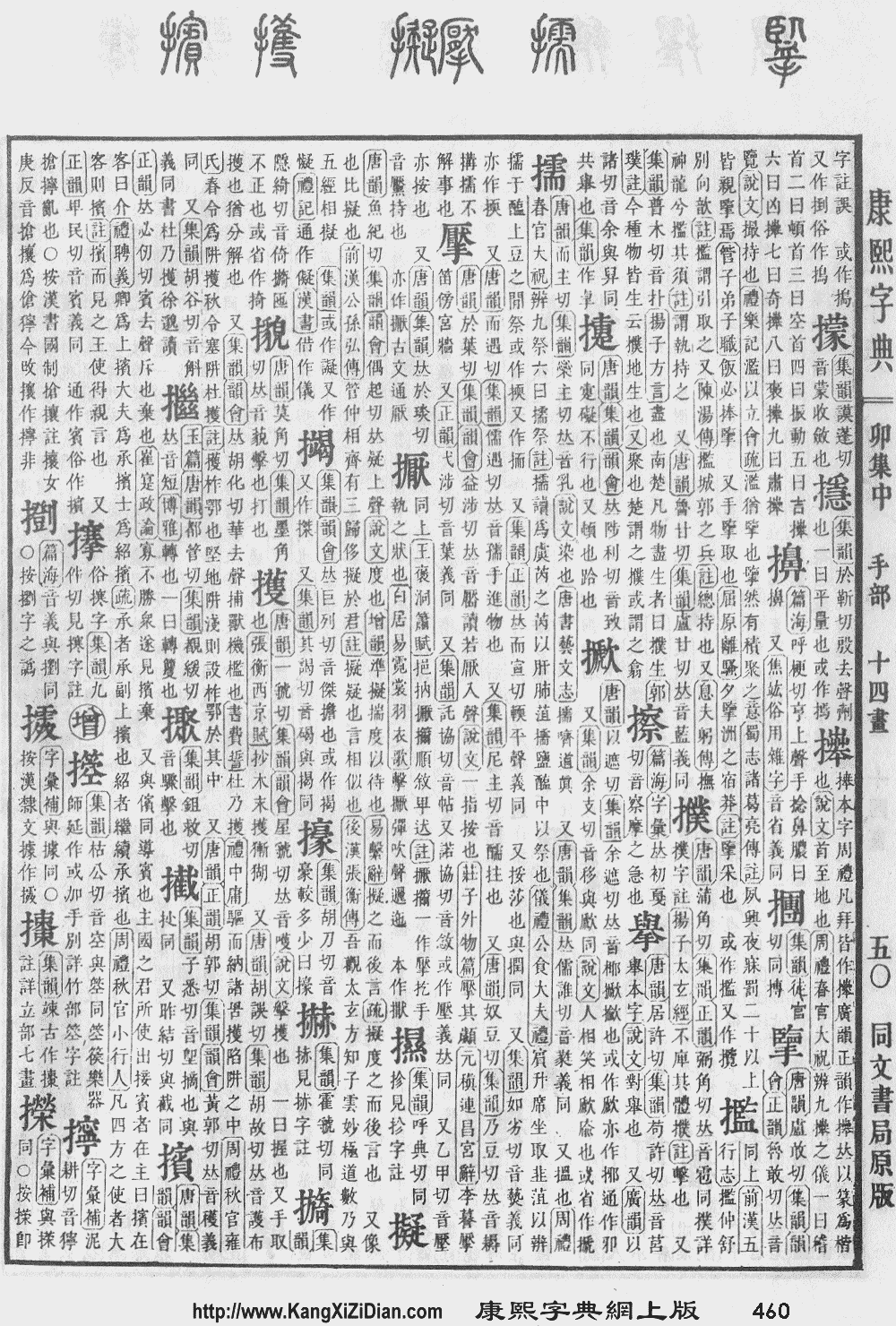
- KangXi: page 460, character 14
- Dai Kanwa Jiten: character 12867
- Dae Jaweon: page 809, character 4
- Hanyu Da Zidian: volume 3, page 1973, character 6
- Unihan data for U+64EA
Cantonese
Hanzi
擪 (Jyutping ngaap3, Yale ngaap3)
- This term needs a translation to English. Please help out and add a translation, then remove the text
{{rfdef}}.
Japanese
Kanji
擪
- This term needs a translation to English. Please help out and add a translation, then remove the text
{{rfdef}}.
Readings
- On (unclassified): よう (yō), ちょう (chō), じょう (jō), にょう (nyō), おう (ō), えん (en)
- Kun: おさえる (osaeru), もつ (motsu)
Mandarin
Hanzi
擪 (Pinyin yè (ye4), huò (huo4), Wade-Giles yeh4, huo4)
- This term needs a translation to English. Please help out and add a translation, then remove the text
{{rfdef}}.
This article is issued from
Wiktionary.
The text is licensed under Creative Commons - Attribution - Sharealike.
Additional terms may apply for the media files.