槍
See also: 枪
| ||||||||
Translingual
Han character
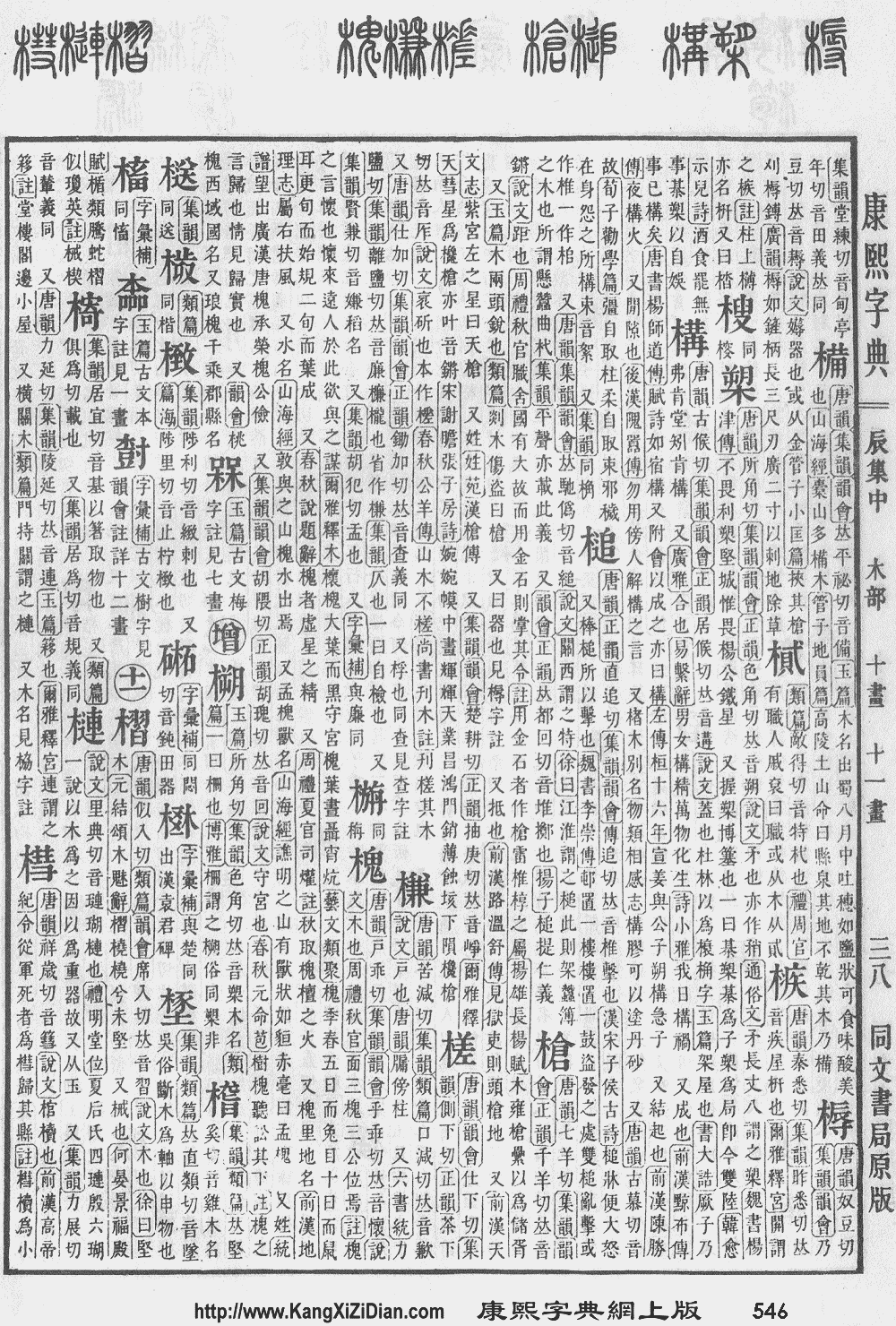
槍 (radical 75, 木+10, 14 strokes, cangjie input 木人戈口 (DOIR), four-corner 48967, composition ⿰木倉)
References
- KangXi: page 546, character 9
- Dai Kanwa Jiten: character 15319
- Dae Jaweon: page 934, character 1
- Hanyu Da Zidian: volume 2, page 1266, character 5
- Unihan data for U+69CD
Chinese
| trad. | 槍/鎗* | |
|---|---|---|
| simp. | 枪 | |
Glyph origin
| Historical forms of the character 槍 | |
|---|---|
| Shuowen Jiezi (compiled in Han) | Liushutong (compiled in Ming) |
| Small seal script | Transcribed ancient scripts |
 |
 |
| Characters in the same phonetic series (倉) (Zhengzhang, 2003) | |
|---|---|
| Old Chinese | |
| 艙 | *sʰaːŋ |
| 倉 | *sʰaːŋ |
| 蒼 | *sʰaːŋ, *sʰaːŋʔ |
| 滄 | *sʰaːŋ, *sʰraŋs |
| 傖 | *sʰaːŋ, *zraːŋ |
| 鶬 | *sʰaːŋ |
| 凔 | *sʰaːŋ |
| 槍 | *sʰaŋ, *sʰraːŋ |
| 搶 | *sʰaŋ, *sʰaŋʔ, *sʰraŋʔ |
| 蹌 | *sʰaŋ |
| 瑲 | *sʰaŋ |
| 牄 | *sʰaŋ |
| 嗆 | *sʰaŋs |
| 創 | *sʰraŋ, *sʰraŋs |
| 瘡 | *sʰraŋ |
| 愴 | *sʰraŋʔ, *sʰraŋs |
| 鎗 | *sʰraːŋ |
Phono-semantic compound (形聲, OC *sʰaŋ, *sʰraːŋ) : semantic 木 + phonetic 倉 (OC *sʰaːŋ).
Pronunciation 1
Definitions
槍
See also
Compounds
Derived terms from 槍
|
|
|
Pronunciation 2
Definitions
槍
- Only used in 欃槍/欃枪 (“comet”).
Japanese
Kanji
槍
(“Jinmeiyō” kanji used for names)
Readings
- Goon: そう (sō)←さう (sau, historical)
- Kan’on: しょう (shō)←しやう (syau, historical)
- Kun: やり (yari, 槍)
- Nanori: うつ (utsu); うつぎ (utsugi)
Compounds
Etymology
| Kanji in this term |
|---|
| 槍 |
| やり Jinmeiyō |
| kun’yomi |
The 連用形 (ren'yōkei, stem or continuative form) of 遣る (yaru, “to do, execute → to kill”). (Can this(+) etymology be sourced?)
Pronunciation
Alternative forms
Noun
- (weaponry) a spear, lance
- (shogi) common name for the 香車 (kyōsha, “lance”)
- a javelin (throwing spear used in athletics)
- (archaic) jeering
Derived terms
Derived terms
- 槍烏賊 (yariika)
- 槍踊り (yari-odori)
- 槍ヶ岳 (Yarigatake)
- 槍絡み (yarigarami)
- 槍鉋 (yari-ganna)
- 槍傷, 槍疵 (yarikizu)
- 槍先 (yarisaki)
- 槍錆 (Yarisabi)
- 槍師 (yarishi)
- 槍下 (yarishita)
- 槍印 (yarijirushi)
- 槍備え (yari-zonae)
- 槍鱮 (yaritanago, “Tanakia lanceolata”)
- 槍玉 (yaridama)
- 槍使い (yari-tsukai)
- 槍梯子 (yaribashigo)
- 槍衾 (yaribusuma)
- 槍奉行 (yari-bugyō)
- 槍持 (yarimochi)
- 槍の間 (yari no ma)
- 石槍 (ishiyari)
- 一番槍 (ichiban yari)
- 一本槍 (ippon yari)
- 鉤槍 (kagiyari)
- 鎌槍 (kamayari)
- 管槍 (kudayari)
- 毛槍 (keyari)
- 七本槍 (shichihon yari)
- 十文字槍 (jū-monji yari)
- 竹槍 (takeyari)
- たんぽ槍 (tanpo-yari, “padded spear”)
- 血槍 (chiyari)
- 手槍 (teyari)
- 鳥毛の槍 (torige no yari)
- 長柄の槍 (nagae no yari)
- 長槍 (nagayari)
- 投げ槍 (nageyari, “throwing spear, javelin”)
- 引っ殺ぎ槍 (hissogi yari)
- 牡丹槍 (botan-yari)
- 横槍 (yokoyari)
Idioms
- 槍が降っても (yari ga futte mo)
- 槍一筋の主 (yari-hitosuji no nushi)
See also
Proper noun
槍 (hiragana やり, rōmaji Yari)
- a surname.
References
Korean
Hanja
槍 • (chang, jaeng) (hangeul 창, 쟁, revised chang, jaeng, McCune–Reischauer ch'ang, chaeng, Yale chang, cayng)
- This term needs a translation to English. Please help out and add a translation, then remove the text
{{rfdef}}.
Vietnamese
Han character
- This term needs a translation to English. Please help out and add a translation, then remove the text
{{rfdef}}.
This article is issued from
Wiktionary.
The text is licensed under Creative Commons - Attribution - Sharealike.
Additional terms may apply for the media files.