伽
| ||||||||
Translingual
Han character
伽 (radical 9 人+5, 7 strokes, cangjie input 人大尸口 (OKSR), four-corner 26200, composition ⿰亻加)
References
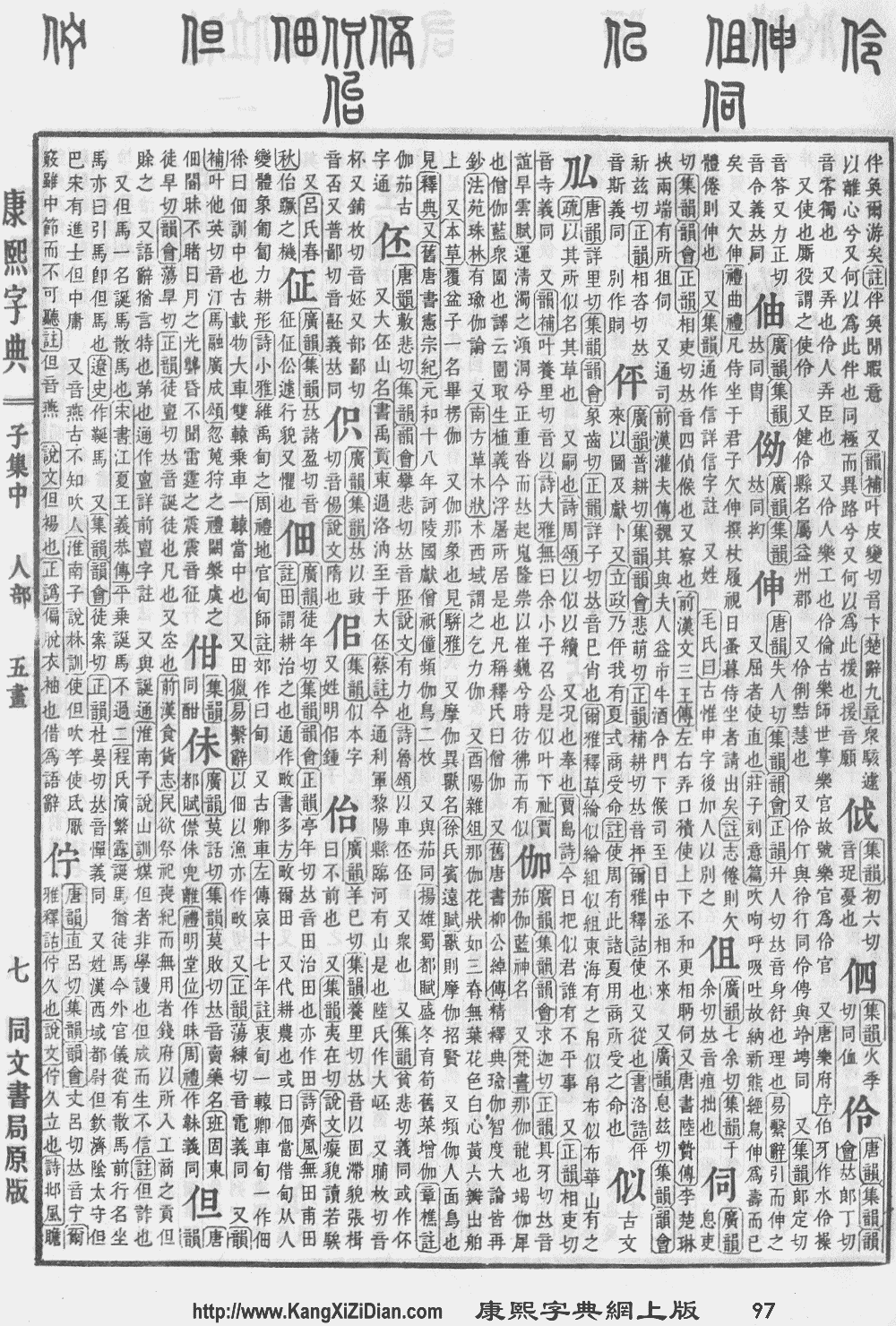
- KangXi: page 97, character 12
- Dai Kanwa Jiten: character 486
- Dae Jaweon: page 205, character 17
- Hanyu Da Zidian: volume 1, page 140, character 7
- Unihan data for U+4F3D
Chinese
Glyph origin
| Characters in the same phonetic series (加) (Zhengzhang, 2003) | |
|---|---|
| Old Chinese | |
| 妿 | *kaːl, *qaːl |
| 賀 | *ɡaːls |
| 迦 | *ka, *kal, *kraːl |
| 茄 | *ɡa, *ɡal, *kraːl |
| 伽 | *ɡa, *ɡal |
| 枷 | *ɡa, *ɡal, *kraːl |
| 嘉 | *kraːl |
| 加 | *kraːl |
| 笳 | *kraːl |
| 痂 | *kraːl |
| 袈 | *kraːl |
| 跏 | *kraːl |
| 珈 | *kraːl |
| 鴐 | *kraːl |
| 架 | *kraːls |
| 駕 | *kraːls |
| 瘸 | *ɡʷal |
| simp. and trad. |
伽 | |
|---|---|---|
Pronunciation 1
Definitions
伽
- Original form of 茄 (qié).
- Used in phonetic transcriptions.
Compounds
Pronunciation 2
Definitions
伽
- Used in phonetic transcriptions.
Compounds
Pronunciation 3
Definitions
伽
Compounds
Japanese
Kanji
伽
(“Jinmeiyō” kanji used for names)
- This term needs a translation to English. Please help out and add a translation, then remove the text
{{rfdef}}.
Readings
Etymology
| Kanji in this term |
|---|
| 伽 |
| とぎ Jinmeiyō |
| kun’yomi |
Pronunciation
- IPA(key): [to̞ɡʲi]
Noun
伽 (hiragana とぎ, rōmaji togi)
- relieving one of boredom with a story; also, such a person
- attending one in their bedroom; also, such a person
- nursing or taking care of a person; also, such a person
Korean
Hanja
伽 • (ga)
- This term needs a translation to English. Please help out and add a translation, then remove the text
{{rfdef}}.
Vietnamese
Han character
- This term needs a translation to English. Please help out and add a translation, then remove the text
{{rfdef}}.
References
This article is issued from
Wiktionary.
The text is licensed under Creative Commons - Attribution - Sharealike.
Additional terms may apply for the media files.