rosa
English
Etymology
Believed to derive from the name of the Australian native bird rosella (genus Platycercus), a small parrot noted for its ability to vanish when the need arises.
Pronunciation
Audio (US) (file)
Verb
rosa (third-person singular simple present rosas, present participle rosaing, simple past and past participle rosaed)
Noun
rosa (plural rosas)
Anagrams
Asturian
Noun
rosa f (plural roses)
- rose (flower)
Noun
rosa m (plural roses)
- rose (colour)
Catalan
Etymology
Pronunciation
Noun
rosa f (plural roses)
Adjective
rosa (masculine and feminine plural roses)
See also
| Colors in Catalan · colors (layout · text) | |||||
|---|---|---|---|---|---|
| blanc | gris | negre | marró | ||
| rosa | roig, vermell ; carmesí | taronja | groc ; crema | ||
| verd lima | verd | cian ; xarxet | |||
| atzur | blau | violat ; indi | magenta ; lila, porpra | ||
Cebuano
Etymology
From Spanish rosa, from Latin rosa, probably from Ancient Greek ῥόδον (rhódon).
Pronunciation
- Hyphenation: ro‧sa
Noun
rosa
Adjective
rosa
- of the colour pink
Classical Nahuatl
Etymology
Noun
rosa
- Rose.
- Synonym: Caxtillan xochitl
- 1555, Alonso de Molina, Aqui comienca vn vocabulario en la lengua Castellana y Mexicana
- Flor o roſa de caſtilla. caſtillan xuchitl. Roſa.
Czech
Etymology
From Proto-Slavic *rosa.
Noun
rosa f
Declension
Galician
Noun
rosa f (plural rosas)
Derived terms
See also
| Colors in Galician · cores (layout · text) | |||||
|---|---|---|---|---|---|
| branco | gris | negro | castaño, marrón | ||
| rosa | vermello ; carmín | laranxa | amarelo ; crema | ||
| verde lima | verde | menta ; verde escuro | ciano ; azul verdoso | ||
| cerúleo | azul | violeta ; anil | maxenta ; púrpura | ||
German
Pronunciation
- IPA(key): /ˈʁoːza/
audio (file) - Hyphenation: ro‧sa
Adjective
rosa (comparative rosaner, superlative am rosasten or am rosansten)
Usage notes
- The adjective is usually treated as invariable in the formal standard language, thus neither declined forms nor comparation forms are used.
- rosa also has normal inflected forms. An -n- is then infixed before (vocalic) endings. Compare the same in lila.
Declension
Inflected forms (with infixed -n-):
| number & gender | singular | plural | |||
|---|---|---|---|---|---|
| masculine | feminine | neuter | all genders | ||
| predicative | er ist rosa | sie ist rosa | es ist rosa | sie sind rosa | |
| strong declension (without article) |
nominative | rosaner | rosane | rosanes | rosane |
| genitive | rosanen | rosaner | rosanen | rosaner | |
| dative | rosanem | rosaner | rosanem | rosanen | |
| accusative | rosanen | rosane | rosanes | rosane | |
| weak declension (with definite article) |
nominative | der rosane | die rosane | das rosane | die rosanen |
| genitive | des rosanen | der rosanen | des rosanen | der rosanen | |
| dative | dem rosanen | der rosanen | dem rosanen | den rosanen | |
| accusative | den rosanen | die rosane | das rosane | die rosanen | |
| mixed declension (with indefinite article) |
nominative | ein rosaner | eine rosane | ein rosanes | (keine) rosanen |
| genitive | eines rosanen | einer rosanen | eines rosanen | (keiner) rosanen | |
| dative | einem rosanen | einer rosanen | einem rosanen | (keinen) rosanen | |
| accusative | einen rosanen | eine rosane | ein rosanes | (keine) rosanen | |
| number & gender | singular | plural | |||
|---|---|---|---|---|---|
| masculine | feminine | neuter | all genders | ||
| predicative | er ist rosaner | sie ist rosaner | es ist rosaner | sie sind rosaner | |
| strong declension (without article) |
nominative | rosanerer | rosanere | rosaneres | rosanere |
| genitive | rosaneren | rosanerer | rosaneren | rosanerer | |
| dative | rosanerem | rosanerer | rosanerem | rosaneren | |
| accusative | rosaneren | rosanere | rosaneres | rosanere | |
| weak declension (with definite article) |
nominative | der rosanere | die rosanere | das rosanere | die rosaneren |
| genitive | des rosaneren | der rosaneren | des rosaneren | der rosaneren | |
| dative | dem rosaneren | der rosaneren | dem rosaneren | den rosaneren | |
| accusative | den rosaneren | die rosanere | das rosanere | die rosaneren | |
| mixed declension (with indefinite article) |
nominative | ein rosanerer | eine rosanere | ein rosaneres | (keine) rosaneren |
| genitive | eines rosaneren | einer rosaneren | eines rosaneren | (keiner) rosaneren | |
| dative | einem rosaneren | einer rosaneren | einem rosaneren | (keinen) rosaneren | |
| accusative | einen rosaneren | eine rosanere | ein rosaneres | (keine) rosaneren | |
| number & gender | singular | plural | |||
|---|---|---|---|---|---|
| masculine | feminine | neuter | all genders | ||
| predicative | er ist am rosasten | sie ist am rosasten | es ist am rosasten | sie sind am rosasten | |
| strong declension (without article) |
nominative | rosaster | rosaste | rosastes | rosaste |
| genitive | rosasten | rosaster | rosasten | rosaster | |
| dative | rosastem | rosaster | rosastem | rosasten | |
| accusative | rosasten | rosaste | rosastes | rosaste | |
| weak declension (with definite article) |
nominative | der rosaste | die rosaste | das rosaste | die rosasten |
| genitive | des rosasten | der rosasten | des rosasten | der rosasten | |
| dative | dem rosasten | der rosasten | dem rosasten | den rosasten | |
| accusative | den rosasten | die rosaste | das rosaste | die rosasten | |
| mixed declension (with indefinite article) |
nominative | ein rosaster | eine rosaste | ein rosastes | (keine) rosasten |
| genitive | eines rosasten | einer rosasten | eines rosasten | (keiner) rosasten | |
| dative | einem rosasten | einer rosasten | einem rosasten | (keinen) rosasten | |
| accusative | einen rosasten | eine rosaste | ein rosastes | (keine) rosasten | |
| number & gender | singular | plural | |||
|---|---|---|---|---|---|
| masculine | feminine | neuter | all genders | ||
| predicative | er ist am rosansten | sie ist am rosansten | es ist am rosansten | sie sind am rosansten | |
| strong declension (without article) |
nominative | rosanster | rosanste | rosanstes | rosanste |
| genitive | rosansten | rosanster | rosansten | rosanster | |
| dative | rosanstem | rosanster | rosanstem | rosansten | |
| accusative | rosansten | rosanste | rosanstes | rosanste | |
| weak declension (with definite article) |
nominative | der rosanste | die rosanste | das rosanste | die rosansten |
| genitive | des rosansten | der rosansten | des rosansten | der rosansten | |
| dative | dem rosansten | der rosansten | dem rosansten | den rosansten | |
| accusative | den rosansten | die rosanste | das rosanste | die rosansten | |
| mixed declension (with indefinite article) |
nominative | ein rosanster | eine rosanste | ein rosanstes | (keine) rosansten |
| genitive | eines rosansten | einer rosansten | eines rosansten | (keiner) rosansten | |
| dative | einem rosansten | einer rosansten | einem rosansten | (keinen) rosansten | |
| accusative | einen rosansten | eine rosanste | ein rosanstes | (keine) rosansten | |
See also
- pink (used in German for stronger shades only)
Further reading
- rosa in Duden online
Irish
Noun
rosa m
- inflection of ros:
- genitive singular
- nominative and vocative and dative plural
Further reading
- "rosa" in Foclóir Gaeilge-Béarla, An Gúm, 1977, by Niall Ó Dónaill.
- Entries containing “rosa” in English-Irish Dictionary, An Gúm, 1959, by Tomás de Bhaldraithe.
- Entries containing “rosa” in New English-Irish Dictionary by Foras na Gaeilge.
Italian

Etymology 1
Pronunciation
- IPA(key): /ˈrɔːza/
- Rhymes: -ɔza
- Stress: ròsa
- Hyphenation: ro‧sa
Noun
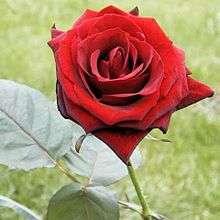
rosa f (plural rose)
Adjective
rosa (invariable)
Related terms
See also
| Colors in Italian · colori (layout · text) | |||||
|---|---|---|---|---|---|
| bianco | grigio | nero | marrone | ||
| rosa | rosso ; cremisi | arancione | giallo ; crema | ||
| limetta | verde | ciano ; blu petrolio, foglia di tè | |||
| azzurro | blu | violetto ; indaco | magenta ; viola | ||
Etymology 2
Past participle of rodere.
Pronunciation
- IPA(key): /ˈro.za/, [ˈroːz̪ä]
- Rhymes: -osa
- Stress: rósa
- Hyphenation: ro‧sa
Participle
rosa f sg
- feminine singular of roso
Noun
rosa f (plural rose)
Anagrams
Latin
Etymology 1
Might be derived from Ancient Greek ῥόδον (rhódon), but some of the details remain mysterious.
Pronunciation
- (Classical) IPA(key): /ˈro.sa/, [ˈrɔ.sa]
- (Ecclesiastical) IPA(key): /ˈro.sa/, [ˈroː.sa]
Audio (Classical) (file)
Noun
rosa f (genitive rosae); first declension
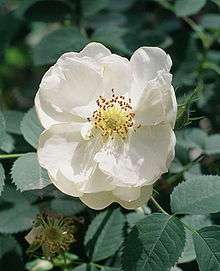
- a rose
- 61 CE – c. 112 CE, Pliny the Younger, Epistulae 5
- Inde etiam rosas effert, umbrarumque frigus non ingrato sole distinguit. Finito vario illo multiplicique curvamine recto limiti redditur nec huic uni, nam viae plures intercedentibus buxis dividuntur.[1][2]
- Farther on, there are roses too along the path, and the cool shade is pleasantly alternated with sunshine. Having passed through these manifold winding alleys, the path resumes a straight course, and at the same time divides into several tracks, separated by box hedges.[3][4]
Even roses grow there, and the warmth of the sun is delightful as a change from the cool of the shade. When you come to the end of these various winding alleys, the boundary again runs straight, or should I say boundaries, for there are a number of paths with box shrubs between them.[5]
- Farther on, there are roses too along the path, and the cool shade is pleasantly alternated with sunshine. Having passed through these manifold winding alleys, the path resumes a straight course, and at the same time divides into several tracks, separated by box hedges.[3][4]
- Inde etiam rosas effert, umbrarumque frigus non ingrato sole distinguit. Finito vario illo multiplicique curvamine recto limiti redditur nec huic uni, nam viae plures intercedentibus buxis dividuntur.[1][2]
- (transferred sense, endearment) dear, rose, sweetheart, love; a word of endearment
- Mea rosa. ― My love.
- Rosa! ― Honey!
- Tu mihi rosa es. ― You are my sweetheart.
Inflection
First declension.
| Case | Singular | Plural |
|---|---|---|
| nominative | rosa | rosae |
| genitive | rosae | rosārum |
| dative | rosae | rosīs |
| accusative | rosam | rosās |
| ablative | rosā | rosīs |
| vocative | rosa | rosae |
Related terms
|
Descendants
- Catalan: rosa
- Dalmatian: ruosa
- Danish: rose, rosa
- Dutch: roos
- English: rose
- French: rose
- Friulian: rose
- Galician: rosa
- Irish: rós
- Istriot: roza
- Italian: rosa
- Ligurian: rêuza
- Occitan: ròsa
- → Old High German: rōsa
- Polish: róża
- Portuguese: rosa
- Romanian: roză
- Romansch: rosa, rösa
- Russian: роза (roza)
- Sardinian: rosa, arrosa
- Sicilian: rosa
- Slovene: roža
- Spanish: rosa
Etymology 2
Inflected form of rōsus, participle of rōdō (“gnaw, eat away”).
Pronunciation 1
- (Classical) IPA(key): /ˈroː.sa/
Participle
rōsa
Pronunciation 2
- (Classical) IPA(key): /ˈroː.saː/
Participle
rōsā
- ablative feminine singular of rōsus
References
- rosa in Charlton T. Lewis and Charles Short (1879) A Latin Dictionary, Oxford: Clarendon Press
- rosa in Charlton T. Lewis (1891) An Elementary Latin Dictionary, New York: Harper & Brothers
- rosa in Charles du Fresne du Cange’s Glossarium Mediæ et Infimæ Latinitatis (augmented edition, 1883–1887)
- rosa in Gaffiot, Félix (1934) Dictionnaire Illustré Latin-Français, Hachette
- ↑ Pliny text, Latin version
- ↑ Pliny text, Latin version 2
- ↑ Pliny text, English translation 1
- ↑ Pliny text, English translation 2
- ↑ Pliny text, alternative English translation
Latvian
Noun
rosa f (4 declension)
Lower Sorbian
Etymology
From Proto-Slavic *rosa, from Proto-Indo-European *Hroseh₂.
Pronunciation
- IPA(key): /ˈrɔsa/
Noun
rosa f (diminutive roska)
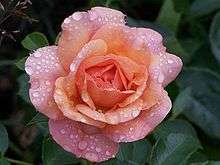
- dew (“moisture in the air that settles on plants, etc.”)
Declension
Luxembourgish
Etymology
Pronunciation
Audio (file)
Adjective
rosa (masculine rosaen, neuter rosat, not comparable)
Norwegian Bokmål
Etymology 1
Adjective
rosa (indeclinable)
Etymology 2
Noun
rosa (indeclinable (uncountable))
Etymology 3
Alternative forms
Noun
rosa m, f
- definite feminine singular of rose
Norwegian Nynorsk
Etymology 1
Adjective
rosa (indeclinable)
- pink (colour)
Etymology 2
Noun
rosa (indeclinable (uncountable))
Etymology 3
Noun
rosa f
- definite singular of rose
Old Portuguese
Etymology
From Latin rosa, from Oscan, from Ancient Greek ῥόδον (rhódon), from Proto-Indo-European *wr̥dʰo.
Pronunciation
- IPA(key): /ˈrɔ.za/
Noun
rosa f
- rose (flower)
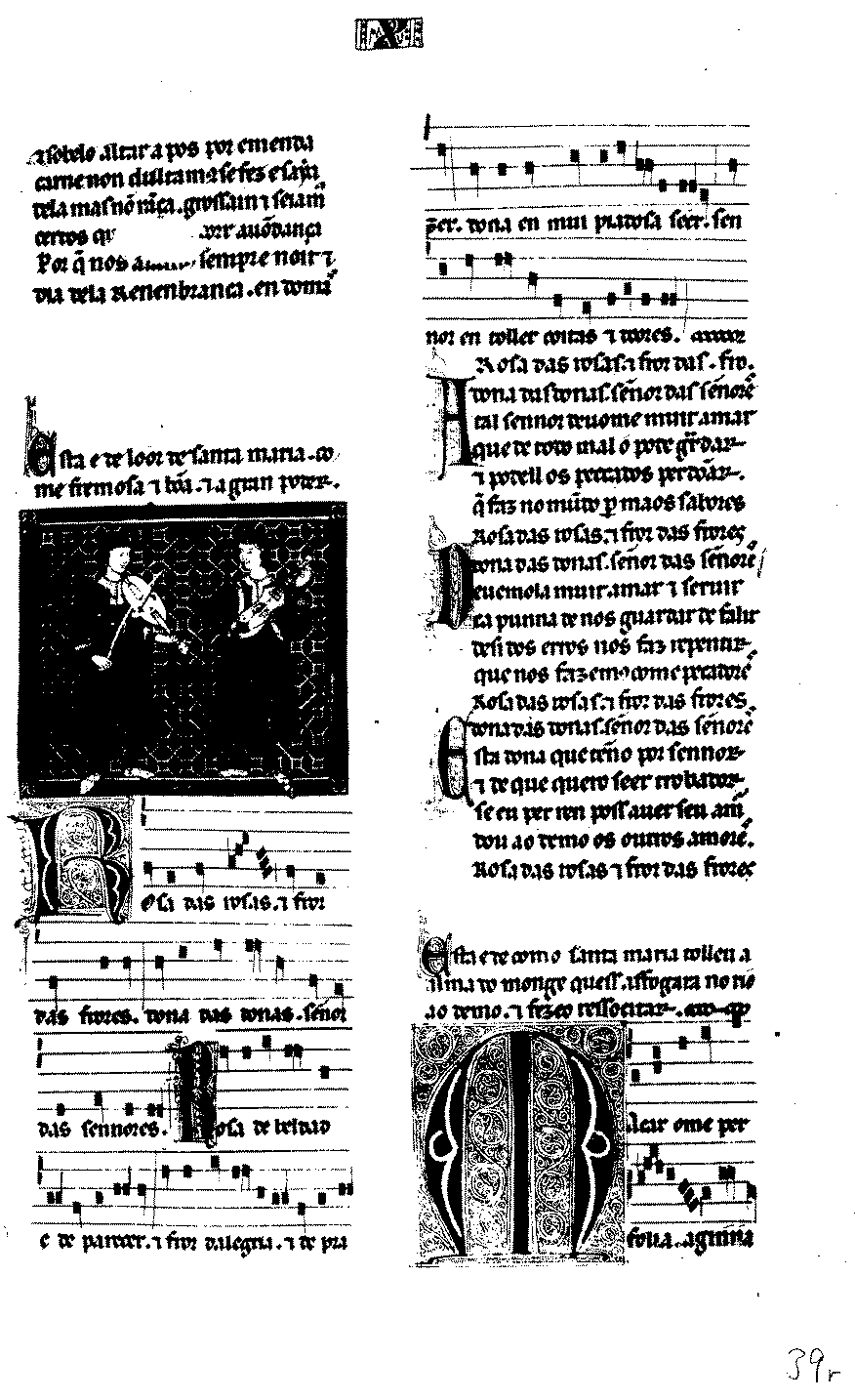
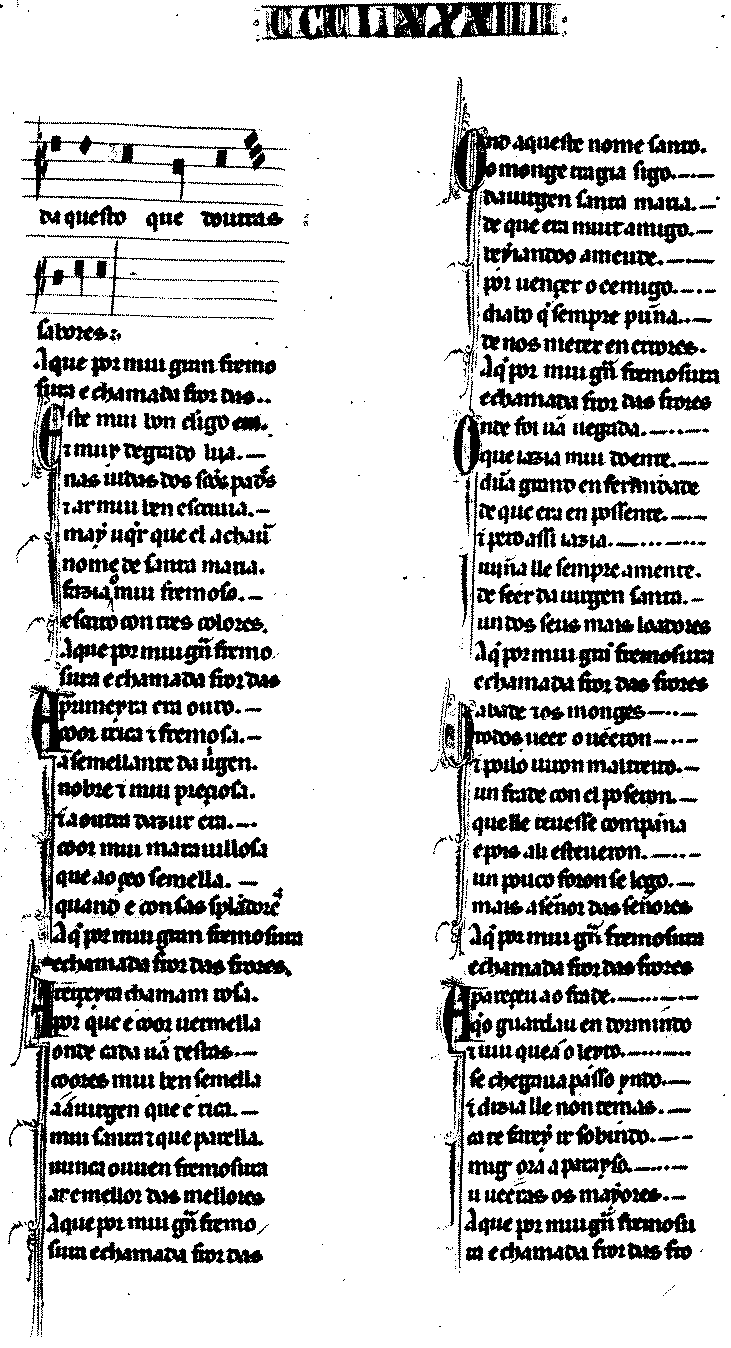
- 13th century, attributed to Alfonso X of Castile, Cantigas de Santa Maria, E codex, cantiga 10 (facsimile):
- Roſa das roſas. ⁊ fror / das frores. dona das donas. / ſeñor das ſennores.
- Rose of roses; And flower / of flowers. Woman of women; / Lady of ladies.
- Roſa das roſas. ⁊ fror / das frores. dona das donas. / ſeñor das ſennores.
- 13th century, attributed to Alfonso X of Castile, Cantigas de Santa Maria, E codex, cantiga 10 (facsimile):
- pink, rose (colour)
- 13th century, attributed to Alfonso X of Castile, Cantigas de Santa Maria, E codex, cantiga 384 (facsimile):
- A terçeyra chamam roſa / por que e coor uermella.
- The third (colour) is called rose, / because it is a reddish colour.
- A terçeyra chamam roſa / por que e coor uermella.
- 13th century, attributed to Alfonso X of Castile, Cantigas de Santa Maria, E codex, cantiga 384 (facsimile):
Descendants
See also
| Colors in Old Portuguese · coores, colores (layout · text) | |||||
|---|---|---|---|---|---|
| branco | gris | negro, preto | castanno | ||
| rosa | vermello | amarelo | |||
| verde | |||||
| azur | cardẽo | ||||
Polish
Etymology
From Proto-Slavic *rosa, from Proto-Indo-European *Hroseh₂.
Pronunciation
- IPA(key): /ˈrɔ.sa/
Noun
rosa f
Declension
Portuguese
Etymology
From Old Portuguese rosa, from Latin rosa (“rose”), perhaps from Ancient Greek ῥόδον (rhódon, “rose”), from Proto-Indo-European *wr̥dʰo.
Pronunciation
Noun
rosa f (plural rosas)
- rose (flower)
Derived terms
|
Related terms
Adjective
rosa (plural rosa, comparable)
- pink
- Synonym: cor-de-rosa
Noun
rosa m (plural rosas)
- pink (color)
- Synonym: cor-de-rosa
See also
| Colors in Portuguese · cores (layout · text) | |||||
|---|---|---|---|---|---|
| branco | cinza | preto | castanho, marrom | ||
| rosa, cor-de-rosa |
vermelho ; carmim | laranja, cor-de-laranja |
amarelo ; creme | ||
| verde-limão | verde | ciano ; azul-petróleo | |||
| azul céu | azul | violeta ; índigo, anil |
magenta ; roxo | ||
Romansch
Alternative forms
- rösa (Puter, Vallader)
Etymology
Noun
rosa f (plural rosas)
Serbo-Croatian
Etymology
From Proto-Slavic *rosa, from Proto-Indo-European *Hroseh₂.
Pronunciation
- IPA(key): /rǒsa/
- Hyphenation: ro‧sa
Noun
ròsa f (Cyrillic spelling ро̀са)
Declension
Slovene
Etymology
From Proto-Slavic *rosa, from Proto-Indo-European *Hroseh₂.
Pronunciation
- IPA(key): /ˈrɔ̀ːsa/
- Tonal orthography: rósa
Noun
rôsa f (genitive rôse or rosé, uncountable)
- dew (moisture in the air that settles on plants, etc.)
Declension
Spanish
Etymology
Pronunciation
- IPA(key): /ˈrosa/
Noun
rosa f (plural rosas)
Related terms
See also
| Colors in Spanish · colores (layout · text) | |||||
|---|---|---|---|---|---|
| blanco | gris | negro | marrón | ||
| rosa | rojo ; carmín, carmesí | naranja, anaranjado | amarillo ; crema | ||
| lima | verde | cian ; azul-petróleo | |||
| azur | azul | violeta ; añil, índigo | magenta ; morado, púrpura | ||
Further reading
- “rosa” in Diccionario de la lengua española, Vigésima tercera edición, Real Academia Española, 2014.
Swedish
Pronunciation
audio (file)
Etymology 1
From a Romance language, likely via German.
Noun
rosa n
Etymology 2
Verb
rosa
Upper Sorbian
Etymology
From Proto-Slavic *rosa.
Noun
rosa f