soar
English
Etymology
From Middle English soren, from Old French essorer (“to fly up, soar”), from Vulgar Latin *exaurare (“to rise into the air”), from Latin ex (“out”) + aura (“the air, a breeze”), from Ancient Greek αὔρα (aúra, “breath”). Compare aura, and exhale.
Pronunciation
- (Received Pronunciation) enPR: sô, IPA(key): /sɔː/
- (General American) enPR: sôr, IPA(key): /sɔɹ/
- (rhotic, without the horse–hoarse merger) enPR: sōr, IPA(key): /so(ː)ɹ/
- (non-rhotic, without the horse–hoarse merger) IPA(key): /soə/
Audio (US) (file) - Rhymes: -ɔː(ɹ)
- Homophones: sore, sower; saw (in non-rhotic accents with the horse–hoarse merger)
Verb
soar (third-person singular simple present soars, present participle soaring, simple past and past participle soared)
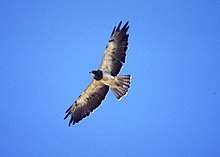
- to fly aloft with little effort, as a bird.
- Byron
- When soars Gaul's vulture with his wings unfurled.
- Byron
- to mount upward on wings, or as on wings.
- to remain aloft by means of a glider or other unpowered aircraft.
- to rise, especially rapidly or unusually high.
- The pump prices soared into new heights as the strike continued.
- (figuratively) To rise in thought, spirits, or imagination; to be exalted in mood.
- John Milton
- where the deep transported mind may soar
- Joseph Addison
- Valour soars above What the world calls misfortune.
- John Milton
Translations
|
Noun
soar (plural soars)
- The act of soaring.
- Samuel Taylor Coleridge
- this apparent soar of the hooded falcon
- Samuel Taylor Coleridge
- An upward flight.
Translations
References
- soar in Webster’s Revised Unabridged Dictionary, G. & C. Merriam, 1913
Anagrams
Galician
Etymology 1
From Old Portuguese sõar, from Latin sonāre, present active infinitive of sonō.
Verb
soar (first-person singular present soo, first-person singular preterite soei, past participle soado)
- make a sound
Conjugation
| infinitive | soar | ||||||
|---|---|---|---|---|---|---|---|
| gerund | soando | ||||||
| past participle | singular | plural | |||||
| masculine | soado | soados | |||||
| feminine | soada | soadas | |||||
| person | singular | plural | |||||
| first | second | third | first | second | third | ||
| indicative | eu | ti | el / ela / Vde. | nós | vós | eles / elas / Vdes. | |
| present | soo | soas | soa | soamos | soades | soan | |
| imperfect | soaba | soabas | soaba | soabamos | soabades | soaban | |
| preterite | soei | soaches | soou | soamos | soastes | soaron | |
| pluperfect | soara | soaras | soara | soaramos | soarades | soaran | |
| future | soarei | soarás | soará | soaremos | soaredes | soarán | |
| conditional | soaría | soarías | soaría | soariamos | soariades | soarían | |
| subjunctive | eu | ti | el / ela / Vde. | nós | vós | eles / elas / Vdes. | |
| present | soe | soes | soe | soemos | soedes | soen | |
| preterite | soase | soases | soase | soásemos | soásedes | soasen | |
| future | soar | soares | soar | soarmos | soardes | soaren | |
| imperative | — | ti | Vde. | nós | vós | Vdes. | |
| affirmative | — | soa | soe | soemos | soade | soen | |
| negative | — | soes | soe | soemos | soedes | soen | |
| personal infinitive | eu | ti | el / ela / Vde. | nós | vós | eles / elas / Vdes. | |
| soar | soares | soar | soarmos | soardes | soaren | ||
Etymology 2
Noun
soar f (plural soares)
- building land
Manx
Noun
soar m (genitive singular [please provide], plural [please provide])
Verb
soar (verbal noun soaral or soarey or soaraghey)
- to smell
Mutation
| Manx mutation | ||
|---|---|---|
| Radical | Lenition | Eclipsis |
| soar | hoar after "yn", toar | unchanged |
| Note: Some of these forms may be hypothetical. Not every possible mutated form of every word actually occurs. | ||
Portuguese
Etymology
From Old Portuguese sõar, from Latin sonāre, present active infinitive of sonō, ultimately from Proto-Indo-European *swen- (“to sound, resound”).
Pronunciation
Verb
soar (first-person singular present indicative soo, past participle soado)
- make a sound
- 1913, Fernando Pessoa, “Ó sino da minha aldeia”:
- Ó sino da minha aldeia, / Dolente na tarde calma, / Cada tua badalada / Soa dentro da minha alma.
- Oh bell of my village, / Lazy in this peaceful afternoon, / Each one of your tollings / Resounds in my soul.
- Ó sino da minha aldeia, / Dolente na tarde calma, / Cada tua badalada / Soa dentro da minha alma.
- Isso não soa bem. ― That doesn't sound good.
- 1913, Fernando Pessoa, “Ó sino da minha aldeia”:
Conjugation
| Notes:[edit] | ||||||
| Singular | Plural | |||||
|---|---|---|---|---|---|---|
| First-person (eu) |
Second-person (tu) |
Third-person (ele / ela / você) |
First-person (nós) |
Second-person (vós) |
Third-person (eles / elas / vocês) | |
| Infinitive | ||||||
| Impersonal | soar | |||||
| Personal | soar | soares | soar | soarmos | soardes | soarem |
| Gerund | ||||||
| soando | ||||||
| Past participle | ||||||
| Masculine | soado | soados | ||||
| Feminine | soada | soadas | ||||
| Indicative | ||||||
| Present | soo Obsolete: sôo |
soas | soa | soamos | soais | soam |
| Imperfect | soava | soavas | soava | soávamos | soáveis | soavam |
| Preterite | soei | soaste | soou | soamos soámos |
soastes | soaram |
| Pluperfect | soara | soaras | soara | soáramos | soáreis | soaram |
| Future | soarei | soarás | soará | soaremos | soareis | soarão |
| Conditional | ||||||
| soaria | soarias | soaria | soaríamos | soaríeis | soariam | |
| Subjunctive | ||||||
| Present | soe | soes | soe | soemos | soeis | soem |
| Imperfect | soasse | soasses | soasse | soássemos | soásseis | soassem |
| Future | soar | soares | soar | soarmos | soardes | soarem |
| Imperative | ||||||
| Affirmative | - | soa | soe | soemos | soai | soem |
| Negative (não) | - | soes | soe | soemos | soeis | soem |
Volapük
Etymology
Pronunciation
- IPA(key): /soˈaɾ/
Noun
soar (plural soars)
Declension
Derived terms
- soarajul
- zälasoar