鰻
See also: 鳗
| ||||||||
Translingual
Han character
鰻 (radical 195 魚+11, 22 strokes, cangjie input 弓火日田水 (NFAWE), four-corner 26347, composition ⿰魚曼)
Descendants
References
- KangXi: page 1477, character 7
- Dai Kanwa Jiten: character 46443
- Dae Jaweon: page 2008, character 34
- Hanyu Da Zidian: volume 7, page 4710, character 8
- Unihan data for U+9C3B
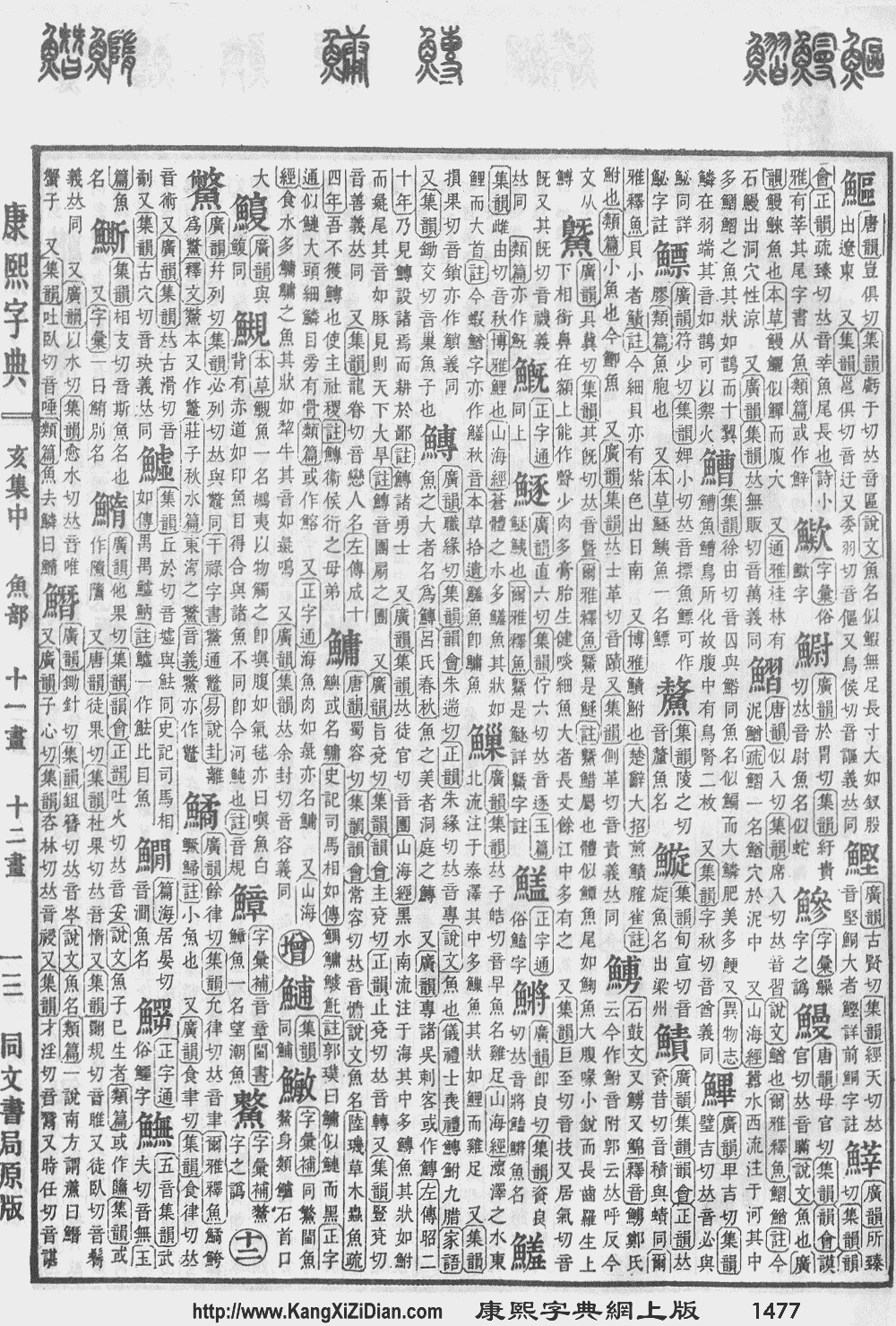
Chinese
| trad. | 鰻 | |
|---|---|---|
| simp. | 鳗 | |
Glyph origin
| Characters in the same phonetic series (曼) (Zhengzhang, 2003) | |
|---|---|
| Old Chinese | |
| 獌 | *mroːn, *moːns, *mons |
| 鬘 | *mroːn |
| 謾 | *mroːn, *mroːns, *mon, *moːn, *moːns |
| 慢 | *mroːns |
| 嫚 | *mroːns |
| 縵 | *mroːns, *moːns |
| 曼 | *moːn, *mons |
| 饅 | *moːn |
| 蔓 | *moːn, *mons |
| 鰻 | *moːn, *mons |
| 墁 | *moːn, *moːns |
| 鏝 | *moːn, *moːns |
| 槾 | *moːn |
| 漫 | *moːns |
| 幔 | *moːns |
| 蟃 | *mons |
Phono-semantic compound (形聲, OC *moːn, *mons) : semantic 魚 (“fish”) + phonetic 曼 (OC *moːn, *mons) – a kind of fish.
Pronunciation
Definitions
鰻
Compounds
Japanese
Kanji
鰻
Readings
Etymology 1
| Kanji in this term |
|---|
| 鰻 |
| むなぎ Hyōgaiji |
| kun’yomi |
⟨munaɡi1⟩ → /munaɡi/
From Old Japanese, first attested in the Man'yōshū (c. 759 CE).
Pronunciation
Noun
鰻 (hiragana むなぎ, rōmaji munagi)
- (archaic, possibly obsolete) an eel
- c. 759, Man'yōshū (book 16, poem 3853), text here
- 石麻呂尓吾物申夏痩尓吉跡云物曽武奈伎取喫 [Man'yōgana]
- 石麻呂に我れ物申す夏痩せによしといふものぞ鰻捕り食せ [Modern spelling]
- Iwamaro ni waga mono mōsu natsu-yase ni yoshi to iu-mono zo munagi torimese
- I address Mr. Iwamaro: they're said to be efficacious for summer loss of weight―go and eat some eels.[1]
- c. 759, Man'yōshū (book 16, poem 3854), text here
- 痩々母生有者将在乎波多也波多武奈伎乎漁取跡河尓流勿 [Man'yōgana]
- 痩す痩すも生けらばあらむをはたやはた鰻を捕ると川に流るな [Modern spelling]
- yasuyasu mo ikeraba aramu o hata ya hata munagi o toru to kawa ni nagaru na
- Ever thinner though you be, better stay alive. When you're after eels for dinner, watch your step. Don't dive.[2]
- c. 759, Man'yōshū (book 16, poem 3853), text here
Etymology 2
| Kanji in this term |
|---|
| 鰻 |
| うなぎ Hyōgaiji |
| kun’yomi |
/munaɡi/ → /unaɡi/
Sound shift from munagi above.[3][4]
Pronunciation
Noun
鰻 (hiragana うなぎ, katakana ウナギ, rōmaji unagi)
- eel, especially the Japanese eel (Anguilla japonica)
Derived terms
Derived terms
- 鰻筒 (unagi-zutsu, “eel trap”)
- 鰻の寝床 (unagi no nedoko, “long, narrow house; eel bed”)
- 鰻上り (unagi-nobori, “rising rapidly”)
- 鰻屋 (unagi-ya, “eel restaurant”)
- 大鰻 (ōunagi, “marbled eel”)
- 日本鰻 (Nihon unagi, “Japanese eel”)
- ヨーロッパ鰻 (Yōroppa unagi, “European eel”)
See also
- 穴子 (anago, “conger eel”)
- 鱓 (utsubo, “moray eel”)
Etymology 3
| Kanji in this term |
|---|
| 鰻 |
| うな Hyōgaiji |
| Irregular |
Abbreviation of unagi above, used in some compounds.
Pronunciation
Noun
鰻 (hiragana うな, rōmaji una)
- Synonym of うなぎ above.
Derived terms
Etymology 4
| Kanji in this term |
|---|
| 鰻 |
| う Hyōgaiji |
| Irregular |
Another abbreviation of unagi above, used in some compounds.
Pronunciation
Noun
- Synonym of うなぎ above.
Usage notes
- Found in restaurant signboards, for example.
Derived terms
Derived terms
- 鰻作 (u-zaku)
- 鰻鍋 (u-nabe)
- 鰻巻き (u-maki)
References
- ↑ Paula Doe; Yakamochi Ōtomo (1982) A Warbler's Song in the Dusk: The Life and Work of Ōtomo Yakamochi (718-785), illustrated edition, University of California Press, →ISBN, page 81
- ↑ Robin D. Gill (2009) A Dolphin in the Woods Composite Translation, Paraversing & Distilling Prose, illustrated edition, Paraverse Press, →ISBN, page 215
- 1 2 3 4 2006, 大辞林 (Daijirin), Third Edition (in Japanese), Tōkyō: Sanseidō, →ISBN
- ↑ 1995, 大辞泉 (Daijisen) (in Japanese), Tōkyō: Shogakukan, →ISBN
- ↑ 1998, NHK日本語発音アクセント辞典 (NHK Japanese Pronunciation Accent Dictionary) (in Japanese), Tōkyō: NHK, →ISBN
Korean
Hanja
鰻 • (man) (hangeul 만, revised man, McCune–Reischauer man, Yale man)
- This term needs a translation to English. Please help out and add a translation, then remove the text
{{rfdef}}.
This article is issued from
Wiktionary.
The text is licensed under Creative Commons - Attribution - Sharealike.
Additional terms may apply for the media files.