昴
| ||||||||
Translingual
Han character
昴 (radical 72, 日+5, 9 strokes, cangjie input 日竹竹中 (AHHL), four-corner 60727, composition ⿱日卯)
References
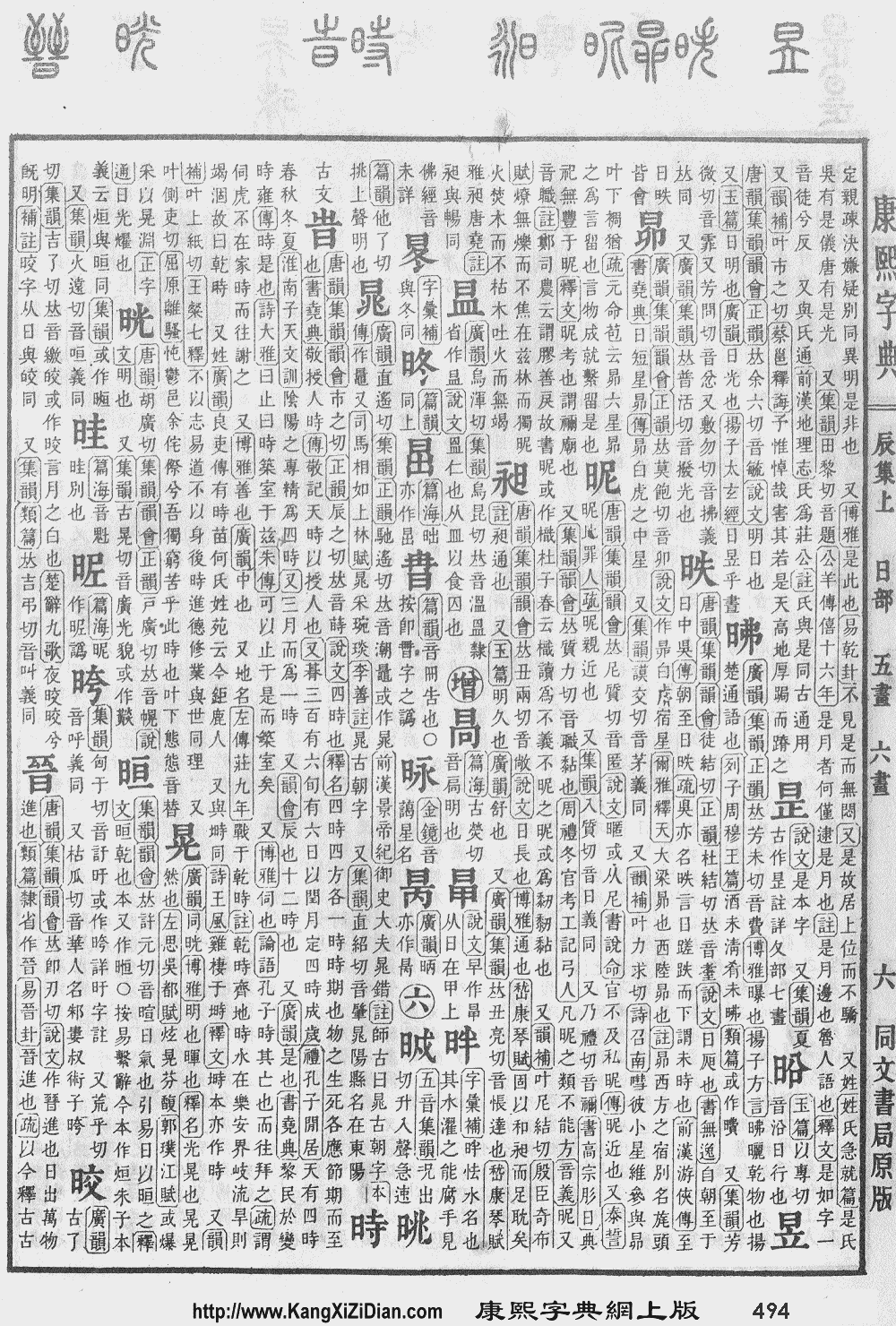
- KangXi: page 494, character 6
- Dai Kanwa Jiten: character 13865
- Dae Jaweon: page 858, character 12
- Hanyu Da Zidian: volume 2, page 1503, character 2
- Unihan data for U+6634
Chinese
| simp. and trad. |
昴 | |
|---|---|---|
Glyph origin
| Characters in the same phonetic series (卯) (Zhengzhang, 2003) | |
|---|---|
| Old Chinese | |
| 卯 | *mruːʔ |
| 昴 | *mruːʔ |
| 泖 | *mruːʔ |
| 茆 | *mruːʔ, *m·ruʔ |
| 奅 | *m̥ʰruːs |
| 窌 | *m̥ʰruːs, *m·ruː, *m·rus |
| 聊 | *m·rɯːw |
| 貿 | *mlus |
| 鄮 | *mlus |
| 劉 | *m·ru |
| 留 | *m·ru, *m·rus |
| 蒥 | *m·ru |
| 鶹 | *m·ru |
| 騮 | *m·ru |
| 榴 | *m·ru |
| 瑠 | *ru |
| 瘤 | *m·ru, *m·rus |
| 遛 | *m·ru |
| 鎦 | *m·ru |
| 飀 | *m·ru |
| 鰡 | *m·ru |
| 嵧 | *m·ru |
| 餾 | *m·ru, *m·rus |
| 瀏 | *m·ru, *m·ruʔ |
| 懰 | *m·ru, *m·ruʔ |
| 柳 | *m·ruʔ |
| 珋 | *m·ruʔ |
| 罶 | *m·ruʔ |
| 嬼 | *m·ruʔ, *m·rus |
| 溜 | *m·rus |
| 霤 | *m·rus |
| 廇 | *m·rus |
| 塯 | *m·rus |
Pronunciation
Definitions
昴
- the Pleiades (star cluster)
Compounds
|
Japanese
Kanji
(“Jinmeiyō” kanji used for names)
- the Pleiades (star cluster)
Readings
Etymology 1
| Kanji in this term |
|---|
| 昴 |
| すばる Jinmeiyō |
| kun’yomi |
Likely from Old Japanese, use of kanji in Japanese texts first appears in the Tangō-no-kuni Fudoki (c. mid-8th century), phonetic spelling first attested in the Wamyō Ruijushō (938 CE).
By extension from 統ばる (subaru, “to bunch together; to unite”, intransitive), due to the way the stars in the constellation all cluster together.[1][2]. Compare 統べる (suberu, “to command”, transitive).
Pronunciation
Proper noun
昴 (hiragana すばる, rōmaji Subaru)
- the Pleiades star cluster, one of the Twenty-Eight Mansions
- Synonyms: プレアデス星団 (Pureadesu-seidan), 昴宿 (Bō-shuku), 昴星 (Subaruboshi, Bōsei), 六連星 (Mutsuraboshi)
- a female given name.
Etymology 2
| Kanji in this term |
|---|
| 昴 |
| すまる Jinmeiyō |
| kun’yomi |
Likely from Old Japanese.
Possibly an allusion from [script needed] (sumaru no tama, literally “cluster of pearls”) referenced multiple times in the Kojiki (712 CE); probably the original form of Subaru above. (Can this(+) etymology be sourced?) Compare the development of 皇 (sume-/sumera- → sube-/subera-, prefix of praise and respect to Shinto deities or an Emperor of Japan)
Proper noun
昴 (hiragana すまる, rōmaji Sumaru)
- (regional) the Pleiades star cluster, one of the Twenty-Eight Mansions
- a male given name.
Etymology 3
| Kanji in this term |
|---|
| 昴 |
| ぼう Jinmeiyō |
| kun’yomi |
/bau/ → /bɔː/ → /boː/
From Middle Chinese 昴 (MC mˠauX).
Pronunciation
Proper noun
昴 (hiragana ぼう, rōmaji Bō, historical hiragana ばう)
- (Chinese astronomy) the Hairy Head constellation, one of the Twenty-Eight Mansions, corresponds to the Pleiades in English
- Synonyms: 昴宿 (Bō-shuku), 昴星 (Bōsei)
Etymology 4
Various nanori readings.
Proper noun
昴 (hiragana たかし, rōmaji Takashi)
- a male given name.
昴 (hiragana のぼる, rōmaji Noboru)
- a male given name.
References
Korean
Hanja
昴 • (myo) (hangeul 묘, McCune–Reischauer myo, Yale myo)
- This term needs a translation to English. Please help out and add a translation, then remove the text
{{rfdef}}.
Vietnamese
Han character
- This term needs a translation to English. Please help out and add a translation, then remove the text
{{rfdef}}.