昵
See also: 暱
| ||||||||
Translingual
Etymology
| Historical forms of the character 昵 |
|---|
| Shuowen Jiezi (compiled in Han) |
| Small seal script |
 |
| Characters in the same phonetic series (尼) (Zhengzhang, 2003) | |
|---|---|
| Old Chinese | |
| 泥 | *niːl, *niːls |
| 屔 | *niːl |
| 苨 | *niːlʔ |
| 坭 | *niːlʔ |
| 迡 | *niːls |
| 埿 | *braːms, *niːl, *niːls |
| 旎 | *nilʔ |
| 狔 | *nilʔ |
| 抳 | *nilʔ |
| 尼 | *nil |
| 呢 | *nil |
| 怩 | *nil |
| 柅 | *nil, *nilʔ |
| 蚭 | *nil |
| 跜 | *nil |
| 秜 | *nil |
| 痆 | *rniːd |
| 昵 | *niɡ |
Han character
昵 (radical 72 日+5, 9 strokes, cangjie input 日尸心 (ASP), four-corner 67011, composition ⿰日尼)
References
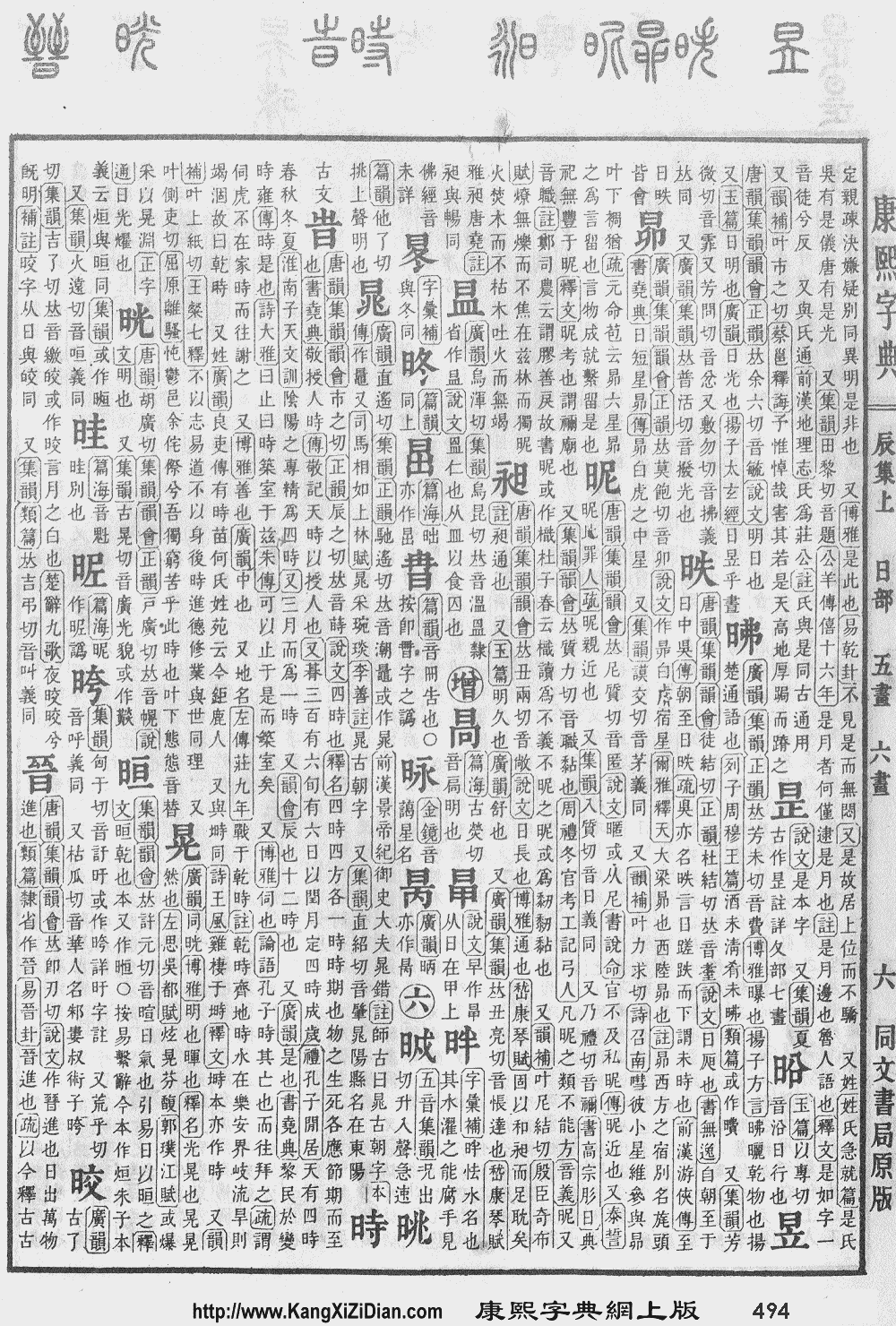
- KangXi: page 494, character 7
- Dai Kanwa Jiten: character 13866
- Dae Jaweon: page 858, character 13
- Hanyu Da Zidian: volume 2, page 1504, character 2
- Unihan data for U+6635
Chinese
Etymology 1
| For pronunciation and definitions of 昵 – see 暱 (“intimate, close; approach”). (This character, 昵, is the simplified form of 暱.) |
Notes:
|
Etymology 2
| simp. and trad. |
昵 | |
|---|---|---|
Pronunciation
Definitions
昵
- This term needs a translation to English. Please help out and add a translation, then remove the text
{{rfdef}}.
References
Japanese
Kanji
昵
- This term needs a translation to English. Please help out and add a translation, then remove the text
{{rfdef}}.
Readings
Korean
Hanja
昵 • (nil>il, nye>ye) (hangeul 닐>일, 녜>예, revised nil>il, nye>ye, McCune–Reischauer nil>il, nye>mye, Yale nil>il, nyey>yey)
- This term needs a translation to English. Please help out and add a translation, then remove the text
{{rfdef}}.
Vietnamese
Han character
- This term needs a translation to English. Please help out and add a translation, then remove the text
{{rfdef}}.
References
This article is issued from
Wiktionary.
The text is licensed under Creative Commons - Attribution - Sharealike.
Additional terms may apply for the media files.