俘
| ||||||||
Translingual
Han character
俘 (radical 9 人+7, 9 strokes, cangjie input 人月弓木 (OBND), four-corner 22247, composition ⿰亻孚)
References
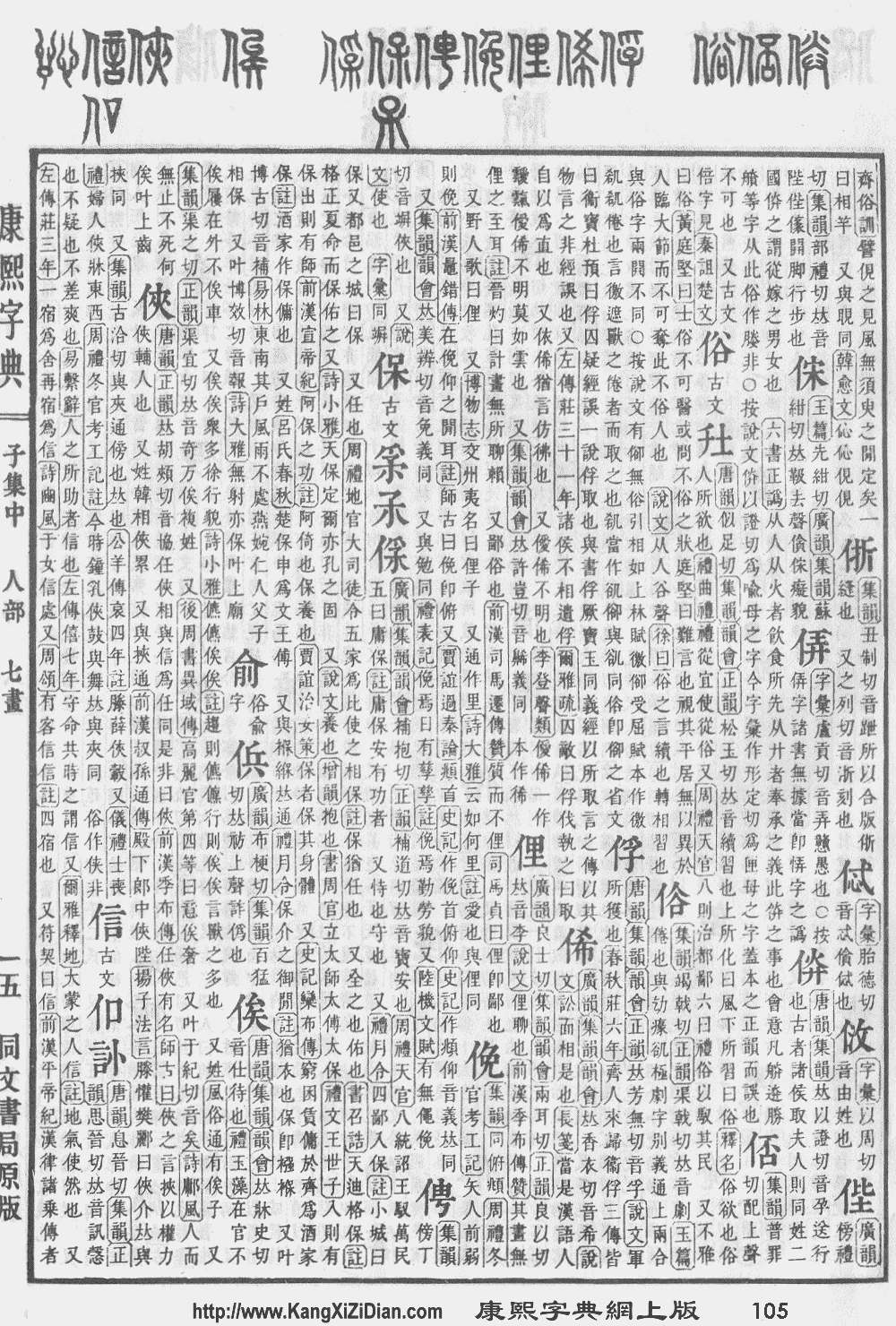
- KangXi: page 105, character 12
- Dai Kanwa Jiten: character 697
- Dae Jaweon: page 222, character 1
- Hanyu Da Zidian: volume 1, page 164, character 2
- Unihan data for U+4FD8
Chinese
| simp. and trad. |
俘 | |
|---|---|---|
Glyph origin
| Historical forms of the character 俘 | ||||||
|---|---|---|---|---|---|---|
| ||||||
|
References: Mostly from Richard Sears' Chinese Etymology site (authorisation),
|


| Characters in the same phonetic series (孚) (Zhengzhang, 2003) | |
|---|---|
| Old Chinese | |
| 殍 | *brɯwʔ, *browʔ, *pʰuw |
| 脬 | *pʰruː |
| 捊 | *bruː, *buw |
| 莩 | *browʔ, *pʰuw |
| 哹 | *pu, *bu |
| 浮 | *bu |
| 蜉 | *bu |
| 桴 | *bu, *pʰuw |
| 罦 | *bu, *pʰuw |
| 琈 | *bu |
| 粰 | *bu |
| 烰 | *bu |
| 艀 | *bu |
| 俘 | *pʰuw |
| 孚 | *pʰuw |
| 孵 | *pʰuw |
| 稃 | *pʰuw |
| 郛 | *pʰuw |
| 筟 | *pʰuw |
Pronunciation
Definitions
俘
- to capture (enemy at war)
- prisoner of war
Compounds
Japanese
Kanji
俘
Readings
Noun
俘 (hiragana とりこ, rōmaji toriko)
Alternative forms
Korean
Hanja
俘 • (bu) (hangeul 부, revised bu, McCune–Reischauer pu)
This article is issued from
Wiktionary.
The text is licensed under Creative Commons - Attribution - Sharealike.
Additional terms may apply for the media files.