art
English
Pronunciation
Etymology 1
From Middle English art, from Old French art, from Latin artem, accusative of ars (“art”). Displaced native Middle English liste (“art”) (from Old English list).
Noun
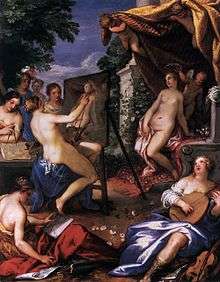
art (countable and uncountable, plural arts)
- (uncountable) The conscious production or arrangement of sounds, colours, forms, movements, or other elements in a manner that affects the senses and emotions, usually specifically the production of the beautiful in a graphic or plastic medium.
- 1992 May 3, "Comrade Bingo" Jeeves and Wooster, Series 3, Episode 6:
- B.W. Wooster: If you ask me, art is responsible for most of the trouble in the world.
R. Jeeves: An interesting theory, sir. Would you care to expatiate upon it?
B.W. Wooster: As a matter of fact, no, Jeeves. The thought just occurred to me, as thoughts do.
R. Jeeves: Very good, sir.
- B.W. Wooster: If you ask me, art is responsible for most of the trouble in the world.
- 2005 July, Lynn Freed, Harper's:
- "I tell her what Donald Hall says: that the problem with workshops is that they trivialize art by minimizing the terror."
- 2009, Alexander Brouwer:
- Visual art is a subjective understanding or perception of the viewer as well as a deliberate/conscious arrangement or creation of elements like colours, forms, movements, sounds, objects or other elements that produce a graphic or plastic whole that expresses thoughts, ideas or visions of the artist.
- There is a debate as to whether graffiti is art or vandalism.
- 1992 May 3, "Comrade Bingo" Jeeves and Wooster, Series 3, Episode 6:
- (countable) Skillful creative activity, usually with an aesthetic focus.
- She's mastered the art of programming.
- (uncountable) The study and the product of these processes.
- He's at university to study art.
- (uncountable) Aesthetic value.
- Her photographs are nice, but there's no art in them.
- (uncountable) Artwork.
- Sotherby's regularly auctions art for millions.
- (countable) A field or category of art, such as painting, sculpture, music, ballet, or literature.
- I'm a great supporter of the arts.
- (countable) A nonscientific branch of learning; one of the liberal arts.
- 2013 August 3, “Boundary problems”, in The Economist, volume 408, number 8847:
- Economics is a messy discipline: too fluid to be a science, too rigorous to be an art. Perhaps it is fitting that economists’ most-used metric, gross domestic product (GDP), is a tangle too. GDP measures the total value of output in an economic territory. Its apparent simplicity explains why it is scrutinised down to tenths of a percentage point every month.
-
- (countable) Skill that is attained by study, practice, or observation.
- 1796, Matthew Lewis, The Monk, Folio Society 1985, page 217:
- A physician was immediately sent for; but on the first moment of beholding the corpse, he declared that Elvira's recovery was beyond the power of art.
- 1898, Winston Churchill, chapter 4, in The Celebrity:
- The Celebrity, by arts unknown, induced Mrs. Judge Short and two other ladies to call at Mohair on an afternoon when Mr. Cooke was trying a trotter on the track. The three returned wondering and charmed with Mrs. Cooke; they were sure she had had no hand in the furnishing of that atrocious house.
- 1796, Matthew Lewis, The Monk, Folio Society 1985, page 217:
- (uncountable, dated) Contrivance, scheming, manipulation.
- 1847, Emily Brontë, Wuthering Heights:
- ...and Mrs. Earnshaw undertook to keep her sister-in-law in due restraint when she returned home; employing art, not force: with force she would have found it impossible.
-
Synonyms
- (Human effort): craft
Antonyms
- (Human effort): mundacity, nature, subsistence
Hyponyms
|
|
|
Derived terms
|
|
Translations
|
|
|
|
|
|
- The translations below need to be checked and inserted above into the appropriate translation tables, removing any numbers. Numbers do not necessarily match those in definitions. See instructions at Wiktionary:Entry layout#Translations.
|
|
Etymology 2
From Middle English, from Old English eart (“(thou) art”), second-person singular present indicative of wesan, from Proto-Germanic *ar-t (“(thou) art", originally, "(thou) becamest”), second-person singular preterite indicative form of *iraną (“to rise, be quick, become active”), from Proto-Indo-European *er-, *or(w)- (“to lift, rise, set in motion”). Cognate with Faroese ert (“art”), Icelandic ert (“art”), Old English earon (“are”), from the same preterite-present Germanic verb. More at are.
Verb
art
- (archaic) second-person singular simple present form of be
- How great thou art!
See also
References

Further reading
- "art" in Raymond Williams, Keywords (revised), 1983, Fontana Press, page 40.
Anagrams
Albanian
Etymology
Learned borrowing from Latin ars, artem.
Noun
art m (definite singular arti)
Catalan
Noun
art m, f (plural arts)
- art (something pleasing to the mind)
Related terms
Cornish
Etymology
Pronunciation
- IPA(key): [ɒɹt]
Noun
art m (plural artys)
Crimean Tatar
Noun
art
Danish
Etymology
From Middle Low German art.
Noun
art c (singular definite arten, plural indefinite arter)
Inflection
French
Etymology
Pronunciation
- IPA(key): /aʁ/
audio (file)
Noun
art m (plural arts)
- art (something pleasing to the mind)
Derived terms
Further reading
- “art” in le Trésor de la langue française informatisé (The Digitized Treasury of the French Language).
Anagrams
Irish
Etymology
Noun
art m (genitive singular airt, nominative plural airt)
Declension
First declension
|
Bare forms:
|
Forms with the definite article:
|
Derived terms
- chomh marbh le hart (“stone dead”)
Mutation
| Irish mutation | |||
|---|---|---|---|
| Radical | Eclipsis | with h-prothesis | with t-prothesis |
| art | n-art | hart | not applicable |
| Note: Some of these forms may be hypothetical. Not every possible mutated form of every word actually occurs. | |||
Further reading
- "art" in Foclóir Gaeilge-Béarla, An Gúm, 1977, by Niall Ó Dónaill.
- “art” in Dictionary of the Irish Language, Royal Irish Academy, 1913–76.
Latvian
Etymology
From Proto-Baltic [Term?], from Proto-Indo-European *ar-, *arə-, *h₂erh₃- (“to plow”), from *h₁er- (“sparse; to crumble, to fall to pieces”), whence also the verb irt (q.v.). Cognates include Lithuanian árti, Old Prussian artoys (“plowman”) (compare Lithuanian artójas), Old Church Slavonic орати (orati), Russian dialectal or dated ора́ть (orátʹ), Belarusian ара́ць (arácʹ), Ukrainian ора́ти (oráty), Bulgarian ора́ (orá), Czech orati, Polish orać, Gothic 𐌰𐍂𐌾𐌰𐌽 (arjan), Old Norse erja, Hittite ẖarra- (“to crush; (passive form) to disappear”), ẖarš- (“to tear open; to plow”), Ancient Greek ἀρόω (aróō), Latin arō.[1]
Pronunciation
- IPA(key): [âɾt]
| (file) |
Verb
art tr., 1st conj., pres. aru, ar, ar, past aru
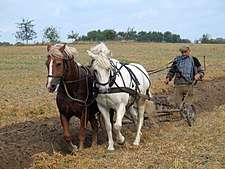
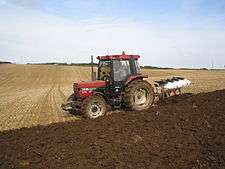
- to plow (to prepare (land) for sowing by using a plow)
- art zemi ― to plow the land, earth
- art tīrumu, lauku ― to plow a field
- art dārzu ― to plow a garden
- art kūdraino augsni ― to plow the peaty soil
- art ar traktoru ― to plow with a tractor
- papuvi ara divi traktori ― two tractors plowed the fallow (land)
- iziet art agri no rīta ― to go plowing early in the morning
- rudenī, rugāju arot, sekoju Jurim pa vagu un sarunājos ― in autumn, while (he was) plowing the stubble field, I followed Juris along the furrows and talked
Conjugation
| INDICATIVE (īstenības izteiksme) | IMPERATIVE (pavēles izteiksme) | ||||
|---|---|---|---|---|---|
| Present (tagadne) |
Past (pagātne) |
Future (nākotne) | |||
| 1st pers. sg. | es | aru | aru | aršu | — |
| 2nd pers. sg. | tu | ar | ari | arsi | ar |
| 3rd pers. sg. | viņš, viņa | ar | ara | ars | lai ar |
| 1st pers. pl. | mēs | aram | arām | arsim | arsim |
| 2nd pers. pl. | jūs | arat | arāt | arsiet, arsit |
ariet |
| 3rd pers. pl. | viņi, viņas | ar | ara | ars | lai ar |
| RENARRATIVE (atstāstījuma izteiksme) | PARTICIPLES (divdabji) | ||||
| Present | arot | Present Active 1 (Adj.) | arošs | ||
| Past | esot aris | Present Active 2 (Adv.) | ardams | ||
| Future | aršot | Present Active 3 (Adv.) | arot | ||
| Imperative | lai arot | Present Active 4 (Obj.) | aram | ||
| CONDITIONAL (vēlējuma izteiksme) | Past Active | aris | |||
| Present | artu | Present Passive | arams | ||
| Past | būtu aris | Past Passive | arts | ||
| DEBITIVE (vajadzības izteiksme) | NOMINAL FORMS | ||||
| Indicative | (būt) jāar | Infinitive (nenoteiksme) | art | ||
| Conjunctive 1 | esot jāar | Negative Infinitive | neart | ||
| Conjunctive 2 | jāarot | Verbal noun | aršana | ||
Derived terms
Related terms
References
- ↑ Karulis, Konstantīns (1992), “art”, in Latviešu Etimoloģijas Vārdnīca (in Latvian), Rīga: AVOTS, →ISBN.
Maltese
Etymology
Noun
art f
Middle French
Noun
art m (plural ars)
- art
- 15th century, Rustichello da Pisa (original author), Mazarine Master (scribe), The Travels of Marco Polo, page 15, line 7-8:
- Il y a de toutes choses habondance, et ils vivent de marchandise et d'art.
- There is an abundance of everything and they make a living from merchandise and from art
- Il y a de toutes choses habondance, et ils vivent de marchandise et d'art.
-
Norwegian Bokmål
Noun
art f, m (definite singular arta or arten, indefinite plural arter, definite plural artene)
Derived terms
Norwegian Nynorsk
Noun
art m, f (definite singular arten or arta, indefinite plural artar or arter, definite plural artane or artene)
Derived terms
Old French
Etymology
Noun
art m, f (oblique plural arz or artz, nominative singular arz or artz, nominative plural art)
- art (skill; practice; method)
- Walter of Bibbesworth: Le Tretiz, ed. W. Rothwell, ANTS Plain Texts Series 6, 1990. Date of cited text: circa 1250
- ore serroit a saver de l’art a bresser & brasyr
- Now would be the time to know the art of brewing
- ore serroit a saver de l’art a bresser & brasyr
- Walter of Bibbesworth: Le Tretiz, ed. W. Rothwell, ANTS Plain Texts Series 6, 1990. Date of cited text: circa 1250
Descendants
References
- Godefroy, Frédéric, Dictionnaire de l'ancienne langue française et de tous ses dialectes du IXe au XVe siècle (1881) (art, supplement)
- art on the Anglo-Norman On-Line Hub
- “art” in le Trésor de la langue française informatisé (The Digitized Treasury of the French Language).
Old Irish
Etymology
From Proto-Celtic *artos (“bear”) (compare Cornish arth, Welsh arth), from Proto-Indo-European *h₂ŕ̥tḱos (“bear”).
Pronunciation
- IPA(key): /ar͈t/
Noun
art m
- bear
- Synonym: mathgamain
Inflection
| Masculine o-stem | |||
|---|---|---|---|
| Singular | Dual | Plural | |
| Nominative | |||
| Vocative | |||
| Accusative | |||
| Genitive | |||
| Dative | |||
Initial mutations of a following adjective:
| |||
Mutation
| Old Irish mutation | ||
|---|---|---|
| Radical | Lenition | Nasalization |
| art | unchanged | n-art |
| Note: Some of these forms may be hypothetical. Not every possible mutated form of every word actually occurs. | ||
Swedish
Pronunciation
audio (file)
Noun
art c
Declension
| Declension of art | ||||
|---|---|---|---|---|
| Singular | Plural | |||
| Indefinite | Definite | Indefinite | Definite | |
| Nominative | art | arten | arter | arterna |
| Genitive | arts | artens | arters | arternas |
Turkish
Etymology
From Proto-Turkic *hārt (“back”). Cognate with Old Turkic [Term?].
Noun
art (definite accusative artı, plural artlar)
Declension
| Inflection | ||
|---|---|---|
| Nominative | art | |
| Definite accusative | artı | |
| Singular | Plural | |
| Nominative | art | artlar |
| Definite accusative | artı | artları |
| Dative | arta | artlara |
| Locative | artta | artlarda |
| Ablative | arttan | artlardan |
| Genitive | artın | artların |