been
English
Etymology 1
From Middle English ybeen, from Old English ġebēon, past participle of bēon (“to be”), equivalent to be + -en.
Alternative forms
Pronunciation
- (General American, Received Pronunciation) IPA(key): /bɪn/
Audio (US) (file) - Homophone: bin
- Rhymes: -ɪn
- (General American) IPA(key): /bɛn/
- Homophone: Ben
- Rhymes: -ɛn
- (Received Pronunciation) IPA(key): /biːn/
Audio (UK) (file) - Homophone: bean
- Rhymes: -iːn
- (unstressed) IPA(key): /bɨn/, /bɪ̈n/
Verb
been
- past participle of be
- (obsolete) plural simple present of be
- Assembled been a senate grave and stout. — Fairfax.
- 1584, George Peele, The Arraignment of Paris, I, ii
- My love is fair, my love is gay,
- As fresh as been the flowers in May;
- c. 1608, William Shakespeare, Pericles, Prince of Tyre, II
- Where when men been, there's seldom ease;
- 1641, Ben Jonson, The Sad Shepherd, I, iii
- O Friar, those are faults that are not seen,
- Ours open, and of worse example been.
Etymology 2
From Middle English been, from Old English bēon (“bees”), nominative and accusative plural of bēo (“bee”). More at bee.
Pronunciation
- IPA(key): /biːn/
Noun
been
See also
References
Vaux, Bert and Scott Golder. 2003. The Harvard Dialect Survey: been. Cambridge, MA: Harvard University Linguistics Department.
Anagrams
Afrikaans
Etymology
Noun
been (plural bene)
Derived terms
Dutch
| Picture dictionary | ||
|---|---|---|
| ||
|


Etymology
From Middle Dutch bêen, from Old Dutch bēn, from Proto-Germanic *bainą.
Pronunciation
- Rhymes: -eːn
- IPA(key): /beːn/
audio (file)
Noun
been n (plural benen, diminutive beentje n)
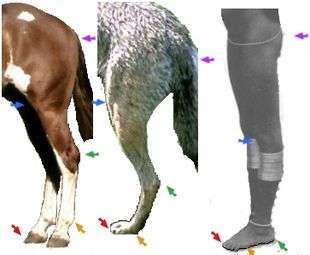
- leg, limb of a person, horse (other animals' would have poten) and certain objects (again many have poten)
- De benen van een passer. ― The legs of a pair of compasses.
- (mathematics) side, leg
- De benen van een hoek. ― The sides of an angle.
Usage notes
- The contemporary plural benen is derived from an analogy to other nouns with regular plurals. Originally, been was left unchanged in the plural; such use in preserved only in set phrases like op de been (“upright, standing, awake”).
Noun
been n (plural beenderen or benen, diminutive beentje n)
- bone, constituent part of a skeleton.
- (uncountable) bone, the chalky material bones are made of
Synonyms
Derived terms
Verb
been
Anagrams
Dutch Low Saxon
Noun
been
See also
- German Low German: Been
Middle Dutch
Etymology
From Old Dutch bēn, from Proto-Germanic *bainą.
Noun
bêen n
Inflection
This noun needs an inflection-table template.
Alternative forms
- bein (Limburgish)
Descendants
Further reading
Middle English
Alternative forms
Etymology
From a conflation of Old English bēon and wesan, from Proto-Germanic *beuną and *wesaną, from Proto-Indo-European *bʰewHeti and a conflation of *h₂wéseti and *h₁ésti.
Pronunciation
Verb
been
- to be
- 1407, The Testimony of William Thorpe, pages 40–41
- And I seide, “Ser, in his tyme maister Ioon Wiclef was holden of ful many men the grettis clerk that thei knewen lyuynge vpon erthe. And therwith he was named, as I gesse worthili, a passing reuli man and an innocent in al his lyuynge. And herfore grete men of kunnynge and other also drowen myche to him, and comownede ofte with him. And thei sauouriden so his loore that thei wroten it bisili and enforsiden hem to rulen hem theraftir… Maister Ion Aston taughte and wroot acordingli and ful bisili, where and whanne and to whom he myghte, and he vsid it himsilf, I gesse, right perfyghtli vnto his lyues eende. Also Filip of Repintoun whilis he was a chanoun of Leycetre, Nycol Herforde, dane Geffrey of Pikeringe, monke of Biland and a maistir dyuynyte, and Ioon Purueye, and manye other whiche weren holden rightwise men and prudent, taughten and wroten bisili this forseide lore of Wiclef, and conformeden hem therto. And with alle these men I was ofte homli and I comownede with hem long tyme and fele, and so bifore alle othir men I chees wilfulli to be enformed bi hem and of hem, and speciali of Wiclef himsilf, as of the moost vertuous and goodlich wise man that I herde of owhere either knew. And herfore of Wicleef speciali and of these men I toke the lore whiche I haue taughte and purpose to lyue aftir, if God wole, to my lyues ende.”
- 1382 John Wycliffe, translation of the Bible (John 1:48)
- Bifor that Filip clepide thee, whanne thou were vndur the fige tree, Y saiy thee.
- 1407, The Testimony of William Thorpe, pages 40–41
Conjugation
| present | singular | plural |
|---|---|---|
| 1st person | am, be | are, been |
| 2nd person | art, bist | are, been |
| 3rd person | is, bith, biþ | are, been |
| subjunctive | be | been |
| participle | present | past |
| beinge, beende | (y)been | |
| simple past | singular | plural |
| 1st person | was | were(n) |
| 2nd person | were | were(n) |
| 3rd person | was | were(n) |
| subjunctive | wer(e) | weren |
| imperative | singular | plural |
| be | beth, beþ |
Descendants
Scots
Verb
been
- past participle of be