rat
English
Pronunciation
- enPR: răt, IPA(key): /ɹæt/
Audio (US) (file) Audio (UK) (file) - Rhymes: -æt
Etymology 1
From Middle English rat, rotte, from Old English ræt, as though from Proto-Germanic *rattaz, *rattō (compare West Frisian rôt, Dutch rat); but the rat was unknown in Northern Europe in antiquity, so if the Proto-Germanic word is real it must have referred to a different animal. Attestation of this family of words begins in the 12th century.
Some of the Germanic cognates show consonant variation, e.g. Middle High German rate, radde, ratte, ratze. The irregularity may be symptomatic of a late dispersal of the word, in which case it would not be old. Kroonen (2011) rather accounts for it with a Proto-Germanic stem *raþō nom., *ruttaz gen., showing both ablaut and a Kluge's law alternation, with the variation arising from varying remodellings in the daughters. This requires a Proto-Indo-European etymon in final *t, and is hence incompatible with the usual derivation from Proto-Indo-European *reh₁d- (“to scrape”).
Noun
rat (plural rats)
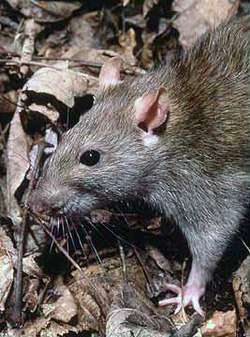
- (zoology) A medium-sized rodent belonging to the genus Rattus.
- 2013 May-June, Charles T. Ambrose, “Alzheimer’s Disease”, in American Scientist, volume 101, number 3, page 200:
- Similar studies of rats have employed four different intracranial resorbable, slow sustained release systems—surgical foam, a thermal gel depot, a microcapsule or biodegradable polymer beads.
-
- (informal) A term indiscriminately applied to numerous members of several rodent families (e.g. voles and mice) having bodies longer than about 12 cm, or 5 inches.
- (informal) A person who is known for betrayal; a scoundrel; a quisling.
- 1883, Robert Louis Stevenson, Treasure Island
- He’s more a man than any pair of rats of you in this here house.
- What a rat, leaving us stranded here!
- 1883, Robert Louis Stevenson, Treasure Island
- (informal) An informant or snitch.
- (slang) A person who routinely spends time at a particular location.
- Our teenager has become a mall rat.
- He loved hockey and was a devoted rink rat.
- Scab.
- (north-west London, slang) Vagina.
- Get your rat out.
- A wad of shed hair used as part of a hairstyle.
Synonyms
- (person known for betrayal): traitor (see for more synonyms)
- (informer): stool pigeon
Derived terms
Translations
|
|
|
See also
Verb
rat (third-person singular simple present rats, present participle ratting, simple past and past participle ratted)
- (usually with “on” or “out”) To betray someone and tell their secret to an authority or an enemy; to turn someone in, bewray.
- He ratted on his coworker.
- He is going to rat us out!
- (of a dog, etc.) To kill rats.
Synonyms
- (to betray someone to an authority): tell on, to finger or put the finger on, bewray
Translations
- The translations below need to be checked and inserted above into the appropriate translation tables, removing any numbers. Numbers do not necessarily match those in definitions. See instructions at Wiktionary:Entry layout#Translations.
|
Etymology 2
From Middle English ratten, further etymology unknown. Compare Middle High German ratzen (“to scratch; rasp; tear”). Could be related to write. See also rit.
Noun
rat (plural rats)
Verb
rat (third-person singular simple present rats, present participle ratting, simple past and past participle ratted)
- (regional) To scratch or score.
- He ratted a vertical line on his face with a pocket knife.
- (regional, rare, obsolete) To tear, rip, rend.
- Ratted to shreds.
Usage notes
The verb "rat" is rarely used in the second sense. In the sense of to tear, rip, rend, the form to-rat is more common. Compare German zerreißen (“to rip up, tear, rend”).
References
Anagrams
Catalan
Pronunciation
Noun
rat m (plural rats)
Synonyms
Danish
Pronunciation
Noun
rat n (singular definite rattet, plural indefinite rat)
Inflection
Dutch
Etymology
From Middle Dutch ratte.
Pronunciation
- Rhymes: -ɑt
- IPA(key): /rɑt/
Audio (file) - Homophone: rad
Noun
rat f (plural ratten, diminutive ratje n)
French
Etymology
From Middle French rat (“rat”), from Old French rat (“rat”), from Frankish *rato (“rat”); further origin uncertain. More at rat.
Pronunciation
- IPA(key): /ʁa/
audio (file)
Noun
rat m (plural rats)
- rat
- (informal) sweetheart
- scrooch
Related terms
Further reading
- “rat” in le Trésor de la langue française informatisé (The Digitized Treasury of the French Language).
Anagrams
Kalasha
Etymology
Noun
rat
Middle Dutch
Etymology 1
From Old Dutch *rath, from Proto-Germanic *raþą, from Proto-Indo-European *Hret-.
Noun
rat n
Inflection
This noun needs an inflection-table template.
Descendants
Etymology 2
From Old Dutch *rath, from Proto-Germanic *raþaz, from Proto-Indo-European *Hret-.
Adjective
rat
Inflection
This adjective needs an inflection-table template.
Descendants
- Dutch: rad
Further reading
- “rat”, in Vroegmiddelnederlands Woordenboek, 2000
- “rat (I)”, in Middelnederlandsch Woordenboek, 1929
- “rat (III)”, in Middelnederlandsch Woordenboek, 1929
Norman
Etymology
From Old French rat (“rat”).
Noun
rat m (plural rats)
Derived terms
|
|
|
Occitan
Noun
rat m (plural rats)
Synonyms
Derived terms
Related terms
References
Old French
Etymology
Noun
rat m (oblique plural raz or ratz, nominative singular raz or ratz, nominative plural rat)
- rat (rodent)
Descendants
Romani
Etymology
From Sanskrit रक्त (rakta, “blood”). Compare dialectal Hindi रात (rāt) and Punjabi ਰੱਤ (ratt, “blood”).
Noun
rat m (plural rat)
Romansch
Etymology
From Frankish *rato (“rat”).
Noun
rat m (plural rats)
Synonyms
Serbo-Croatian
Etymology
From Proto-Slavic *ortь, from the o-grade of Proto-Indo-European *h₃er- (“to rise, to attack”), cognate to Ancient Greek ἔρις (éris, “quarrel, strife”), Sanskrit ऋति (ṛti, “assault”) and Proto-Germanic *ernustuz (“struggle, fight”)
Pronunciation
- IPA(key): /rât/
Noun
rȁt m (Cyrillic spelling ра̏т)
- war
- Sȁmo idìoti mȉslē da rȁt r(j)ešáva pròblēme.
- Only idiots think that war solves problems.
Declension
Synonyms
Torres Strait Creole
Etymology
Noun
rat
Synonyms
- mukeis (eastern dialect)
Volapük
Etymology
Pronunciation
- IPA(key): [ɾat]
Noun
rat (plural rats)
Declension
Hypernyms
Hyponyms
Derived terms
|
|
|
See also
Westrobothnian
Noun
rat n