鬱
| ||||||||
Translingual
Han character
鬱 (radical 192, 鬯+19, 29 strokes, cangjie input 木木月山竹 (DDBUH), four-corner 44722, composition ⿳⿲木缶木冖⿰鬯彡)
Derived characters
References
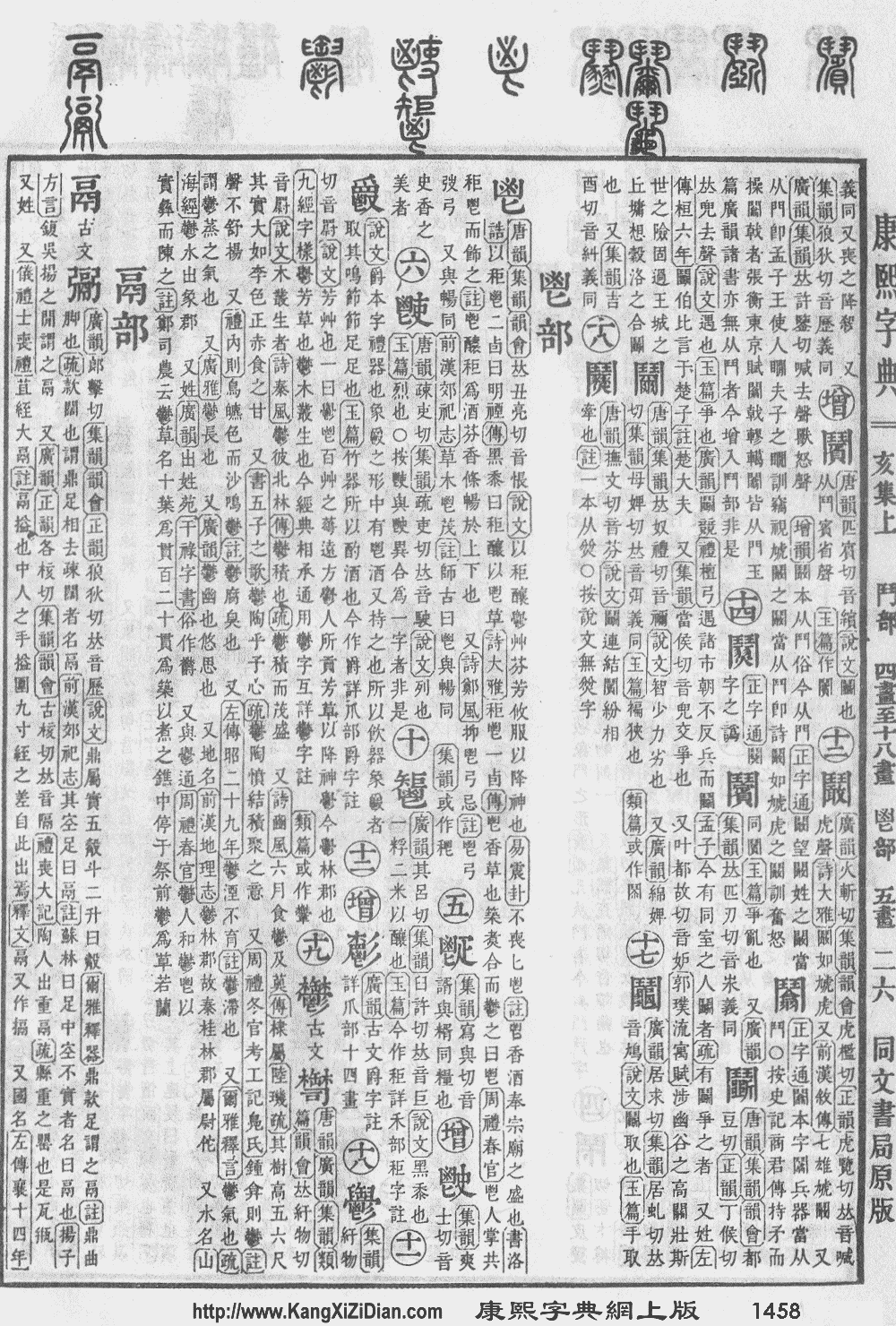
- KangXi: page 1458, character 18
- Dai Kanwa Jiten: character 45671
- Dae Jaweon: page 1990, character 22
- Hanyu Da Zidian: volume 2, page 858, character 12
- Unihan data for U+9B31
Chinese
| trad. | 鬱 | |
|---|---|---|
| simp. | 郁* | |
| alt. forms | ||
Glyph origin
| Historical forms of the character 鬱 | |||
|---|---|---|---|
| Shang | Western Zhou | Warring States | Shuowen Jiezi (compiled in Han) |
| Oracle bone script | Bronze inscriptions | Qin slip script | Small seal script |
 |
 |
 |
 |
| Characters in the same phonetic series (鬱) (Zhengzhang, 2003) | |
|---|---|
| Old Chinese | |
| 鬱 | *qud |
| 欝 | *qud |
| 灪 | *qud |
| 爩 | *qud |
Phono-semantic compound (形聲, OC *qud) : semantic 林 + phonetic 𩰪.
Pronunciation
Definitions
鬱
- lush; luxuriant; exuberant; dense; thick
- various; abundant; profuse
- deep; obscure; profound
- to gather; to stagnate; to become stagnant
- depressed; gloomy; moody
- melancholy; depression
- to begrudge; to resent; to feel aggrieved
- hot air (rising); steam
- a kind of plum
- name of a god
- tall and big
- putrid; putrefied
- tulip; fragrant grass
- (~水) name for a branch of the Pearl River, including the You River, Yu River and the Xun River in Guangxi, as well as the Xi River downstream in Guangdong
- (~郡) name of an ancient Chinese prefecture
- A surname.
Compounds
|
Japanese
Kanji
鬱
Readings
Compounds
Trivia
鬱 has, at 29 strokes, the most strokes of any kanji in the jōyō kanji list or kanji kentei level pre-1.[1] The next highest kanji in the jōyō list is 鑑, at 23 strokes.
Etymology
| Kanji in this term |
|---|
| 鬱 |
| うつ Grade: S |
| on’yomi |
From Middle Chinese 鬱 (MC ʔɨut̚).
Adjective
鬱 (-na inflection, hiragana うつ, rōmaji utsu)
- depressing
- 鬱な曲
- utsu na kyoku
- depressing song
- 鬱な曲
- depressed
Noun
- (psychiatry) depression
- 鬱を克服する
- utsu o kokufuku suru
- overcome depression
- 鬱を克服する
Synonyms
- 鬱病 (utsubyō)
References
- ↑ Crazy kanji: what’s the highest stroke count?, Nihonshock, 2009 Oct 22
Korean
Hanja
鬱 • (ul) (hangeul 울, revised ul, McCune–Reischauer ul, Yale wul)
- This term needs a translation to English. Please help out and add a translation, then remove the text
{{rfdef}}.
Vietnamese
Han character
鬱 (uất)
- This term needs a translation to English. Please help out and add a translation, then remove the text
{{rfdef}}.
This article is issued from
Wiktionary.
The text is licensed under Creative Commons - Attribution - Sharealike.
Additional terms may apply for the media files.