缶
| ||||||||
Translingual
| Stroke order | |||
|---|---|---|---|
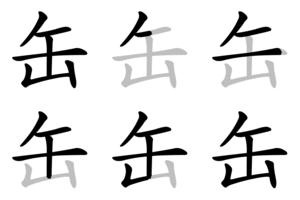 | |||
Han character
缶 (radical 121 缶+0, 6 strokes, cangjie input 人十山 (OJU), four-corner 80772)
- Kangxi radical #121, ⽸.
Derived characters
- Index:Chinese radical/缶
References
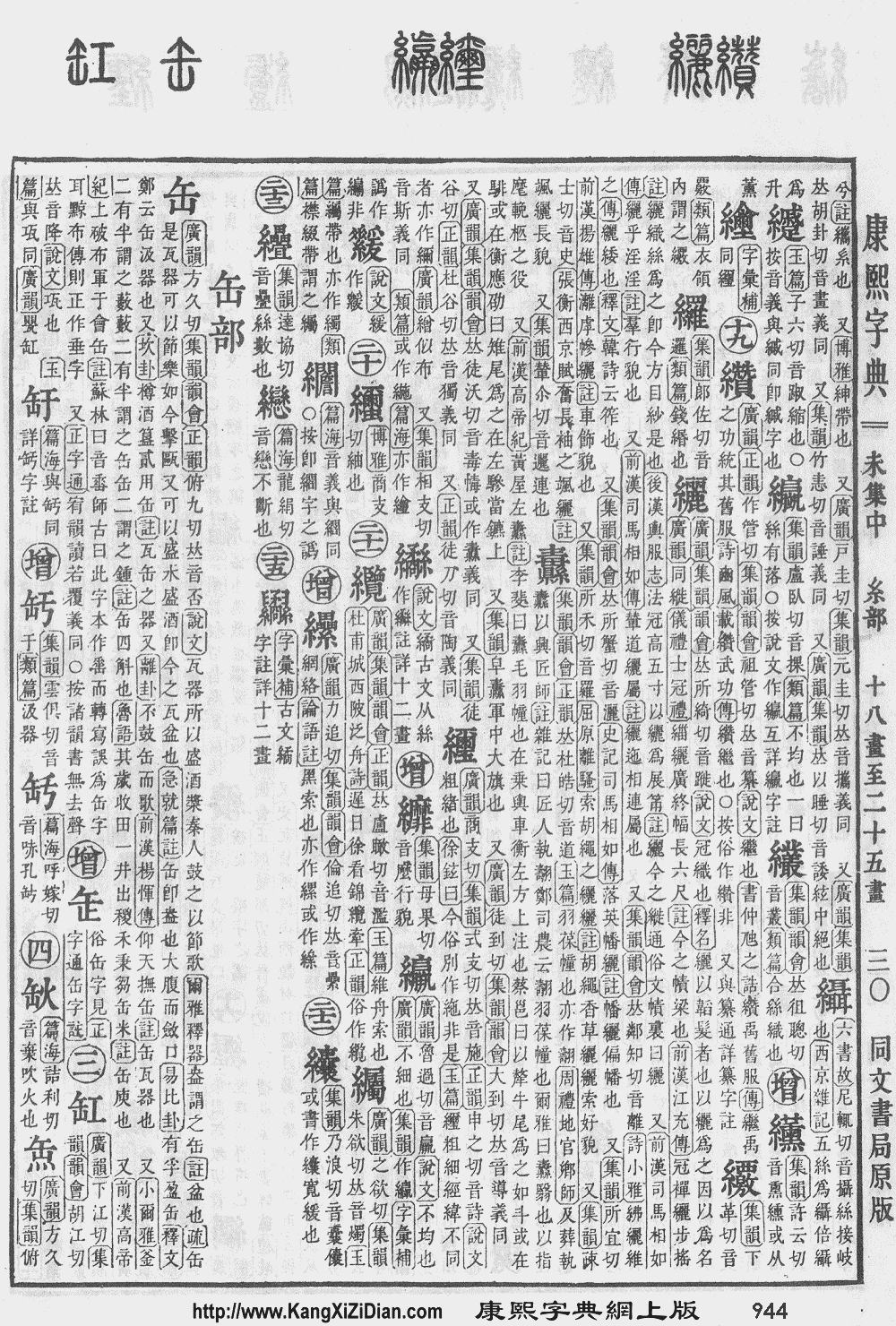
- KangXi: page 944, character 26
- Dai Kanwa Jiten: character 28108
- Dae Jaweon: page 1385, character 1
- Hanyu Da Zidian: volume 5, page 2935, character 1
- Unihan data for U+7F36
Chinese
| simp. and trad. |
缶 | |
|---|---|---|
| alt. forms | 𦈢 缻 | |
Glyph origin
| Historical forms of the character 缶 | |||
|---|---|---|---|
| Shang | Spring and Autumn | Shuowen Jiezi (compiled in Han) | Liushutong (compiled in Ming) |
| Oracle bone script | Bronze inscriptions | Small seal script | Transcribed ancient scripts |
 |
 |
 |
 |
| Characters in the same phonetic series (缶) (Zhengzhang, 2003) | |
|---|---|
| Old Chinese | |
| 寶 | *puːʔ |
| 珤 | *puːʔ |
| 缶 | *puʔ |
| 缹 | *puʔ |
Pictogram (象形) – a pot with a lid.
Pronunciation
Definitions
缶
- earthen pot or jar for storing an alcoholic drink
- musical instrument for ritual music
Compounds
Japanese
| 缶 | |
| 罐 |
Kanji
缶
(common “Jōyō” kanji, shinjitai kanji, kyūjitai form 罐)
Readings
Compounds
Compounds
- 缶詰 (kanzume): canned food; confinement for a particular purpose
- 缶詰業 (kanzumegyō): the canning industry
- 缶詰業者 (kanzume gyōsha): a canner, someone who cans as a business
- 缶詰工場 (kanzume kōjō): a cannery, a canning plant
- 缶詰食品 (kanzume shokuhin): canned food
- 缶石 (kanseki): scale, lime and other deposits left behind in a boiler, kettle, or similar device
- 缶切り (kankiri), 缶切 (kankiri): a can opener
- 缶胴 (kamadō): the boiler of a steam engine
- 缶焚き (kamataki), 缶焚 (kamataki): minding a boiler fire for a steam engine; a steam engine fireman, tender, or stoker
- 缶偏 (kamahen): the Chinese character radical consisting of the 缶 character
Etymology 1
Originally from Dutch kan (“cylindrical metallic container”), with additional influence from English can (“cylindrical metallic container”). The kanji is an example of ateji (当て字).
Pronunciation
Alternative forms
Noun
Etymology 2
From Old Japanese kama, signifying a container for high heat and referring variously to a hearth, oven, pot, kettle.
Pronunciation
Alternative forms
Noun
- a boiler, as for a steam engine
Usage notes
For the boiler sense, this term kama is most often spelled using the kanji 缶.
Synonyms
- ボイラー (boirā)
Korean
Hanja
缶 • (bu) (hangeul 부, revised bu, McCune–Reischauer pu, Yale pu)
장군 부 [janggun bu]
- an earthern vessel that bulges in the middle and has a narrow mouth
- refers to one of many types of the double-headed drums with a narrow waist in the middle
- 洋甁, a glazed pot bulging in the middle with a narrow mouth
- volume, capacity (=4斛) [1]
- rad. 121
Vietnamese
Han character
- This term needs a translation to English. Please help out and add a translation, then remove the text
{{rfdef}}.
This article is issued from
Wiktionary.
The text is licensed under Creative Commons - Attribution - Sharealike.
Additional terms may apply for the media files.