矢
| ||||||||
Translingual
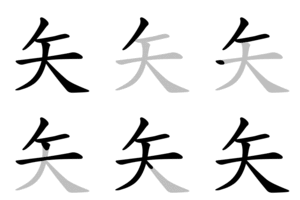
| Stroke order | |||
|---|---|---|---|
 | |||
Han character
矢 (radical 111, 矢+0, 5 strokes, cangjie input 人大 (OK), four-corner 80430, composition ⿱𠂉大)
- Kangxi radical #111, ⽮.
Derived characters
- Index:Chinese radical/矢
See also
References
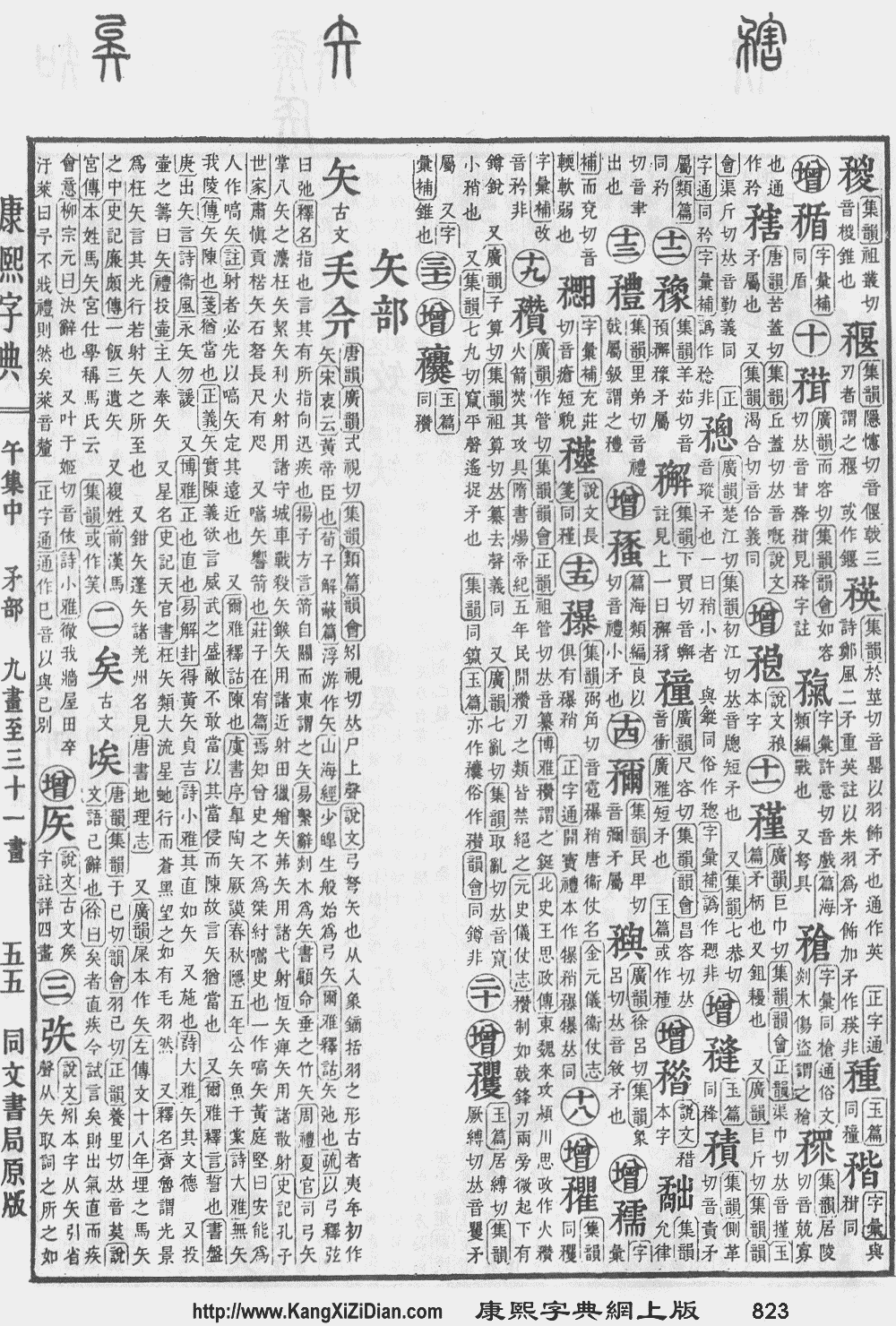
- KangXi: page 823, character 34
- Dai Kanwa Jiten: character 23929
- Dae Jaweon: page 1235, character 22
- Hanyu Da Zidian: volume 4, page 2580, character 1
- Unihan data for U+77E2
Chinese
| simp. and trad. |
矢 | |
|---|---|---|
Glyph origin
| Historical forms of the character 矢 | |||
|---|---|---|---|
| Shang | Western Zhou | Shuowen Jiezi (compiled in Han) | Liushutong (compiled in Ming) |
| Oracle bone script | Bronze inscriptions | Small seal script | Transcribed ancient scripts |
 |
 |
 |
 |
| Characters in the same phonetic series (矢) (Zhengzhang, 2003) | |
|---|---|
| Old Chinese | |
| 彘 | *l'eds |
| 璏 | *l'eds, *ɢʷleds, *ɢʷled |
| 薙 | *l̥ʰiːs, *ljiʔ, *l'iʔ |
| 知 | *ʔl'e |
| 蜘 | *te |
| 智 | *ʔl'es |
| 鼅 | *te |
| 潪 | *teɡs, *deɡ |
| 踟 | *de |
| 雉 | *l'iʔ |
| 矢 | *hliʔ |
| 痴 | *l̥ʰɯ |
Pictogram (象形) - pictographic representation of an arrow. More recognizable in older forms.
Pronunciation
Definitions
矢
Synonyms
- (arrow): 箭 (jiàn)
References
Japanese
Kanji
矢
Readings
Etymology 1
| Kanji in this term |
|---|
| 矢 |
| や Grade: 2 |
| kun’yomi |
From Old Japanese. Found in the Man'yōshū, completed some time after 759 CE.[1]
Pronunciation
Alternative forms
Noun
- an arrow
- 光陰矢の如し。
- Kōin ya no gotoshi.
- Shine and shadow, just like an arrow. → Time flies like an arrow.
- 光陰矢の如し。
Derived terms
- 弓矢 (yumiya): bow and arrow
Coordinate terms
- 弓 (yumi): a bow
- 弓矢 (yumiya): bow and arrow
Etymology 2
| Kanji in this term |
|---|
| 矢 |
| さ Grade: 2 |
| kun’yomi |
From Old Japanese. Found in the Man'yōshū, completed some time after 759 CE.[3] Possibly cognate with Old Japanese-derived 幸 (sachi, “a hunting implement”) and Korean 살 (sal, “arrow”).
This reading does not appear to be used in modern Japanese.
Pronunciation
Alternative forms
Noun
- (obsolete) an arrow
References
Korean
Hanja
矢 • (si)
- This term needs a translation to English. Please help out and add a translation, then remove the text
{{rfdef}}.
Vietnamese
Han character
矢 (thỉ, tẻ, thẻ, yêu, tử, tủ, tú, siệu)
- This term needs a translation to English. Please help out and add a translation, then remove the text
{{rfdef}}.
References
- Nom Foundation
- Thiều Chửu : Hán Việt Tự Điển Hà Nội 1942
- Trần Văn Chánh: Từ Điển Hán Việt NXB Trẻ, Ho Chi Minh Ville, 1999
- Vũ Văn Kính: Đại Tự Điển Chữ Nôm, NXB Văn Nghệ, Ho Chi Minh Ville, 1999
This article is issued from
Wiktionary.
The text is licensed under Creative Commons - Attribution - Sharealike.
Additional terms may apply for the media files.