礼
See also: 禮
| ||||||||
| ||||||||
Translingual
| Stroke order | |||
|---|---|---|---|
 | |||
| 禮 | |
| 礼 | |
| 礼 | |
| 禮 |
Etymology
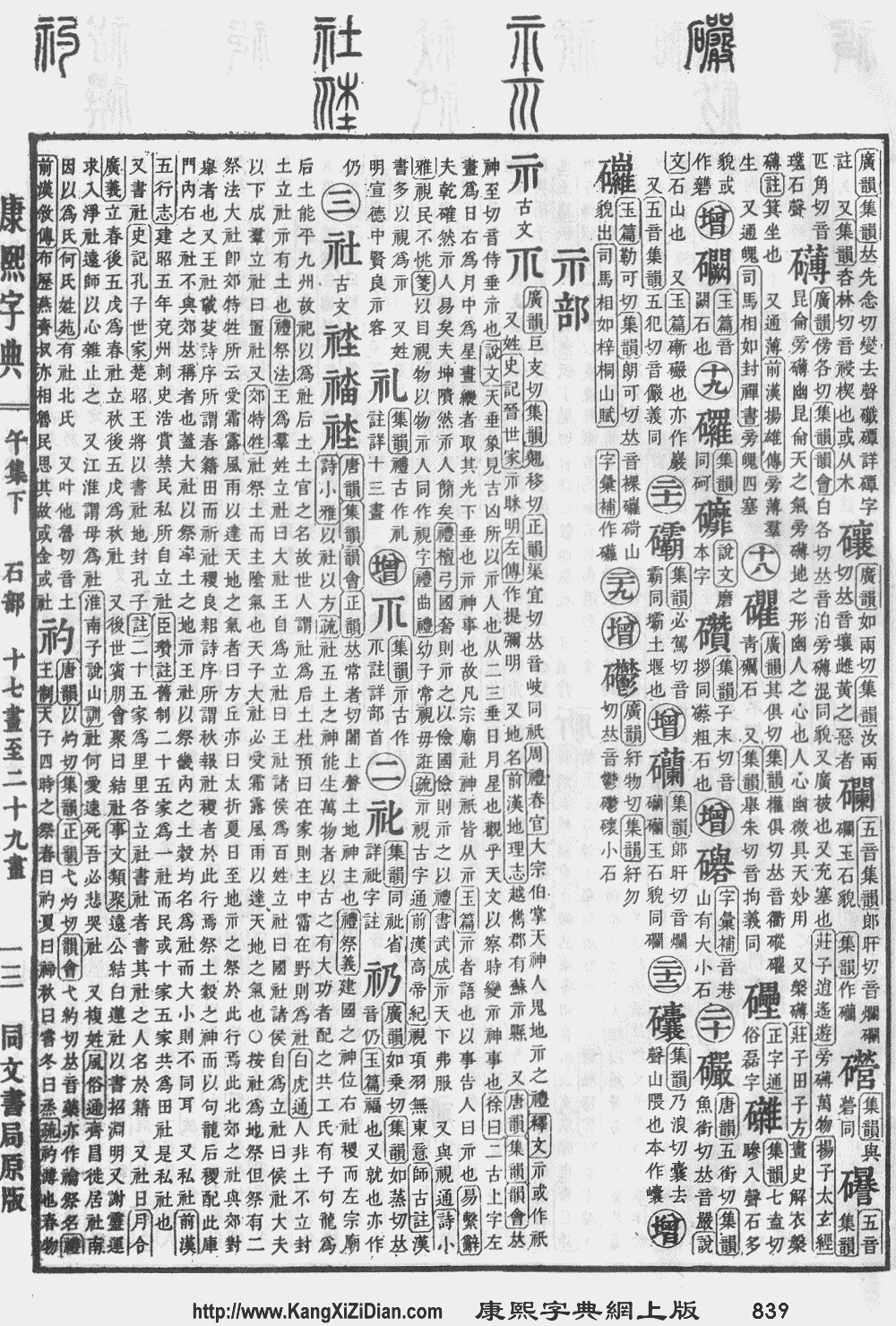
Ancient form of 禮 according to the Kangxi dictionary (Jiyun section).
In Japanese shinjitai and simplified Chinese, the character is simplified from 禮 (示 → 礻 and 豊 → 乚).
Han character
礼 (radical 113, 示+1, 5 strokes, cangjie input 戈火山 (IFU), four-corner 32210, composition ⿰礻乚(U+793C) or ⿰示乚(U+FA18))
Derived characters
References
- KangXi: page 839, character 22
- Dai Kanwa Jiten: character 24626
- Dae Jaweon: page 1256, character 28
- Hanyu Da Zidian: volume 4, page 2385, character 2
- Unihan data for U+793C
- Unihan data for U+FA18
Chinese
Glyph origin
Phono-semantic compound (形聲, OC *riːʔ) : semantic 礻 (“altar”) + phonetic 乚 – performing rites at an altar.
Definitions
| For pronunciation and definitions of 礼 – see 禮 (“present, gift; ritual, rite; etc.”). (This character, 礼, is the simplified form of 禮.) |
Notes:
|
Japanese
| 礼 | |
| 禮 |
Kanji
礼
(grade 3 “Kyōiku” kanji, shinjitai kanji, kyūjitai form 禮)
Readings
Etymology
wiya → iya.
Noun
See also 礼をする
礼 (shinjitai kanji, kyūjitai kanji 禮, hiragana いや, rōmaji iya, historical hiragana ゐや)
- the act of respecting one; reverence
Noun
礼 (shinjitai kanji, kyūjitai kanji 禮, hiragana れい, rōmaji rei)
- a bow, the gesture of bending at the waist
- an expression of thanks or gratitude
Synonyms
- (bow): お辞儀 (ojigi)
Troponyms
Compounds
This article is issued from
Wiktionary.
The text is licensed under Creative Commons - Attribution - Sharealike.
Additional terms may apply for the media files.