痿
| ||||||||
Translingual
Han character
痿 (radical 104 疒+8, 13 strokes, cangjie input 大竹木女 (KHDV), four-corner 00144, composition ⿸疒委)
References
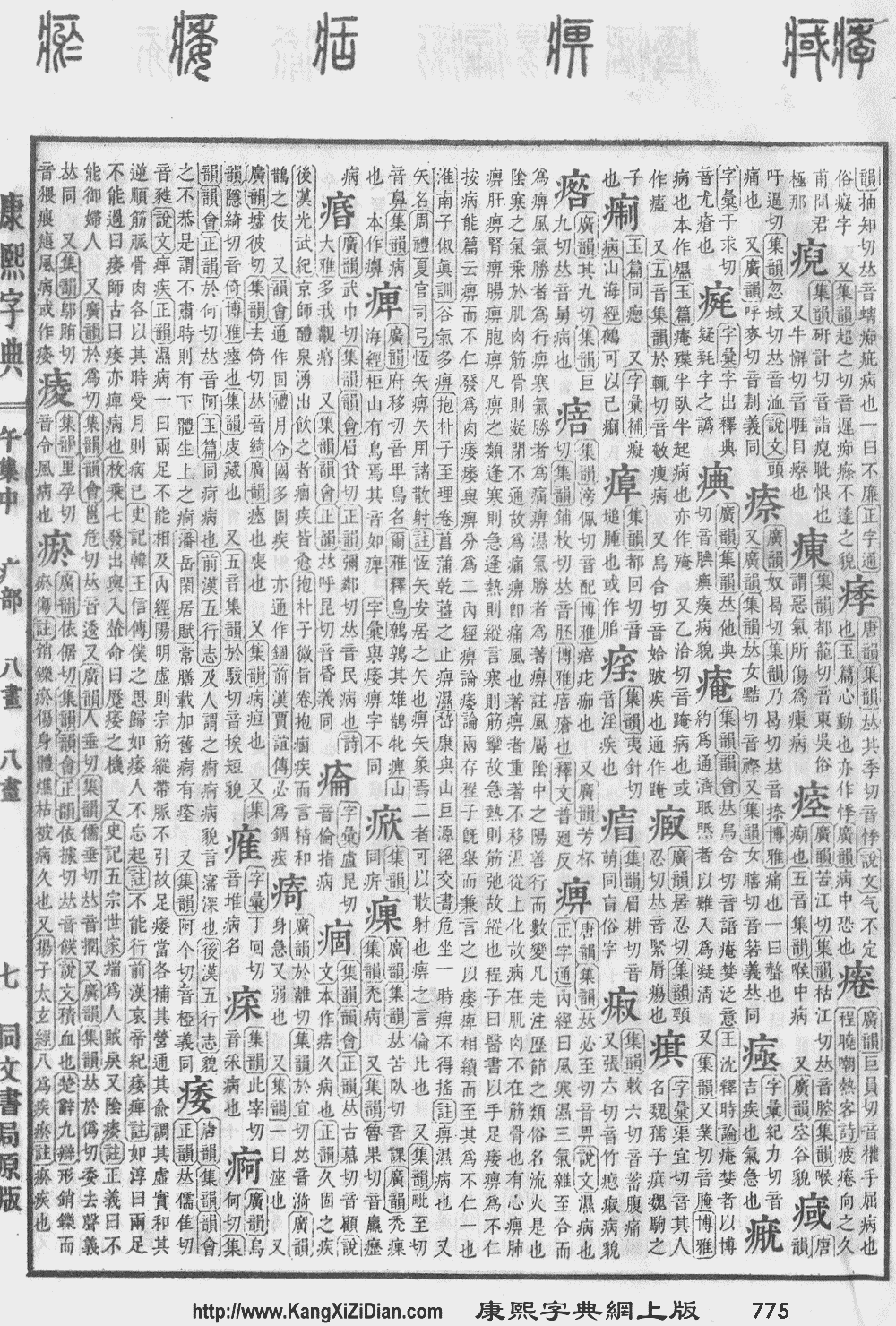
- KangXi: page 775, character 33
- Dai Kanwa Jiten: character 22290
- Dae Jaweon: page 1186, character 17
- Hanyu Da Zidian: volume 4, page 2681, character 4
- Unihan data for U+75FF
Chinese
| simp. and trad. |
痿 | |
|---|---|---|
Glyph origin
| Characters in the same phonetic series (委) (Zhengzhang, 2003) | |
|---|---|
| Old Chinese | |
| 矮 | *qraːlʔ |
| 躷 | *qraːlʔ |
| 捼 | *noːl, *nuːl, *njul |
| 倭 | *qoːl, *qoːlʔ, *qrol |
| 涹 | *qoːl |
| 踒 | *qoːl |
| 餧 | *nuːlʔ, *qrols |
| 諉 | *nols, *qrolʔ |
| 痿 | *njol, *qrol |
| 萎 | *qrol, *qrols |
| 逶 | *qrol |
| 覣 | *qrol |
| 蜲 | *qrol, *qrolʔ |
| 委 | *qrol, *qrolʔ |
| 緌 | *njul |
Pronunciation
Definitions
痿
Compounds
References
Japanese
Kanji
痿
- This term needs a translation to English. Please help out and add a translation, then remove the text
{{rfdef}}.
Readings
- Goon: ぬい (nui)←ぬゐ (nuwi, historical)
- Kan’on: ずい (zui)←ずゐ (zuwi, historical)
- Kan’yōon: い (i)←ゐ (wi, historical)
- Kun: なえる (naeru, 痿える)
Korean
Hanja
痿 • (wi) (hangeul 위, revised wi, McCune–Reischauer wi, Yale wi)
- This term needs a translation to English. Please help out and add a translation, then remove the text
{{rfdef}}.
This article is issued from
Wiktionary.
The text is licensed under Creative Commons - Attribution - Sharealike.
Additional terms may apply for the media files.