熊
| ||||||||
Translingual
Han character
熊 (radical 86, 火+10, 14 strokes, cangjie input 戈心火 (IPF), four-corner 21331, composition ⿱能灬)
References
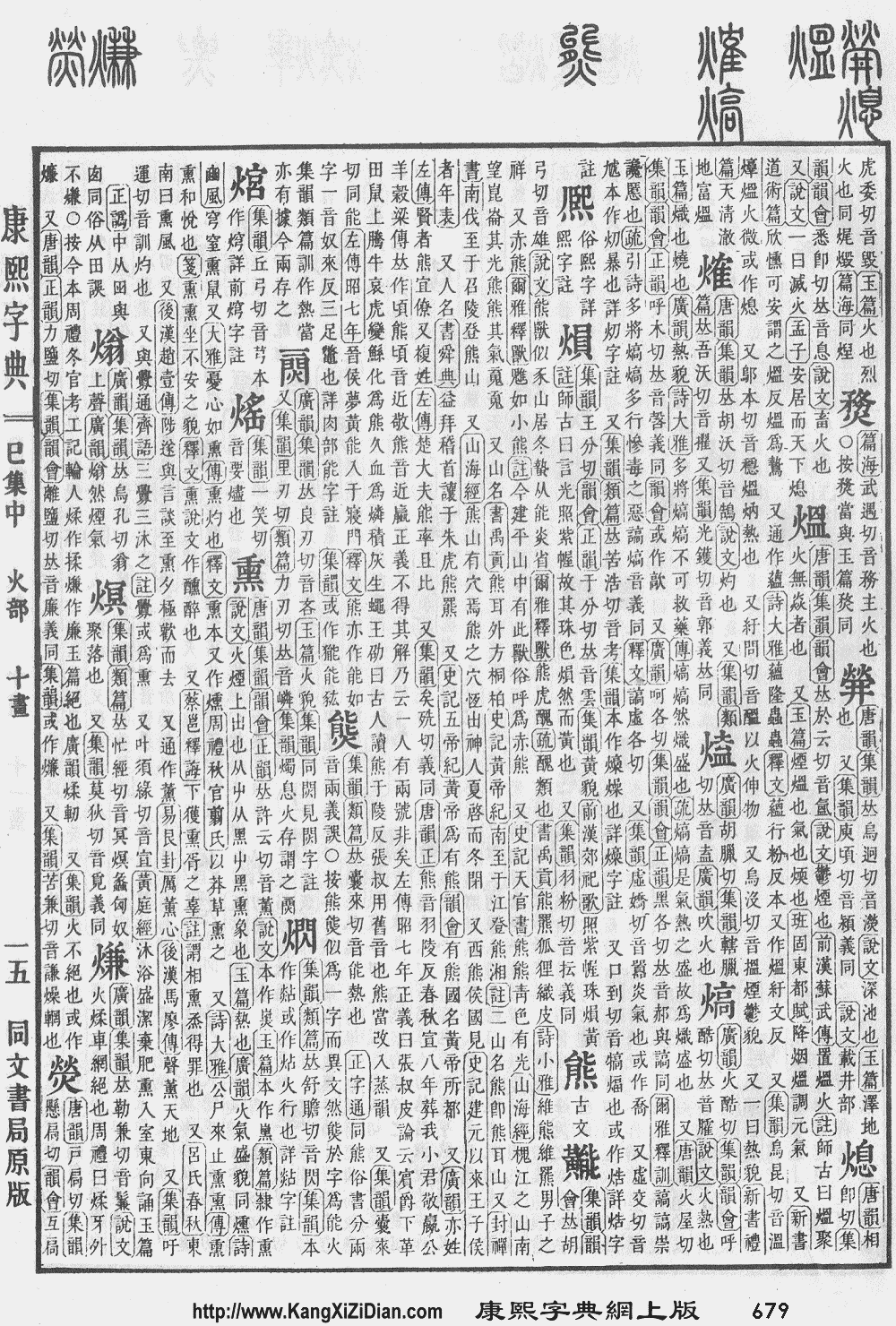
- KangXi: page 679, character 10
- Dai Kanwa Jiten: character 19294
- Dae Jaweon: page 1090, character 32
- Hanyu Da Zidian: volume 3, page 2227, character 5
- Unihan data for U+718A
Chinese
| simp. and trad. |
熊 | |
|---|---|---|
Glyph origin
| Historical forms of the character 熊 | |||||||||||||||||
|---|---|---|---|---|---|---|---|---|---|---|---|---|---|---|---|---|---|
| Shuowen Jiezi (compiled in Han) | Liushutong (compiled in Ming) | ||||||||||||||||
| Small seal script | Transcribed ancient scripts | ||||||||||||||||
 |
 | ||||||||||||||||
|
|
References: Mostly from Richard Sears' Chinese Etymology site (authorisation),
| |||||||||||||||||


Phono-semantic compound (形聲, OC *ɢʷlɯm) : phonetic 能 (OC *nɯː, *nɯːs, *nɯːŋ, *nɯːŋʔ) + semantic 火 (“fire”).
This character originally represented an onomatopoetic word (see 熊熊). Later its phonetic compound 能, the character for the Old Chinese word "bear", was borrowed for another word. This character thus began to represent the word "bear" instead.
Etymology
From Proto-Sino-Tibetan *d-wam.
Pronunciation
Definitions
熊
Compounds
|
|
|
Japanese
Kanji
Readings
Compounds
- 牡熊 (osukuma): a male bear
- 雌熊 (mesukuma): a female bear; a she-bear
- 子熊 (kokuma): a bear cub
- 小熊 (kokuma): a species of small bear
- 白熊 (shirokuma): a white bear
- 北極熊 (hokkyokuguma): a polar bear
- 黒熊 (kurokuma): the Asian black bear
- 熊笹 (kumazasa): bamboo grass, Sasa veitchii
- 熊葛 (kukumatsuzura): common vervain, Verbena officinalis
- 熊手 (kumade): bamboo rake
- 熊襲 (Kumaso): the Kumaso people
Etymology
| Kanji in this term |
|---|
| 熊 |
| くま Grade: S |
| kun’yomi |
From Old Japanese. Probably cognate with 隈 (kuma, “inside corner; inner bend; hollow or hole in something”), perhaps from the way that bears often live in dens. Probably also cognate with Korean 곰 (gom, “bear; hole”).
Pronunciation
Noun
熊 (hiragana くま, katakana クマ, rōmaji kuma)
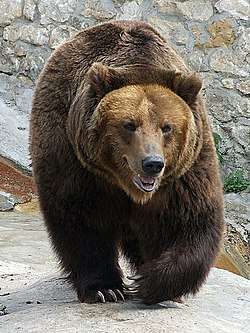
- a bear (large mammal of family Ursidae)
- (slang) a bear, an otter (a hairy man, especially one who is gay)
Usage notes
As with many terms that name organisms, this term is often spelled in katakana, especially in biological contexts, as クマ.
Derived terms
- 熊鼠 (くまねずみ): Rattus rattus, the black rat
- 穴熊 (あなぐま): Meles meles, the Eurasian badger
References
Korean
Hanja
熊 • (ung)
Vietnamese
Han character
熊 (hùng)
- This term needs a translation to English. Please help out and add a translation, then remove the text
{{rfdef}}.