枘
| ||||||||
Translingual
Han character
枘 (radical 75 木+4, 8 strokes, cangjie input 木人月 (DOB), four-corner 44927, composition ⿰木內)
References
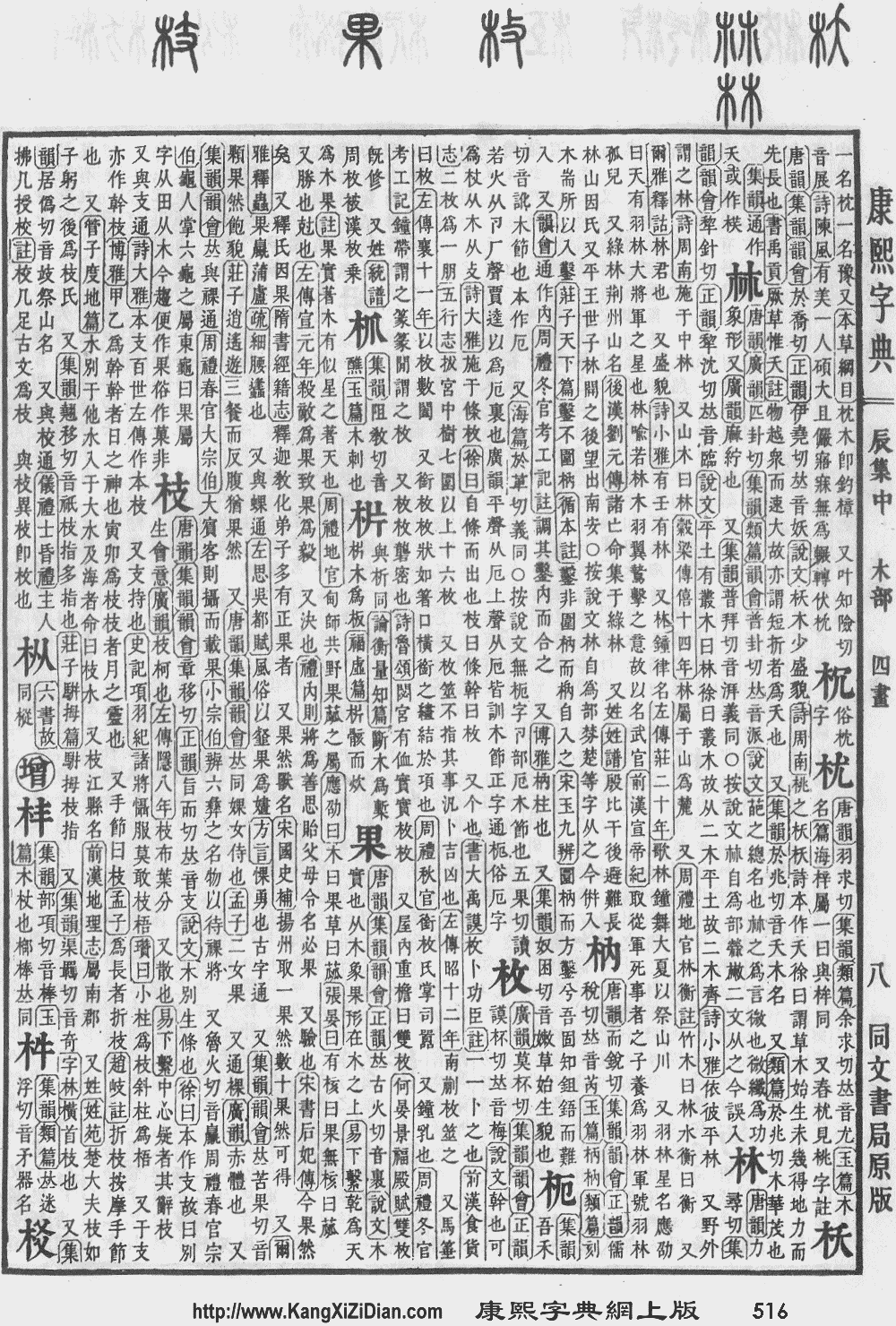
- KangXi: page 516, character 6
- Dai Kanwa Jiten: character 14552
- Dae Jaweon: page 904, character 1
- Hanyu Da Zidian: volume 2, page 1170, character 2
- Unihan data for U+6798
Chinese
| simp. and trad. |
枘 | |
|---|---|---|
Glyph origin
| Characters in the same phonetic series (內) (Zhengzhang, 2003) | |
|---|---|
| Old Chinese | |
| 妠 | *nuːms, *nuːb, *rnoːd |
| 內 | *nuːbs |
| 笍 | *tnobs, *njobs |
| 芮 | *njobs |
| 枘 | *njobs |
| 汭 | *njobs |
| 鈉 | *njobs |
| 蜹 | *njobs, *lobs, *njod |
| 抐 | *nuːns, *nuːd |
| 納 | *nuːb |
| 衲 | *nuːb |
| 魶 | *nuːb, *noːb |
| 軜 | *nuːb |
| 蒳 | *nuːb |
| 豽 | *rnuːd |
| 肭 | *rnuːd, *nuːd, *nuɡ |
| 吶 | *nod |
| 焫 | *njod |
| 訥 | *nuːd |
Pronunciation
Definitions
枘
Japanese
Kanji
枘
- navel; a protrusion; a tenon
Readings
Noun
Usage notes
The tenon sense is sometimes spelled 柄. This alternate character might be considered by some to be a misspelling. Note that the right-hand element of 枘 is 内 without a top bar, while the right-hand element of 柄 is 丙 with a top bar.
Korean
Hanja
枘 • (ye) (hangeul 예, revised ye, McCune–Reischauer ye, Yale yey)
- This term needs a translation to English. Please help out and add a translation, then remove the text
{{rfdef}}.
Vietnamese
Han character
- This term needs a translation to English. Please help out and add a translation, then remove the text
{{rfdef}}.
This article is issued from
Wiktionary.
The text is licensed under Creative Commons - Attribution - Sharealike.
Additional terms may apply for the media files.