承
| ||||||||
Translingual
Han character
承 (radical 64, 手+4, 8 strokes, cangjie input 弓弓手人 (NNQO), four-corner 17232)
References
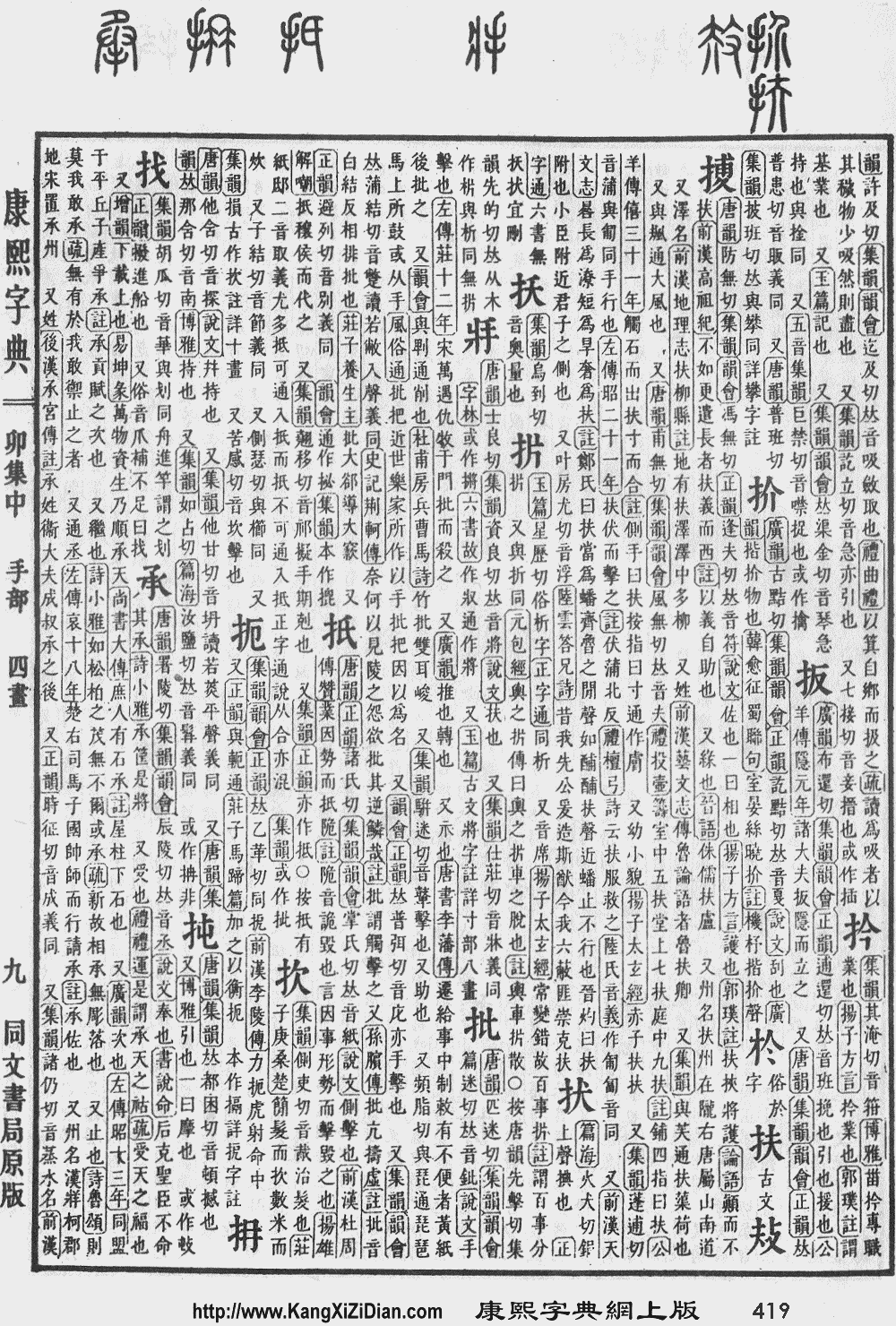
- KangXi: page 419, character 19
- Dai Kanwa Jiten: character 11852
- Dae Jaweon: page 766, character 11
- Hanyu Da Zidian: volume 1, page 54, character 3
- Unihan data for U+627F
Chinese
| simp. and trad. |
承 | |
|---|---|---|
Glyph origin
| Historical forms of the character 承 | |||
|---|---|---|---|
| Shang | Western Zhou | Shuowen Jiezi (compiled in Han) | Liushutong (compiled in Ming) |
| Oracle bone script | Bronze inscriptions | Small seal script | Transcribed ancient scripts |
 |
 |
 |
 |
| Characters in the same phonetic series (丞) (Zhengzhang, 2003) | |
|---|---|
| Old Chinese | |
| 蒸 | *kljɯŋ |
| 烝 | *kljɯŋ, *kljɯŋs |
| 篜 | *klɯŋ |
| 脀 | *kljɯŋ |
| 拯 | *kljɯŋʔ |
| 氶 | *kljɯŋʔ |
| 承 | *ɡljɯŋ |
| 丞 | *ɡljɯŋ, *ɡljɯŋs |
| 巹 | *klɯnʔ |
Ideogrammic compound (會意) : 卩 (“kneeling man”) + 廾 (“both hands”) – to hold; to carry. In the seal script, an additional hand 手 was added.
Pronunciation 1
Definitions
承
- This term needs a translation to English. Please help out and add a translation, then remove the text
{{rfdef}}.
Compounds
|
|
|
Pronunciation 2
Definitions
承
- This term needs a translation to English. Please help out and add a translation, then remove the text
{{rfdef}}.
Japanese
Kanji
- acquiesce
Readings
- Goon: じょう (jō)←じよう (zyou, historical)
- Kan’on: しょう (shō, Jōyō)←しよう (syou, historical)
- Kun: うけたまわる (uketamawaru, 承る, Jōyō)←うけたまはる (uketamafaru, historical); うけたまわり (uketamawari, 承)←うけたまはり (uketamafari, historical); うけたまわり (uketamawari, 承り)←うけたまはり (uketamafari, historical); うける (ukeru, 承ける); ささげる (sasageru, 承げる); とどめる (todomeru, 承める); たすける (tasukeru, 承ける); こらす (korasu, 承らす); ついで (tsuide, 承で); すくう (sukuu, 承う)←すくふ (sukufu, historical)
- Nanori: こと (koto); すけ (suke); つぎ (tsugi); つぐ (tsugu); よし (yoshi)
Compounds
Usage notes
This may be the only kanji with a six-mora reading, of uketamawari. However, this reading is more often spelled with the final -ri spelled in kana (as 承り) to clarify and disambiguate the reading of the single kanji.
This kanji is also one of very few kanji with five-mora readings, and the only verb, namely 承る (uketamawaru, with the kanji comprising the five-mora uketamawa- part). Other kanji with five-mora readings are the nouns 志 (kokorozashi), 詔 / 勅 (mikotonori), and 宰 / 司 (mikotomochi). No kanji have a reading of more than six morae.
Korean
Hanja
承 • (seung, jeung) (hangeul 승, 증, revised seung, jeung, McCune–Reischauer sŭng, jŭng, Yale sung, jung)
- This term needs a translation to English. Please help out and add a translation, then remove the text
{{rfdef}}.
Vietnamese
Han character
承 (thừa)
- This term needs a translation to English. Please help out and add a translation, then remove the text
{{rfdef}}.