弗
| ||||||||
Translingual
Han character
弗 (radical 57, 弓+2, 5 strokes, cangjie input 中中弓 (LLN), four-corner 55027, composition ⿻⿰丿丨弓)
Derived characters
References
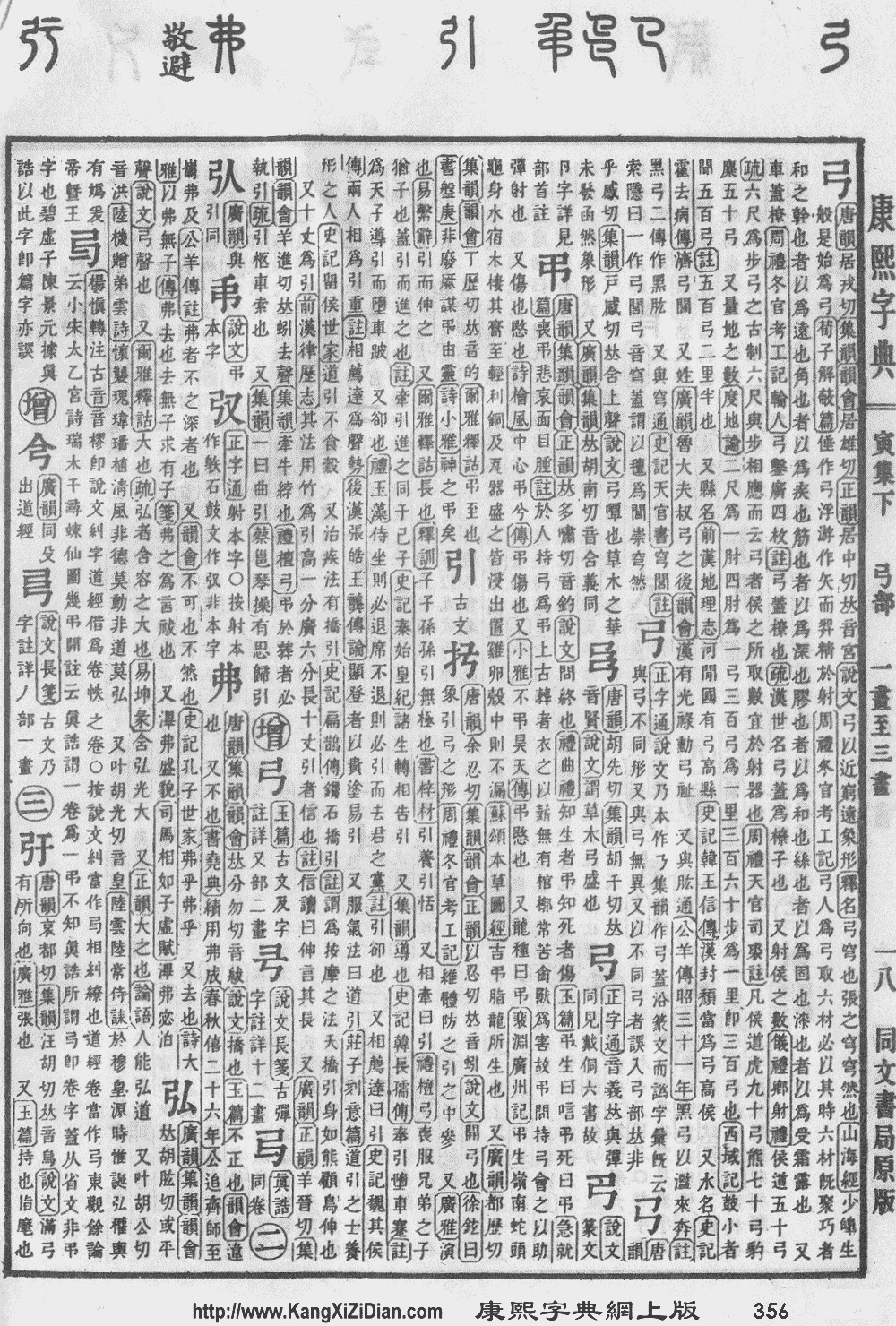
- KangXi: page 356, character 16
- Dai Kanwa Jiten: character 9708
- Dae Jaweon: page 673, character 1
- Hanyu Da Zidian: volume 2, page 990, character 9
- Unihan data for U+5F17
Chinese
| simp. and trad. |
弗 | |
|---|---|---|
Glyph origin
| Characters in the same phonetic series (弗) (Zhengzhang, 2003) | |
|---|---|
| Old Chinese | |
| 鄪 | *prɯds |
| 費 | *prɯds, *pʰɯds, *bɯds |
| 砩 | *pads |
| 沸 | *pɯds |
| 疿 | *pɯds |
| 茀 | *pɯds, *pʰɯd |
| 髴 | *pʰɯds, *pɯd, *pʰɯd |
| 昲 | *pʰɯds |
| 靅 | *pʰɯds |
| 狒 | *buds |
| 怫 | *bɯds, *bɯd |
| 胇 | *brɯd |
| 艴 | *bɯːd, *pʰɯd |
| 弗 | *pɯd |
| 紼 | *pɯd |
| 柫 | *pɯd |
| 笰 | *pɯd |
| 拂 | *pʰɯd |
| 刜 | *pʰɯd, *bɯd |
| 彿 | *pʰɯd |
| 佛 | *bɯd |
| 坲 | *bɯd |
| 咈 | *bɯd |
| 炥 | *bɯd |
Pictogram (象形) – two arrows, tied together to be straightened.
Later borrowed phonetically to mean “no”. The derivative 拂 stands for the original word.
Etymology 1
See etymology of 不.
Pronunciation
Definitions
弗
- (obsolete or dialectal) not.
Usage notes
Etymology 2
| For pronunciation and definitions of 弗 – see 費 (“to cost; to spend; to expend; to consume; to use; to exhaust; etc.”). (This character, 弗, is the second-round simplified form of 費.) |
Notes:
|
Japanese
Kanji
Readings
Etymology 1
| Kanji in this term |
|---|
| 弗 |
| ふつ Hyōgaiji |
| on’yomi |
Originally borrowed from Middle Chinese 弗 (*pjut), meaning either “not” or “a gust of wind”. Apparently later repurposed during the later Edo period for its phonetic value (and possibly also for its “wind” → “gas” connotations) in translating the German Fluor (“fluorine”).
The modern Mandarin 氟 (fú, “fluorine”) appears to be a more recent invention based on this Japanese usage, adding the radical 气.
Pronunciation
Affix
弗 (hiragana ふつ, katakana フツ, rōmaji futsu)
Derived terms
- 弗化 (ふっか, fukka): fluoridation; fluoro-, fluor-; fluorinated
- 弗化カルシウム (ふっかカルシウム, fukka karushiumu): calcium fluoride, CaF2
- 六弗化リン酸リチウム (ろくふっかりんさんりちうむ, roku fukka rinsan richiumu): lithium hexafluorophosphate
- 弗化水素 (ふっかすいそ, fukka suiso): hydrogen fluoride, HF
- 弗化水素酸 (ふっかすいそさん, fukka suiso san): hydrofluoric acid
- 弗化物 (ふっかぶつ, fukkabutsu): fluoride
- 六弗化硫黄 (ろくふっかいおう, ろくふっかいおう): sulfur hexafluoride
- 弗酸 (ふっさん, fussan): short for 弗化水素酸 (fukka suiso san): hydrofluoric acid
- 弗素 (ふっそ, fusso): fluorine, F
Purely phonetic uses:
- 阿弗利加, 亜弗利加 (アフリカ, Afurika): Africa
- 阿弗利加系亜米利加人 (アフリカけいアメリカじん, Afurika-kei Amerikajin): an African American (person)
- 阿弗利加野驢馬 (アフリカのろば, Afurika noroba): the African wild ass: Equus africanus
Usage notes
Seldom used. In chemistry contexts, almost always spelled in katakana as フツ, appearing in most compounds as フッ. This is probably a reflection of this term's roots as a 外来語 (gairaigo, “word borrowed from another language”).
Etymology 2
| Kanji in this term |
|---|
| 弗 |
| どる Hyōgaiji |
| kun’yomi |
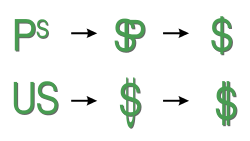
Repurposed for its visual similarity to the dollar symbol $. This reading is ultimately borrowed from Dutch dollar.[1][2]
Pronunciation
Alternative forms
Symbol
- a dollar
Usage notes
Occasionally seen, but more often encountered in the katakana spelling of ドル.
References
Korean
Hanja
弗 • (bul) (hangeul 불, revised bul, McCune–Reischauer pul, Yale pul)
References

Vietnamese
Han character
弗 (phất)
- This term needs a translation to English. Please help out and add a translation, then remove the text
{{rfdef}}.