頬
| ||||||||
Translingual
| Traditional | 頰 |
|---|---|
| Shinjitai | 頬 |
| Simplified | 颊 |
Etymology
Japanese shinjitai Simplified from 頰 (夾 → 夹).
Phono-semantic compound (形聲) : phonetic 夹 + semantic 頁 (“head”) – part of the head.
Han character
頬 (radical 181, 頁+6, 15 strokes, cangjie input 大廿一月金 (KTMBC), composition ⿰夹頁)
References
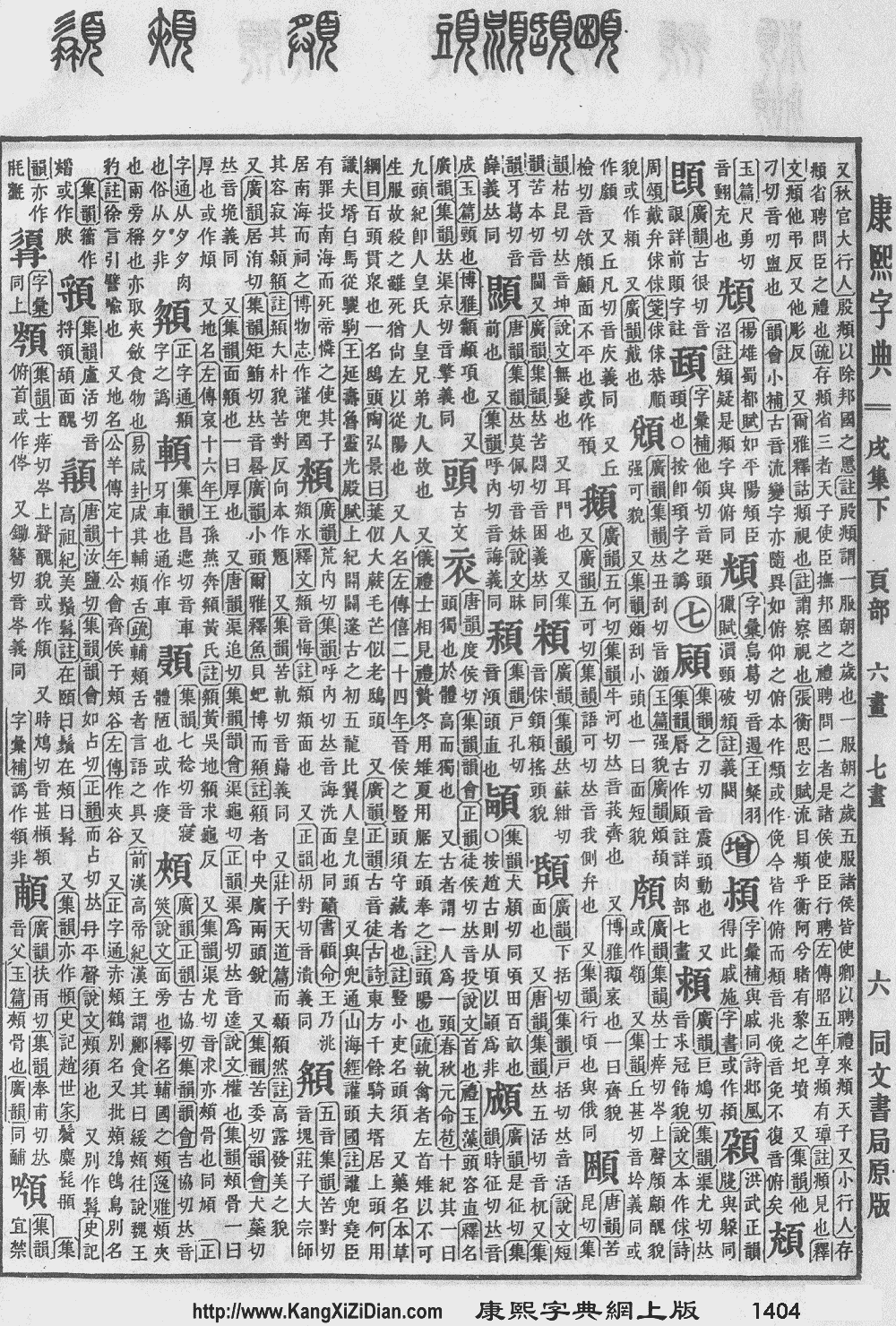
- KangXi: not present, would follow page 1404, character 7
- Hanyu Da Zidian: not present, would follow volume 7, page 4367, character 16
- Unihan data for U+982C
Japanese
Kanji
(uncommon “Hyōgai” kanji, shinjitai kanji, kyūjitai form 頰)
Readings
Compounds
- 頬髭 (hōhige)
Etymology 1
| Kanji in this term |
|---|
| 頬 |
| ほほ Hyōgaiji |
| kun’yomi |
From Old Japanese [Term?].
Pronunciation
Noun
Etymology 2
| Kanji in this term |
|---|
| 頬 |
| ほお Hyōgaiji |
| kun’yomi |
[ho̞ho̞] → [ho̞ː]
Derived from hoho above.[2]
Pronunciation
Noun
頬 (hiragana ほお, rōmaji hō, historical hiragana ほほ)
Usage notes
The reading hō is more common when used as a standalone noun.
Etymology 3
| Kanji in this term |
|---|
| 頬 |
| つら Hyōgaiji |
| kun’yomi |
Of same origin as 列 (tsura, “a string or lineup of things”). Extending from the meaning of "lineup", the meaning changed to indicate the side of the items lined up. In reference to people, this came to mean the cheeks as the side of the face, and then by extension the face as a whole.[2]
Pronunciation
Noun
頬 (hiragana つら, rōmaji tsura)
- the cheeks
- the face (usually written 面)
- one's facial expression
- the side of something
- the surface or front of something
- one's honor: "face" as in save face or lose face
Alternative forms
Synonyms
Etymology 4
Used as ateji in various names.
Proper noun
頬 (hiragana すえみつ, rōmaji Suemitsu)
- A male given name.
Proper noun
頬 (hiragana すえもと, rōmaji Suemoto)
- A male given name.
Proper noun
頬 (hiragana のりみち, rōmaji Norimichi)
- A male given name.