咦
| ||||||||
Translingual
Etymology
| Historical forms of the character 咦 |
|---|
| Shuowen Jiezi (compiled in Han) |
| Small seal script |
 |
| Characters in the same phonetic series (夷) (Zhengzhang, 2003) | |
|---|---|
| Old Chinese | |
| 桋 | *l'iːl, *lil |
| 荑 | *l'iːl, *lil |
| 銕 | *l'iːl, *l̥ʰiːd |
| 鴺 | *l'iːl, *lil |
| 鮧 | *l'iːl, *lil |
| 洟 | *l̥ʰiːls, *lil |
| 羠 | *ljilʔ, *lil |
| 咦 | *hril |
| 夷 | *lil |
| 姨 | *lil |
| 痍 | *lil |
| 峓 | *lil |
| 恞 | *lil |
| 眱 | *lil |
| 蛦 | *lil |
| 胰 | *lil, *lɯ |
| 跠 | *lil |
Han character
咦 (radical 30 口+6, 9 strokes, cangjie input 口大弓 (RKN), four-corner 65032, composition ⿰口夷)
References
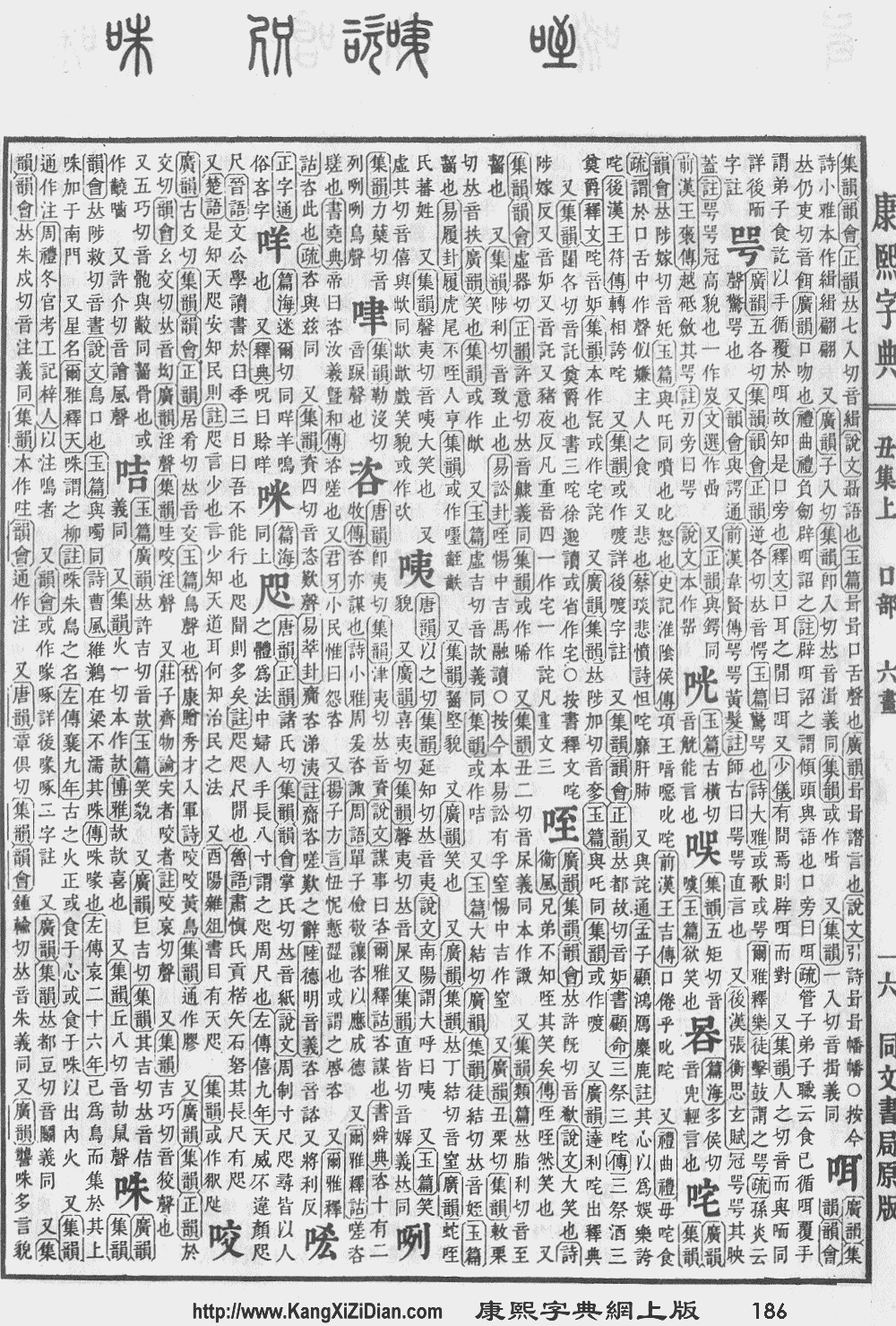
- KangXi: page 186, character 8
- Dai Kanwa Jiten: character 3535
- Dae Jaweon: page 405, character 30
- Hanyu Da Zidian: volume 1, page 614, character 1
- Unihan data for U+54A6
Chinese
| simp. and trad. |
咦 | |
|---|---|---|
Pronunciation
Definitions
咦
- An interjection used to express confusion. huh?
Usage notes
咦 expresses a relatively neutral feeling.
Japanese
Kanji
咦
- This term needs a translation to English. Please help out and add a translation, then remove the text
{{rfdef}}.
Readings
Korean
Hanja
咦 • (i, jae) (hangeul 이, 재, revised i, jae, McCune–Reischauer i, chae)
- This term needs a translation to English. Please help out and add a translation, then remove the text
{{rfdef}}.
This article is issued from
Wiktionary.
The text is licensed under Creative Commons - Attribution - Sharealike.
Additional terms may apply for the media files.