侍
| ||||||||
Translingual
| Stroke order | |||
|---|---|---|---|
 | |||
Han character
侍 (radical 9, 人+6, 8 strokes, cangjie input 人土木戈 (OGDI), four-corner 24241, composition ⿰亻寺)
References
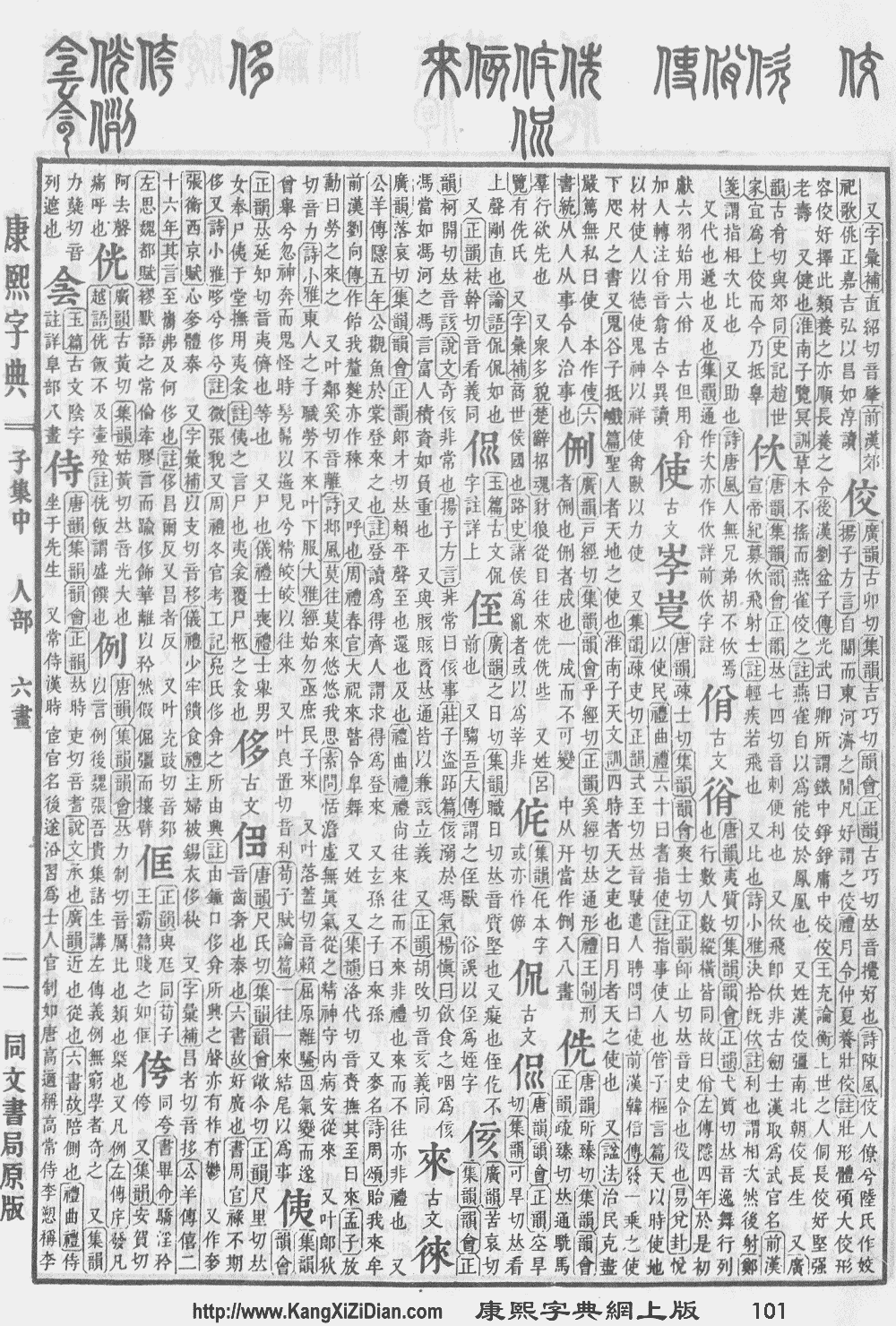
- KangXi: page 101, character 26
- Dai Kanwa Jiten: character 589
- Dae Jaweon: page 215, character 7
- Hanyu Da Zidian: volume 1, page 143, character 17
- Unihan data for U+4F8D
Chinese
| simp. and trad. |
侍 | |
|---|---|---|
Glyph origin
| Historical forms of the character 侍 | |||||
|---|---|---|---|---|---|
| |||||
|
References: Mostly from Richard Sears' Chinese Etymology site (authorisation),
|


| Characters in the same phonetic series (寺) (Zhengzhang, 2003) | |
|---|---|
| Old Chinese | |
| 等 | *tɯːʔ, *tɯːŋʔ |
| 待 | *dɯːʔ |
| 寺 | *ljɯs |
| 持 | *l'ɯ |
| 峙 | *dɯʔ |
| 痔 | *dɯʔ |
| 跱 | *dɯʔ |
| 歭 | *dɯʔ |
| 洔 | *dɯʔ, *tjɯʔ |
| 畤 | *dɯʔ, *tjɯʔ, *djɯʔ |
| 秲 | *dɯʔ, *djɯs |
| 庤 | *dɯʔ |
| 時 | *djɯ |
| 鰣 | *djɯ |
| 塒 | *djɯ |
| 蒔 | *djɯ, *djɯs |
| 榯 | *djɯ |
| 恃 | *djɯʔ |
| 侍 | *djɯs |
| 詩 | *hljɯ |
| 邿 | *hljɯ |
| 特 | *dɯːɡ |
Pronunciation
Definitions
侍
Compounds
Japanese
Kanji
Readings
- Goon: じ (ji, Jōyō)
- Kan’on: し (shi)
- Kun: さぶらい (saburai, 侍)←さぶらひ (saburafi, historical); さぶらう (saburau, 侍う)←さぶらふ (saburafu, historical); さむらい (samurai, 侍, Jōyō)←さむらひ (samurafi, historical); さむらう (samurau, 侍う)←さむらふ (samurafu, historical); はべる (haberu, 侍る)
- Nanori: つこ (tsuko); ひと (hito)
Compounds
Etymology 1
| Kanji in this term |
|---|
| 侍 |
| さむらい Grade: S |
| kun’yomi |
⟨sa morapi1⟩ → /saburapi/ → /saburafi/ → /samurawi/ → /samurai/
Sound shift from saburai (see below), itself the 連用形 (ren'yōkei, stem or continuative form) of classical verb 侍ふ (saburafu, “to serve”, modern saburau), ultimately derived from さ (sa-, prefix meaning "early") + 守らふ (morafu, “to keep watch”, modern morau).
The shift from saburaf- → samuraf- is due to the development of the 女性語 (josei-go, “women's language”) in Middle Japanese, expected from 候 (sōrō, “service”, classical saurafu).
Alternative forms
Pronunciation
Noun
侍 (hiragana さむらい, rōmaji samurai, historical hiragana さむらひ)
- (historical) a warrior class in medieval and pre-modern Japan; samurai
- Synonym: 武士 (bushi)
- one who serves nearby:
- Short for 侍所 (samurai-dokoro): the Board of Retainers in the Kamakura and Muromachi periods.
- an above-average person
Derived terms
- 侍気質 (samurai katagi)
- 田舎侍 (inaka-zamurai)
- 犬侍 (inuzamurai)
- 忰侍 (kase-zamurai)
- 国侍 (kuni-zamurai)
- 若侍 (waka-zamurai)
Idioms
- 黄金と侍は朽ちても朽ちぬ (kogane to samurai wa kuchite mo kuchinu)
See also
- 武士道 (bushidō, “samurai code of conduct”)
- 浪人 (rōnin, “masterless samurai”)
Etymology 2
| Kanji in this term |
|---|
| 侍 |
| さぶらい Grade: S |
| kun’yomi |
⟨sa morapi1⟩ → /saburapi/ → /saburafi/ → /saburawi/ → /saburai/
The 連用形 (ren'yōkei, stem or continuative form) of classical verb 侍ふ (saburafu, “to serve”).
Pronunciation
Noun
侍 (hiragana さぶらい, rōmaji saburai, historical hiragana さぶらひ)
- (archaic) one who serves nearby:
- Synonym of 下侍 (shimosaburai): This term needs a translation to English. Please help out and add a translation, then remove the text
{{rfdef}}. - Short for 侍所 (saburai-dokoro): a samurai guardhouse in the Heian period
References
Korean
Hanja
侍 • (si) (hangeul 시)
- This term needs a translation to English. Please help out and add a translation, then remove the text
{{rfdef}}.
Vietnamese
Han character
侍 (thị)
- This term needs a translation to English. Please help out and add a translation, then remove the text
{{rfdef}}.